




Shower Heads Explained for Australian Bathrooms
by Shivam Tayal 20 Sep 2026 0 Comments
You've chosen the wall tiles, narrowed the floor tile to something slip-rated, and finally picked a vanity that fits the room. Then someone asks, “What shower head are you using?” It sounds like a small fixture decision. In a Melbourne bathroom, it rarely is.
A shower head changes how the whole shower zone behaves. It affects how water lands on the body, but also how much spray reaches the glass, the niche, the grout lines, the doorway and the floor outside the screen. A wide overhead spray can feel calm and luxurious, yet it can also wet more wall area and leave more residue on dark tiles. A tighter spray can feel stronger, but if the outlet sits too close to a wall niche, you'll notice splashback quickly.
That's why renovators often get caught out. They buy by style first, then discover the pressure feels wrong, the shower arm lands awkwardly on a feature tile, or the floor near the entry stays wetter than expected. In older Victorian homes, that mismatch is even more common because plumbing positions, water pressure and room dimensions don't always line up neatly with showroom displays.
Introduction to Shower Heads in Australian Bathrooms
In Australian bathrooms, shower heads sit at the intersection of comfort, compliance and design. They're regulated products, not just decorative fittings. Australia's showerhead rules have been standardised for decades through the mandatory WELS scheme, and showerheads must be registered and rated under AS/NZS 6400:2016 before sale, as outlined in NSW Planning Portal guidance on showerheads.
That matters during a renovation because the shower head you choose has to work with more than the look of the room. It needs to suit your water pressure, your hot water setup, your shower screen layout and your tile finish. If you're fitting large-format porcelain on the walls and a textured floor tile underfoot, the spray pattern becomes part of the room design, much like the position of the mixer or the fall to the waste.
Why renovators misjudge shower heads
Testing a shower head in a display setting where the pressure is stable and there's no real shower screen, no niche and no concern about where water rebounds differs from the home experience. At home, the result can be different.
A few common surprises show up again and again:
- A large rain head looks balanced on the plan but ends up too close to a wall, so one side of the spray lands on grout and shelf edges.
- A handheld sounds practical but the rail cuts across a feature tile layout or sits awkwardly beside a recessed niche.
- A water-saving model is compliant but doesn't feel right because the bathroom's pressure conditions don't suit that particular spray design.
- A strong directional spray feels great but throws water toward the entry, making floor tile grip and screen placement more important than expected.
Practical rule: Choose the shower head at the same time you choose the shower layout. Don't leave it until after the tile setout is locked in.
The bathroom doesn't treat water evenly
Water doesn't just disappear down the drain. It hits surfaces, runs down joints, pools near transitions and leaves residue where the spray regularly lands. That's why the right shower head can make tile maintenance easier, while the wrong one can make a new bathroom feel messy from day one.
In a compact Melbourne ensuite, a fixed head with a controlled spray can help keep water inside the intended zone. In a family bathroom, a rail shower may suit different heights and make cleaning easier. In a walk-in shower with a larger tiled envelope, an overhead option can work beautifully if the waterproofing, falls and tile layout have been planned around it.
How Shower Heads Work and Why Design Matters
A shower head is basically a traffic controller for water. Water comes through the pipe, reaches the head, then gets shaped by openings, channels and internal controls before it leaves your wall or ceiling. The easiest way to picture it is a garden hose. If you change the nozzle, you change how the water feels, even when the tap feeding it stays the same.
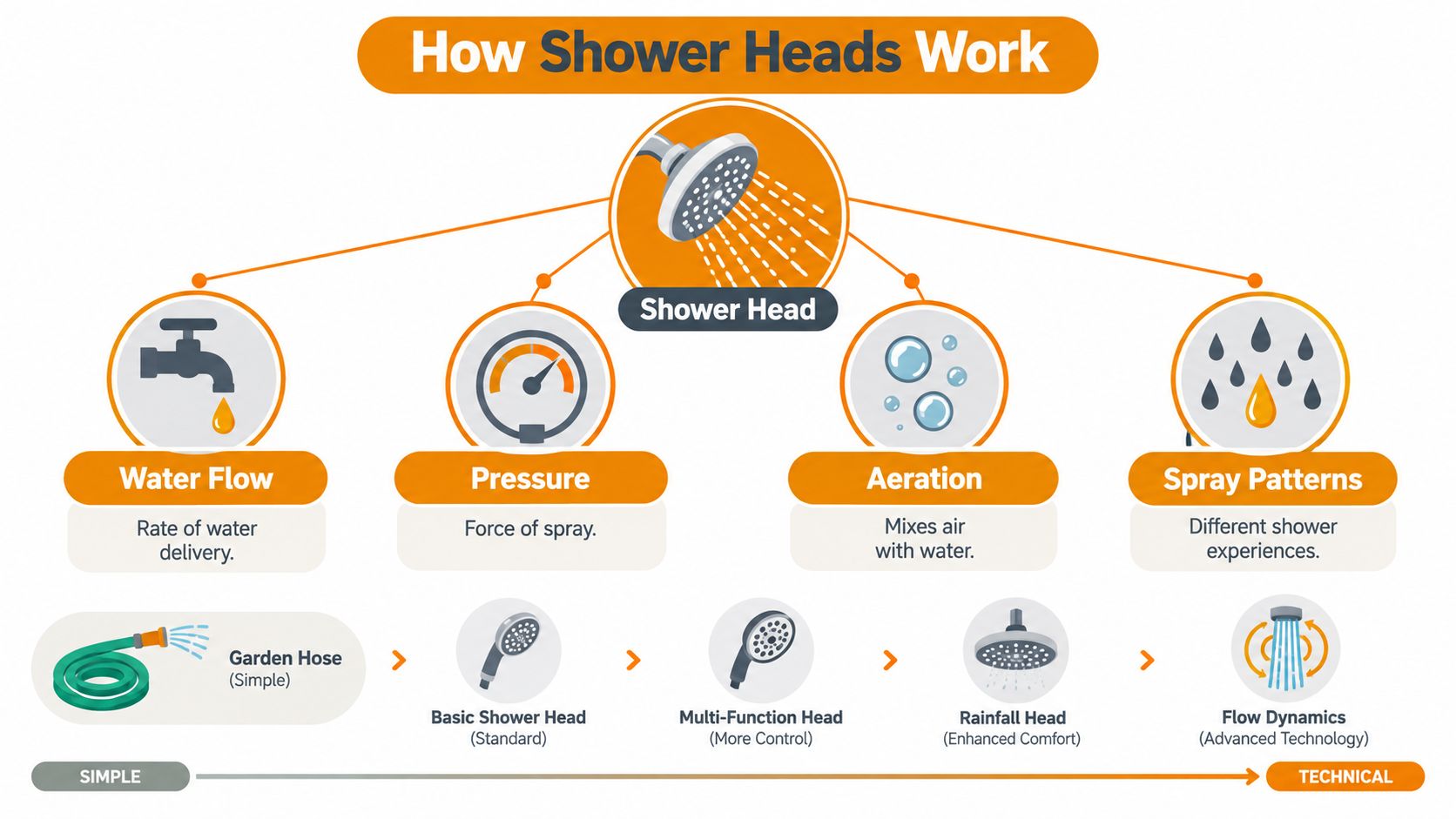
Flow rate and pressure aren't the same thing
Many buyers get confused. Flow rate is how much water moves through the shower head, measured in litres per minute. Pressure is the force pushing that water through the system. You can have a shower head with a modest flow rate that still feels lively because it focuses the water well. You can also have a broad shower head that feels softer because it spreads the same water across more nozzles.
Think of two watering cans. If both hold the same amount of water but one has a narrow spout and the other has a wide rose, they'll feel very different in use. Shower heads work the same way.
The parts doing the work
Several small components shape the experience:
- Faceplate: This is the visible front of the shower head. Its size and shape affect spray spread.
- Nozzles: These openings direct the water. Their pattern changes whether the spray feels concentrated or wide.
- Flow restrictor: This limits how much water can pass through.
- Mixer interaction: Your mixer controls temperature and contributes to how the shower behaves in real use.
A handheld unit adds a hose and cradle or rail, which introduces more movement and flexibility. A ceiling-mounted rain head changes the delivery angle entirely, so the water falls more vertically and often interacts differently with your floor area and body position.
Why equal ratings can still feel unequal
Two shower heads can carry the same litres-per-minute rating and still feel nothing alike. One may use aeration, which mixes air through the spray to create a fuller sensation. Another may use finer jets that feel sharper on the skin. A third may spread water over a larger face, making the shower feel gentler and more enveloping.
That difference matters for tile decisions too. A fuller, broader spray can dampen more wall area. A more focused stream may keep water tighter to the centre of the shower footprint.
If you're pairing a shower with natural stone mosaics, textured floor tiles or dark grout, don't think only about how the water feels on your shoulders. Think about where that same water goes after first contact.
Spray shape affects the room, not just the user
In practical terms, the spray pattern influences:
- Screen performance. Wider sprays can send more mist and splash toward open entries.
- Cleaning load. More wall contact usually means more wipe-down work on tiles and glass.
- Floor behaviour. Directional spray can make one part of the floor stay wetter for longer.
- Niche placement. Strong side spray can soak bottles and shelf surfaces constantly.
That's why good bathroom design treats the shower head as part plumbing item, part room planning tool.
Shower Head Types Compared for Every Bathroom Layout
Different shower heads solve different layout problems. The best choice depends less on trend and more on how the room is used, who uses it, and how your wall and floor tiles are set out.
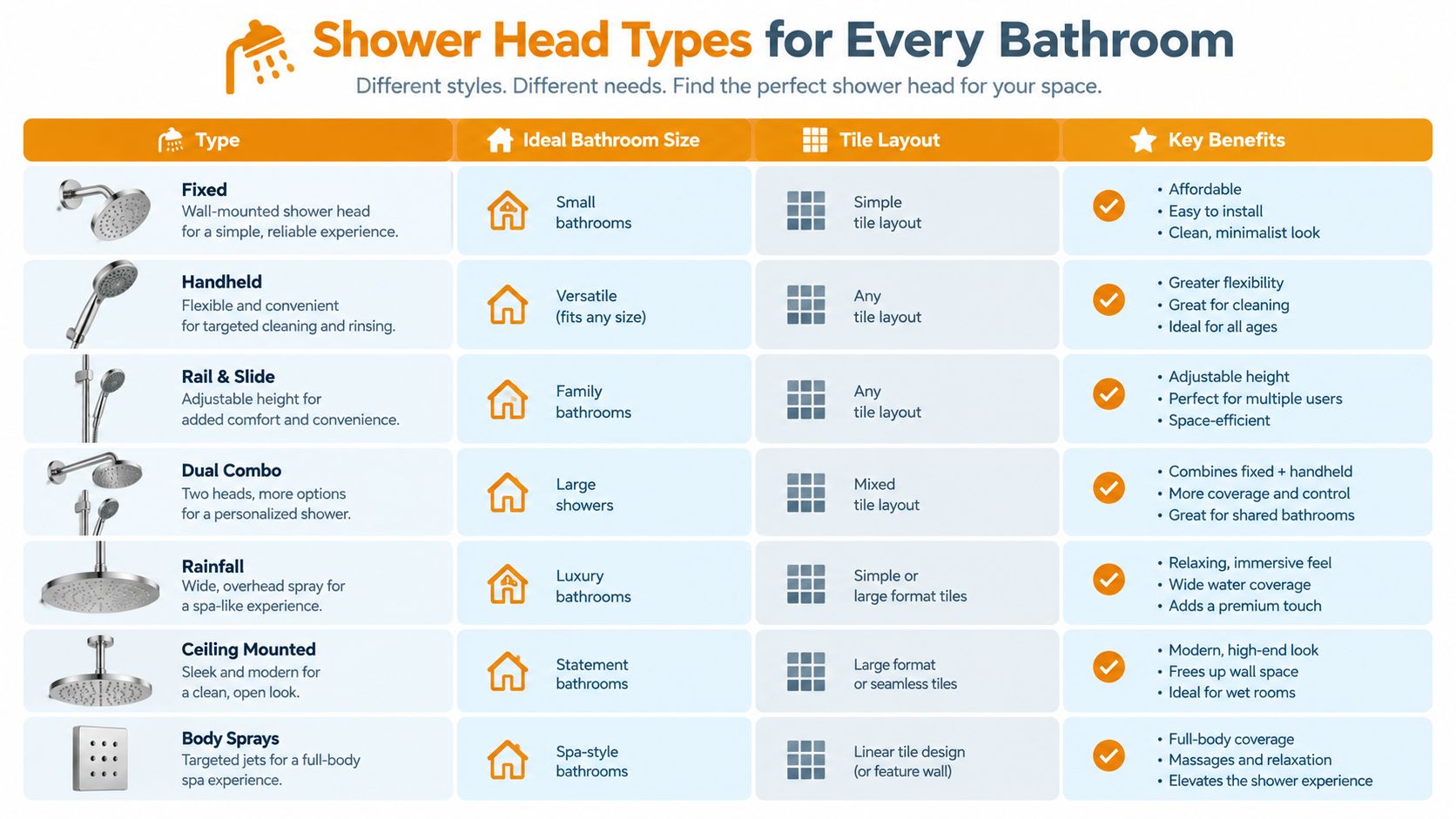
Fixed and handheld options
A fixed shower head is the simplest format. It suits compact bathrooms, straightforward wall tiling and homeowners who want a clean visual line. Because it stays in one position, it's often easier to plan around feature tiles, niches and grout joints.
A handheld shower head adds flexibility. It's useful for rinsing the shower, washing children's hair, cleaning pets or helping someone shower while seated. In design terms, it asks for a little more wall planning because the holder, hose and outlet all need to sit comfortably against the tile layout.
A rail or slide shower works well in family bathrooms because the height adjusts. That sounds like a small convenience until you're sharing one bathroom across different ages and heights. The rail also affects the tile composition on the wall, so it's worth setting out before the tiler starts rather than drilling wherever space appears later.
Dual combinations and rainfall styles
A dual combination shower usually pairs a fixed or overhead head with a handheld. This is a practical choice when one person wants an overhead shower feel and another wants flexibility. It suits larger shower areas better because there are more components on the wall and more visual weight in the design.
A rainfall shower head creates broad coverage and often works best when the shower zone feels open rather than cramped. It can look excellent against large-format wall tiles because the proportions feel calmer and less busy. But it also needs careful positioning. If the spray extends too close to glass, niches or the shower entry, you'll notice the spread straight away.
A rainfall head can make a bathroom look more expensive, but only if the room gives it enough breathing space.
Ceiling-mounted and body spray systems
A ceiling-mounted shower head is usually chosen for a stronger architectural look. The water falls from above rather than pushing forward from the wall, which changes how the user stands and how the floor catches runoff. In a wet-room style space, that can feel natural. In a tight alcove, it can feel less forgiving if the drainage and screen placement aren't right.
A body spray system is the most specialised option in this list. It asks for more planning because the wall outlets, waterproofing details and tile setout all need to coordinate. Linear tile layouts or carefully centred grout joints usually handle body sprays more gracefully than busy patterns.
Matching type to layout
Here's a quick way to see it:
- Small bathroom: Fixed head or compact rail shower.
- Family bathroom: Handheld or rail system, possibly with dual functionality.
- Design-led ensuite: Rainfall or ceiling-mounted option if the room size supports it.
- Accessibility-focused space: Handheld or rail setup with easy reach and adaptable height.
- Feature-tile shower wall: Simpler fixtures usually interfere less with the visual pattern.
- Large-format wall tiles: Overhead styles often look more balanced because the wall has fewer visual interruptions.
The right format should feel like it belongs to the room, not like it was added after the bathroom was already designed.
Understanding Flow Rate Pressure and WELS Ratings
A common Melbourne renovation story goes like this. The shower head looks right in the showroom, the wall tiles are already chosen, and the room is aiming for a clean, hotel-style finish. Then the shower goes in and the water either hits too hard for the narrow shower area, splashes onto glass and grout lines, or feels flat because the home's pressure and the chosen WELS rating were never considered together.
That is why the label matters so much. In Australia, the useful part is usually the plain part. WELS stars and flow rate in litres per minute give you a clearer picture of performance than sales terms like “luxury” or “high pressure”.
What the WELS label actually tells you
Under the WELS scheme, shower heads are rated on a 0 to 6 star scale, and the label shows both the star rating and the tested flow rate in litres per minute, as outlined in the NSW Planning Portal guidance on WELS and standards.
The testing is done under different pressure conditions, so the rating is not based on a single perfect setup. That helps because Victorian homes do not all behave the same way. A renovated townhouse in Brunswick, a new build in Clyde, and an older weatherboard in Ballarat can all deliver water differently at the shower outlet.
Flow rate and pressure are related, but they are not the same
Flow rate is how much water comes out. Pressure is the force pushing it through.
A garden hose is a useful comparison. You can have plenty of water volume with a broad, soft spray, or a firmer spray from a smaller opening. Shower heads work in a similar way. Two models can both be WELS-compliant and still feel very different because the spray nozzles, face size and pattern change how the water lands on your body, your tiles and the floor.
This matters for bathroom design. A concentrated spray in a compact shower can keep water where you want it. A wide rainfall pattern can throw more water onto nearby grout joints, screens and entry zones, especially if the shower area is shallow or the floor falls are modest.
Why 9 L/min matters in a renovation
For new plumbing work in Victoria, shower outlets are limited to 9 L/min, which sets the baseline for many compliant products. That does not mean every legal shower performs the same.
Industry guidance notes that 4-star models can sit between 6.0 and 7.5 L/min while still meeting spray-force and coverage requirements, according to the Housing Industry Association submission on water-efficient fixtures.pdf). In practice, that range is often where renovators find balance. You reduce water use, but you may still get a spray with enough body to feel comfortable in everyday use.
Why these numbers affect tile choices
Shower performance is not only a plumbing decision. It changes how the room handles water.
A broader spray pattern with higher output can leave more water sitting on the floor and lower wall tiles. In a Victorian bathroom with small-format floor tiles and many grout joints, that can mean more cleaning and more moisture lingering in the surface texture. In a bathroom with large-format tiles, fewer grout lines and a properly graded floor, the same spray may be easier to manage.
Slip resistance comes into it too. If a shower head wets a wider area than the layout expected, the practical wet zone becomes larger. That can matter near the shower entry, on polished surfaces, or in an open shower where the screen is short. WELS helps you estimate water volume. Spray shape helps you predict where that water will end up.
What the household savings figures mean
Australian government guidance shows that replacing older high-flow shower heads can cut both water and hot water costs, with savings increasing as flow rate drops, according to Energy.gov.au household water efficiency advice.
Here is a simple way to read the common ratings:
| WELS Rating | Flow Rate L/min | What it often means in practice |
|---|---|---|
| 3 star | 9 | Baseline compliant choice. Often suitable where users want a more familiar, fuller shower feel. |
| 4 star | 6.0 to 7.5 | Middle ground between water saving and comfort. Often easier to pair with compact shower layouts. |
| 5 star | 6 | Lower water use. Can work well when the spray design still gives good coverage at your home's pressure. |
What to check beyond the stars
A star rating is a starting point, not the whole answer.
Check these details before you choose:
- Your home's pressure behaviour: A highly efficient head can still disappoint if the supply is already modest.
- Spray pattern width: Wide sprays can suit larger showers but may wet more grout, glass and floor area.
- Floor tile grip: If more water reaches the bathroom entry or open shower zone, slip rating becomes more important.
- Shower layout depth: A short shower bay has less room to absorb overspray than a deeper recess.
- Tapware pairing: Mixer performance and outlet setup affect the result, so it helps to review related tapware selection considerations.
A good choice feels right on your skin and makes sense on your floor plan. That is the point many renovators miss. The best-performing shower head for your bathroom is the one whose flow, spray style and WELS rating suit the tiles, drainage and layout you are building.
Plumbing Compatibility and Tile Design Integration
Most shower head mistakes don't happen at the store. They happen when the plumber arrives after the tile setout is already fixed, or when the tiler has to drill through finished porcelain without a clear fixture plan.
Start with the plumbing reality
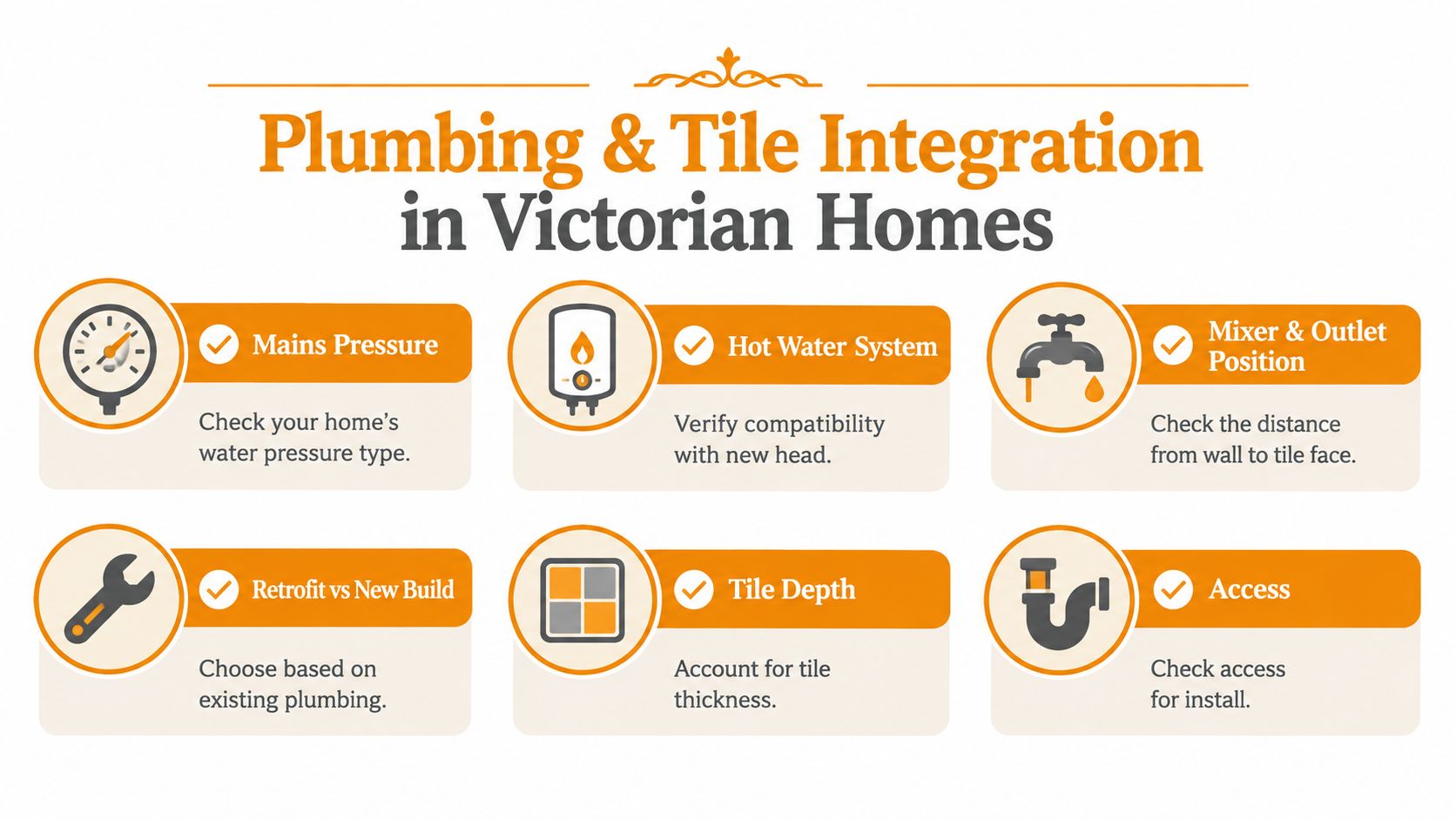
Victorian homes vary widely. Some have straightforward modern plumbing. Others have older pipework, mixed renovations or pressure behaviour that changes across the day. Before choosing a shower head, confirm:
- Mains pressure type: This affects how confidently a shower head will perform in your home.
- Hot water system compatibility: Some setups respond better to certain shower configurations than others.
- Existing outlet location: A replacement on an old stub-out is different from a full renovation where the wall can be reopened.
- Retrofit or new build: Compliance and practical limitations aren't always the same thing.
Australian guidance makes this distinction important. WELS labelling is mandatory and must display both stars and litres per minute, while the Plumbing Code of Australia requires showerheads in new developments to be no more than 9 L/min. Independent Australian guidance also notes that a typical non-efficient showerhead uses roughly 12 to 25 L/min, versus 9 L/min or less for water-saving models, as discussed in CHOICE guidance on showerheads.
Then place the fixture inside the tile design
Bathroom design and performance finally meet.
Large-format wall tiles such as 600x1200 porcelain can create a clean backdrop for fixed or overhead shower heads, but only if the arm, mixer and rail positions are centred properly. If a rail lands awkwardly across a grout line or close to a niche return, the wall can look unresolved even when the products themselves are good.
Textured and slip-rated floor tiles matter too. If your shower head throws water toward the entry, the floor near the opening may stay wetter, so grip becomes more important. Mosaic floors can help with falls because they follow gradients well, but they also introduce more grout lines. That can be useful for slip and drainage, yet it means more joints catching moisture and residue.
With showers, fixture placement should follow the tile setout, and tile setout should respond to the water path.
A checklist before installation
Use this list before waterproofing wraps up:
- Mark the user standing position inside the shower, not just the wall centreline.
- Check niche location against the spray path so bottles aren't constantly soaked.
- Confirm wall build-up depth including adhesive and tile thickness before setting outlet trims.
- Review screen opening direction and where water is likely to rebound.
- Choose finishes carefully if you're mixing matt, honed or textured surfaces in the wet zone.
- Coordinate drilling points early, especially on porcelain and natural stone.
For renovators wanting a visual starting point, bathroom planning often becomes easier when fixtures are considered alongside bathroom tile layout ideas, because tile size and finish directly affect shower placement decisions.
If you're briefing trades, a practical companion is this guide to best plumbing install practices, which helps clarify installation sequencing and site checks before fixtures are locked in.
The hidden cost of a late change
Changing a shower head style late in the project can trigger a chain reaction. A ceiling-mounted option may need structural or service adjustments. A rail shower may shift drilling locations. A larger faceplate may interfere with a feature strip or wall light line. None of that means complex shower heads are a bad idea. It just means they need to be specified early, while the room is still flexible.
Maintenance Cleaning and Troubleshooting Common Issues
A shower head performs better when you maintain it as part of the whole wet area, not as an isolated fitting. The spray nozzles, the finish, the grout nearby and the tile surface all age together.
A simple care routine
Start with gentle cleaning. Mineral build-up can collect around nozzles and change the spray pattern, so regular wiping and occasional descaling help keep water flowing evenly. If your shower head has a softer silicone nozzle face, rubbing those nozzles by hand can often dislodge residue without harsh tools.
Avoid aggressive cleaners, especially if the shower sits near natural stone, speciality grout or textured finishes. A cleaner that strips a fitting can also mark surrounding surfaces or leave residue on matt tiles.
What different symptoms usually mean
If the shower starts spraying unevenly, don't assume the whole unit has failed.
Try reading the signs this way:
- Patchy spray pattern: Often points to mineral build-up at the nozzle face.
- Sudden drop in performance: Could be a blocked restrictor, washer issue or a broader plumbing change.
- Water dribbling after shut-off: Sometimes relates to normal drain-out, but persistent dripping may need a washer or fitting check.
- Poor rinse feel across all settings: Often means the issue is upstream, not the shower head itself.
A shower head can only shape the water it receives. If the supply changes, the spray changes with it.
Protecting tiles while you maintain fittings
Cleaning habits affect tile longevity. Overspray from strong products can settle into grout joints or react poorly with sensitive finishes. That matters around mosaics, natural stone details and darker grout colours, where residue is easier to see.
A sensible routine is better than occasional heavy cleaning. Wipe the face of the shower head, keep the area around the outlet dry when possible, and pay attention when the spray pattern changes. That's usually your first warning that maintenance is due.
How to Choose the Right Shower Head and Final Takeaways
The best shower head for an Australian bathroom isn't the one with the flashiest faceplate. It's the one that suits your plumbing, feels right in daily use, and works with the room you're building.
Match the fixture to the household
A compact ensuite usually benefits from a controlled, tidy setup such as a fixed head or slim rail shower. A family bathroom often gains more from flexibility, especially if different users need different heights or want a handheld option for cleaning. A larger walk-in shower can support an overhead or dual system, but only if the floor falls, screen layout and tile placement were designed around that decision.
If your goal is bill reduction, the WELS label deserves close attention. If your goal is comfort, don't ignore spray shape and pressure behaviour. In practice, most Melbourne renovators need both.
Prioritise in this order
When buyers feel stuck, this sequence usually helps:
- Compliance first: Make sure the product is suitable for the intended installation context.
- Room layout second: The shower zone has to contain and manage the spray well.
- Performance third: Consider how the spray feels in your pressure conditions.
- Finish last: Colour and style matter, but they shouldn't rescue a poor functional choice.
For anyone comparing coordinated fixture options, looking at complete shower set configurations can make it easier to match mixer, rail, outlet and overhead pieces in one plan rather than mixing parts too late.
One practical option during specification is to align tile and fixture decisions together. Tiles Mate Pty Ltd offers bathroom tile samples in a $15 pack of five, a free 15-minute design consultation, and TilesMate Pro pricing support for trade buyers, which can help when you're checking whether a shower head style suits a particular wall tile, grout line and floor finish combination.
A quick visual walkthrough can also help before you lock in your shortlist.
The decision that saves rework
Choose your shower head while the bathroom is still being designed, not after the tiles are ordered and the plumbing points are fixed. That one move reduces a surprising amount of friction. You'll place niches more intelligently, choose safer floor finishes for the way water moves, and avoid drilling regrets later.
A shower head is a small object with a large footprint in bathroom design. Treat it that way, and the whole room tends to work better.
If you're planning a bathroom and want the tiles to work with the shower, not against it, Tiles Mate Pty Ltd can help you compare finishes, sizes and wet-area options before installation starts. Their sample packs, design consultation and trade support make it easier to coordinate shower layout, wall tiles and slip-rated flooring in one clear specification.