


Brushed Nickel Tapware: Choose, Match and Care
by Shivam Tayal 20 Nov 2026 0 Comments
Search for brushed nickel tapware and nearly every product page makes the same two promises. The finish hides water marks, and it lasts for decades. Neither promise belongs to the finish. One depends on how you clean and dry the tap. The other depends on a coating you can't see in a photograph, applied by a process the listing rarely names.
That gap matters in a Melbourne bathroom, where hard water, soap film, steam and a cupboard full of aggressive cleaners do the testing. This guide treats brushed nickel as what it is: a warm grey satin colour with a directional grain. Everything downstream of that, meaning the coating, the body metal, the WELS litres per minute and the WaterMark paperwork, is what you specify and pay for.
The rule to carry through this whole guide: the finish name is a colour and a texture. The durability grade lives in the specification, and most listings hide it.
What Brushed Nickel Tapware Really Is
Brushed nickel tapware is a finish description. It isn't a durability grade, an alloy, a standard or a warranty promise. The satin look comes from directional mechanical polishing, which cuts fine parallel lines into the surface so light scatters instead of reflecting cleanly. That's why a brushed tap reads soft and matte where chrome reads like a mirror.
Underneath the grain, the body is usually brass or stainless steel. A better product then receives a physical vapour deposition (PVD) coating, a hard film deposited over the softer nickel surface. A cheaper product gets an electroplated layer instead. On day one, from a metre away, the two can look identical.
The tone is a warm grey that sits between cool chrome and yellow brass. The grain does disguise fingerprints and light marks better than polished chrome. It doesn't stop mineral deposits or soap residue, particularly at a basin base or a shower fitting where water sits after every use.
Why the low-maintenance promise is only half true
Australian coverage of this finish often treats it as durable and low-maintenance, without explaining how to judge a specific product. The useful correction is that there's no universal lifespan at all. Performance turns on the underlying material, the coating method, the cartridge, the installation, local water conditions, the cleaning routine and the warranty terms, as Tigar Bathrooms' guide to brushed nickel fixtures acknowledges.
That reframes the question you should be asking. It isn't "is brushed nickel easy to clean?" It's "what evidence shows this particular tap will tolerate my bathroom, and what care keeps the warranty valid?"
Ask four questions before you compare prices:
- Coating type: is the finish PVD or electroplated, and does the listing say so in writing?
- Body metal: brass or stainless steel, and what grade?
- Care rules: what does the manufacturer permit on the surface?
- Warranty exclusions: which chemicals and tools void the cover, and for how many years?
A tap that answers all four is a product. A tap that answers none is a colour swatch with a price tag.
How Brushed Nickel Compares with Other Finishes
Eliminate finishes before you style anything. The table below compares five common options on the things that decide whether you still like them in three years: undertone, how marks behave, where they fit and what usually goes wrong.
| Finish | Look | Marks and water | Best fit | Main risk |
|---|---|---|---|---|
| Brushed nickel | Warm grey satin with directional grain | Hides light prints better than chrome; soap and minerals still show | Family bathrooms, laundries, mixed-metal kitchens | Colour name is not a durability grade; undertone varies by brand |
| Polished chrome | Cool bright mirror | Shows fingerprints and water spots quickly | Crisp modern bathrooms and clinical kitchens | Needs frequent drying to stay bright |
| Brushed brass or gold | Warm yellow or champagne satin | Prints less obvious; can tarnish if the coating is poor | Timber, marble-look stone, heritage rooms | Undertones clash across brands |
| Matt black | Flat dark coating | Pale limescale and dust show strongly | High-contrast contemporary rooms | Chips reveal a lighter base |
| Gunmetal | Cool dark grey satin | Similar fingerprint hiding to nickel | Charcoal tile, concrete-look and industrial rooms | Easy to mismatch with nickel under warm lights |
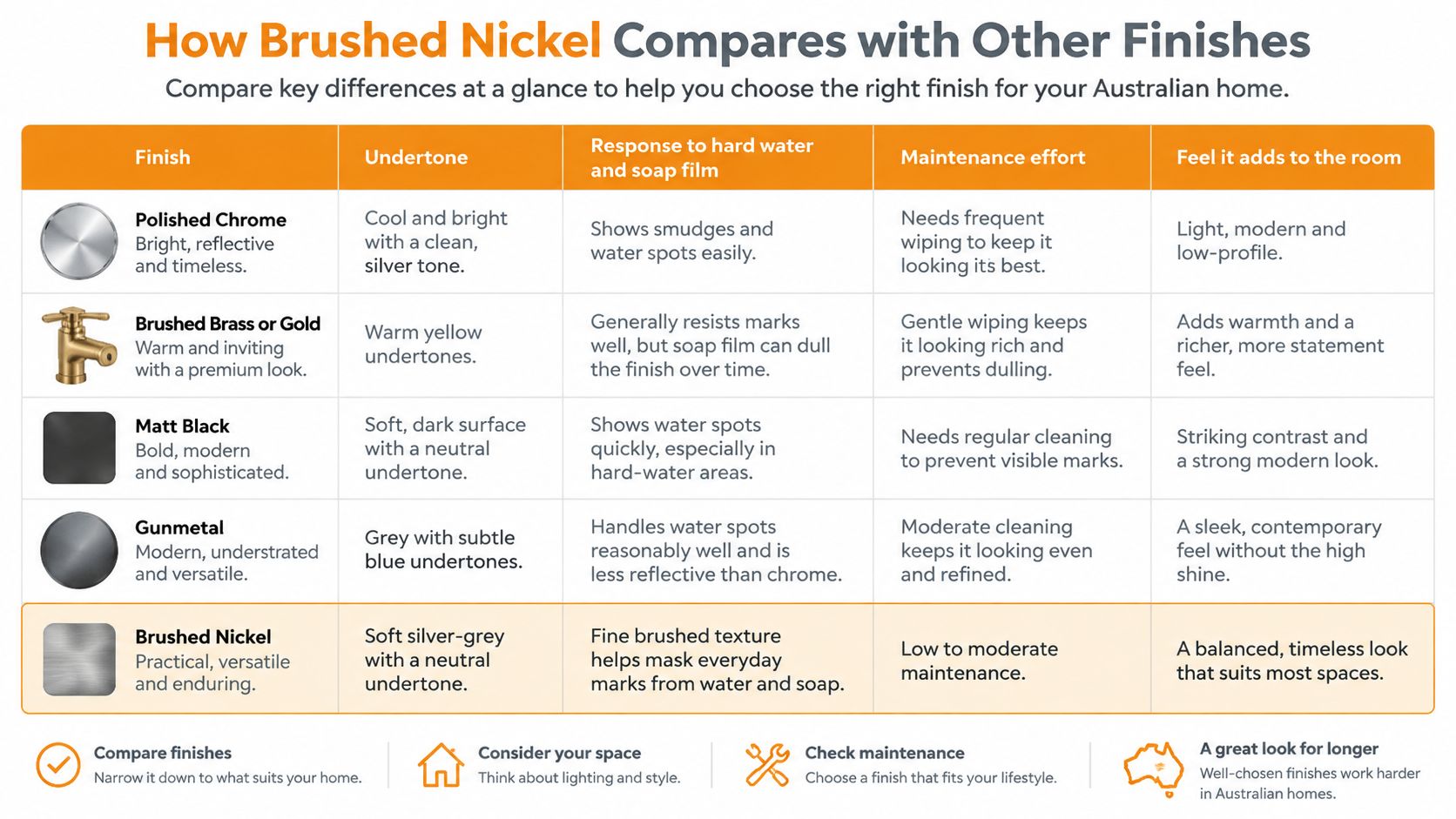
Read that table as a set of trade-offs, not a ranking. Two brushed nickel taps from different makers can differ more than nickel differs from gunmetal.
One verdict per room
Family bathroom: brushed nickel, because the grain absorbs the daily toothpaste and fingerprint traffic that makes chrome look tired by Friday. Pair it with a matt or textured floor tile so water spots aren't competing with a polished surface.
Kitchen with stainless appliances: brushed nickel again, but check the sample against the sink bowl. A warm nickel next to a cool stainless bench reads as a colour clash, even when both are described as grey. If you're weighing darker options at the sink, this guide to black tapware covers how the dark finishes behave in hard-water areas.
A crisp, bright bathroom where the mirror look is the point: chrome. It's the honest choice when the design intent is shine and you're prepared to wipe it.
High-contrast contemporary or industrial room: matt black, or gunmetal if you want the drama without the dust showing as pale speckles.
Heritage or timber-heavy room: brass, but only if every piece is sampled together. If you're still working out which lever, spout and outlet shapes suit the room, the Ring Hot Water tap style guide breaks down the common configurations before you commit to a finish.
What Makes the Finish Last in Australian Homes
Service life runs on two things: the protective surface system and your cleaning regime. The colour name contributes nothing to either. As The Blue Space's brushed nickel range guidance explains, the brushed appearance comes from that directional mechanical polishing, and higher-quality products then receive a PVD coating that shields the softer nickel from tarnishing and wear.
Think of the coating as a barrier between the metal and everything in the room: soap, shampoo, toothpaste, steam and the chemicals you spray at the glass. Abrasive scourers, bleach-based and harsh alkaline cleaners, ammonia and aggressive vinegar descalers all attack that barrier gradually. Once it's compromised, the base metal dulls or stains, and no amount of polishing brings the grain back.
The five-step care routine and why each step earns its place
- Wipe with a soft cloth, warm water and mild pH-neutral detergent. The cloth lifts prints without cutting the grain; the detergent dissolves soap film without attacking the coating.
- Rinse the residue away. Cleaner left to dry in the brush lines concentrates exactly where the barrier is thinnest.
- Dry the tap after use, especially at the spout and base. Drying is the single highest-value habit where hard water leaves spotting, because spots are what tempt people to scrub.
- Ventilate the room and fix a dripping cartridge promptly. Persistent humidity and a constant trickle at the lever keep the surface wet for hours at a time.
- Keep the manufacturer's care sheet on file. Warranty exclusions name banned chemicals, and you'll want the list when someone in the house reaches for a bathroom spray.
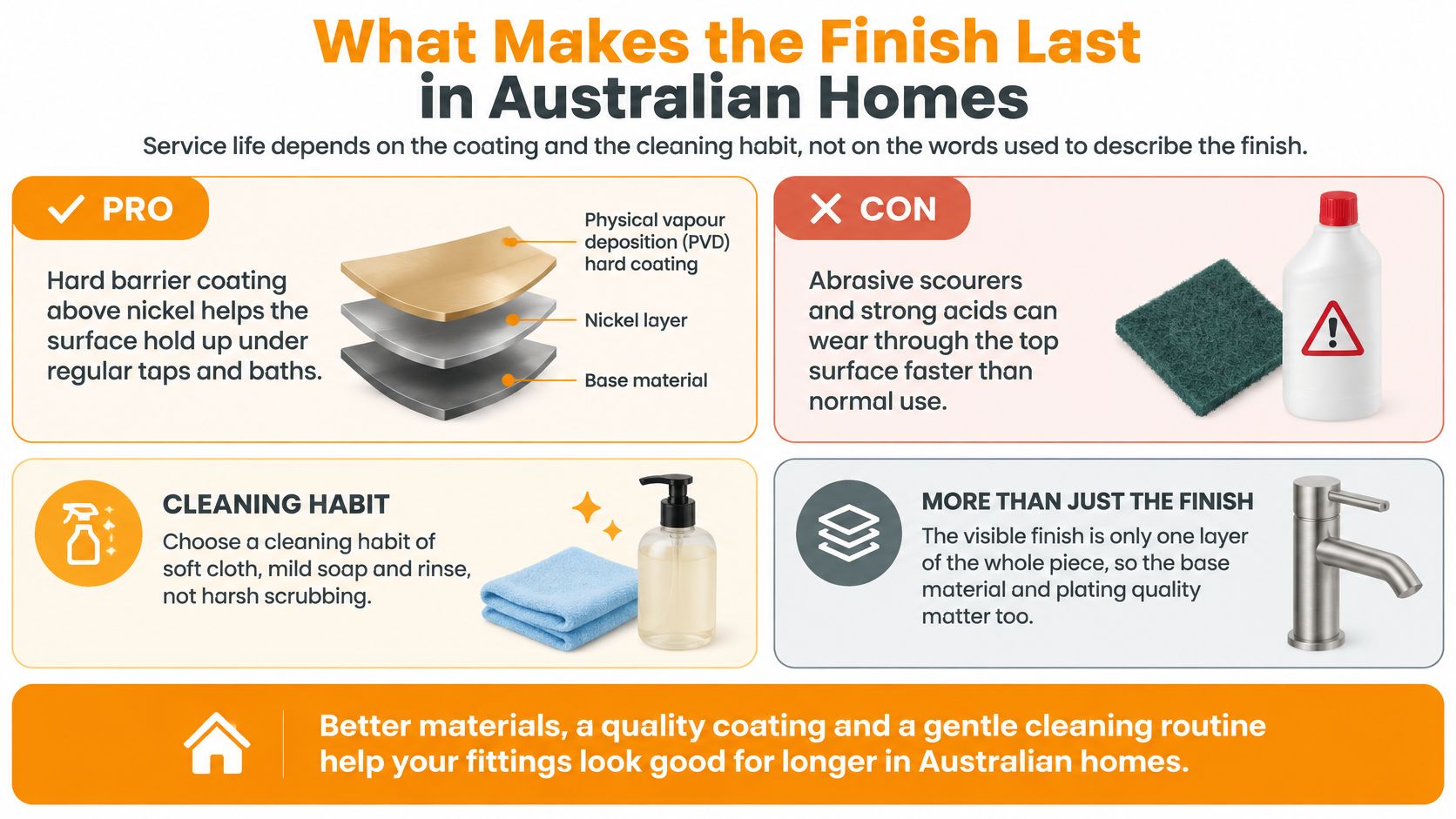
Two households can install identical taps and get completely different results. One dries the spout after brushing and wipes the base weekly. The other leaves soap film sitting in the grain and reaches for a cream cleanser when it looks dull. The finish didn't fail in the second house. The routine did.
| Cleaner or tool | Safe on brushed nickel | Why |
|---|---|---|
| Soft microfibre cloth | Yes, daily | Lifts prints without cutting the brushed grain |
| Warm water with mild pH-neutral detergent | Yes | Removes soap film without attacking the coating |
| Dry cloth after every use | Yes | Stops mineral spotting that tempts scrubbing |
| Abrasive scourer or steel wool | No | Scratches the grain and wears the barrier |
| Bleach, ammonia or harsh alkaline cleaner | No | Degrades the protective coating |
| Strong vinegar-based descaler | No | Acid attacks the finish and the base metal |
| Manufacturer care sheet | Keep on file | Warranty exclusions name the banned chemicals |
Troubleshoot before the finish fails
White mineral spots aren't damage yet. Lay a cloth soaked in warm water and mild pH-neutral detergent over the area for a minute, rinse, then dry. Don't escalate to an acid descaler, because that's the step that turns a spot into a stain.
Grey or dull patches under the spout usually mean the barrier is wearing, and a dripping cartridge or trapped soap is normally the cause. Fix the leak first, then reassess. If base metal shows through a scratch, or the grain has gone chalky, the finish has failed and no polish restores it. Photograph it and read the warranty before touching it, because most exclusions name abrasive pads and bleach.
When you're comparing products, request the coating specification, the body metal, the care instructions and the written exclusions. Don't assume every satin nickel tap shares the same corrosion and abrasion resistance.
Check WELS Stars and WaterMark Before You Buy
Compliance is where a beautiful tap either becomes part of the build or gets returned. Two separate systems apply, and they answer different questions.
| Check | Limit or result | Where it fits | What to confirm |
|---|---|---|---|
| 3-star tap | Up to 9 L/min | Minimum efficiency generally required for taps in new buildings | Stars and the model's declared L/min |
| 5-star or 6-star tap | Up to 50% or more less water than a 3-star basin tap | Basins and ensuites where a softer flow is acceptable | Registered WELS listing for that exact model |
| Kitchen mixer | Flow depends on the model | Rinsing pots and food prep | Don't assume the lowest flow is suitable |
| WaterMark | Conformity with the Australian plumbing standard | Every water-connected tap, spout or mixer | Certificate or licence evidence, separate from the WELS label |
| Outlet on the spec sheet | Basin, kitchen, bath or shower | Match the rating to the fitting, not the finish | Pressure and plumbing layout on the actual site |
What the stars actually measure
The Water Efficiency Labelling and Standards scheme rates taps from accredited laboratory testing across a range of water pressures, as the Australian water rating label explainer sets out. A 3-star tap is permitted at up to 9 litres per minute and is the minimum efficiency level generally required for taps in new Australian buildings. A 5-star or 6-star model can cut basin-tap water consumption by up to 50% or more against a 3-star equivalent.
Those numbers mean nothing until you know what normal looks like. A market analysis of Australia's plumbing fixtures sector reports average tap flow moving from about 7 to 9 litres per minute a decade ago to roughly 4.5 to 6 litres per minute now, under WELS requirements and consumer demand for lower water use. So an older tap in your current bathroom is not a benchmark. The declared figure on the model's own listing is the number to compare.
Why WaterMark is a separate question
WELS doesn't replace plumbing approval. Water-connected products also need appropriate WaterMark certification, which assesses conformity with the relevant Australian plumbing standard. A tap can carry a proud efficiency rating and still lack the certification your project needs.
Lower flow isn't automatically better, either. A kitchen mixer has to rinse a roasting dish, and a low-flow basin mixer can feel weak on a site with poor supply pressure. Match the rating to the outlet and the site, not to a preference for saving water in the abstract.
Write four lines onto the order
Record the WELS stars, the declared litres per minute, the WaterMark status and the intended outlet for every fitting on the job. It takes a minute and it prevents the expensive version of this problem: a brushed nickel tap that looks right, arrives, and can't legally or practically go in. Our tapware collection is organised so you can compare those specifications across mixers, spouts and sets before you buy.
Matching Tapware with Tiles and Room Styles
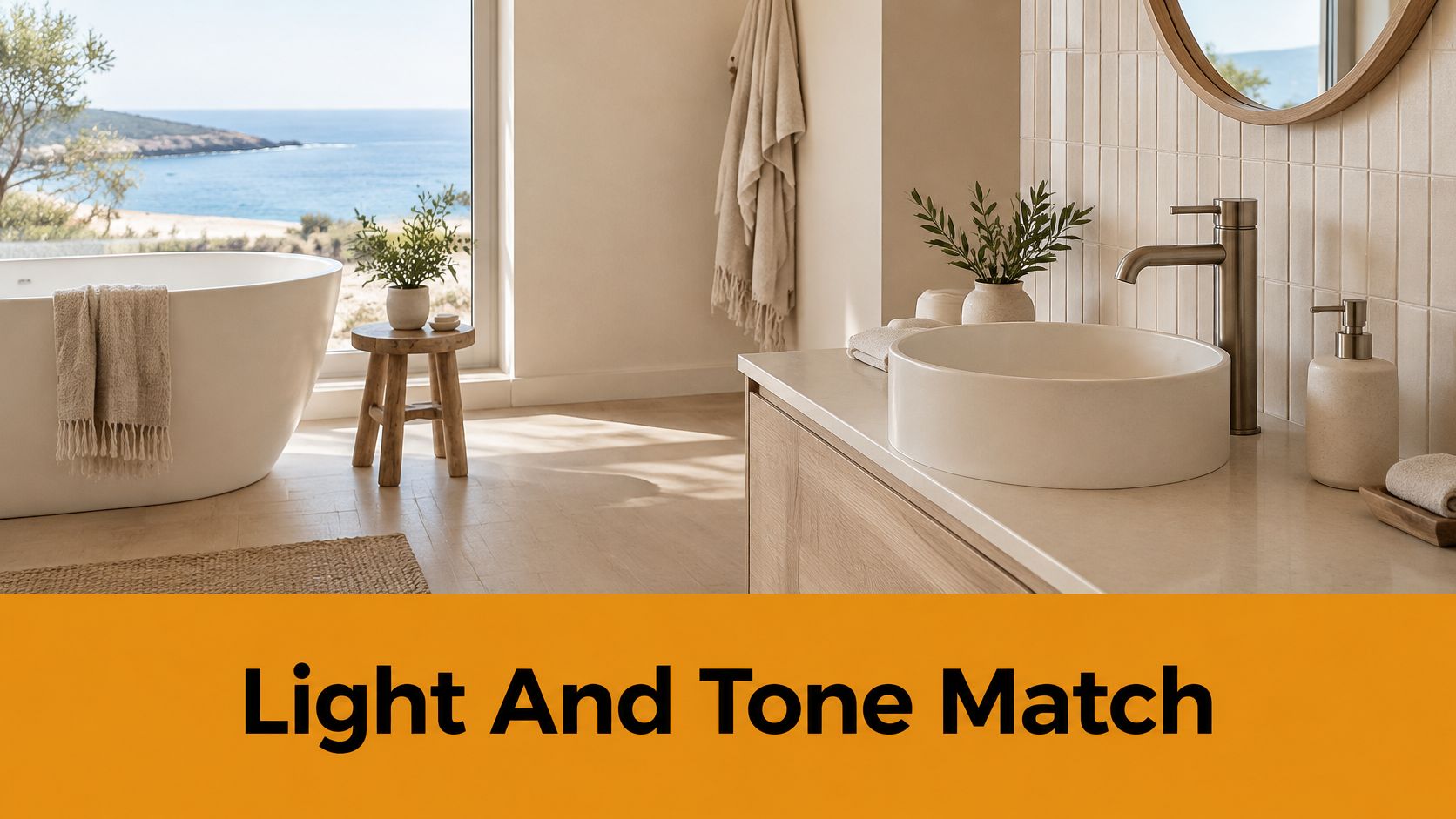
Matching is a lighting and material problem, not a trend problem. Take four rooms and the decision changes each time.
A light-filled coastal bathroom. Sandy or warm-white matt porcelain, a soft stone or solid-surface basin, brushed nickel on the mixer and shower trim. Keep gloss tile to a small accent, because a high-gloss wall mirrors the grain and makes the tap look patchy where the brushing catches the window.
An inner-suburban ensuite with large-format concrete-look tile. Nickel stays readable against charcoal where matt black disappears into the wall. If the tile is already dark grey, gunmetal is the closer twin, and nickel beside it will read warm by comparison.
A kitchen. Set the tap sample beside the sink and the appliances before ordering. A warm nickel can clash with a cool stainless bowl even when both are called grey, and a granite or farmhouse sink needs the same check. This is also where darker or metallic finishes get decided, and a bathroom accessories set approach helps you carry one finish across rails, hooks and holders so the room doesn't drift.
A heritage or timber-heavy bathroom. Nickel is the quieter partner to honed stone and timber. Brass only works here if the existing lights are already warm gold.
Australian light shifts the colour
A south-facing Melbourne room pushes nickel greyer than the showroom sample. North light or warm LEDs push it toward champagne. Neither is wrong, but you can't judge it from a website swatch, and you can't judge it at 2pm if you mostly use the room at 7am.
Matt and textured floor tiles hide water and suit wet rooms better than a polished floor, which is a practical reason the pairing works as well as a visual one.
View tap, tile and basin samples together in the actual room, morning and evening, before you lock the palette.
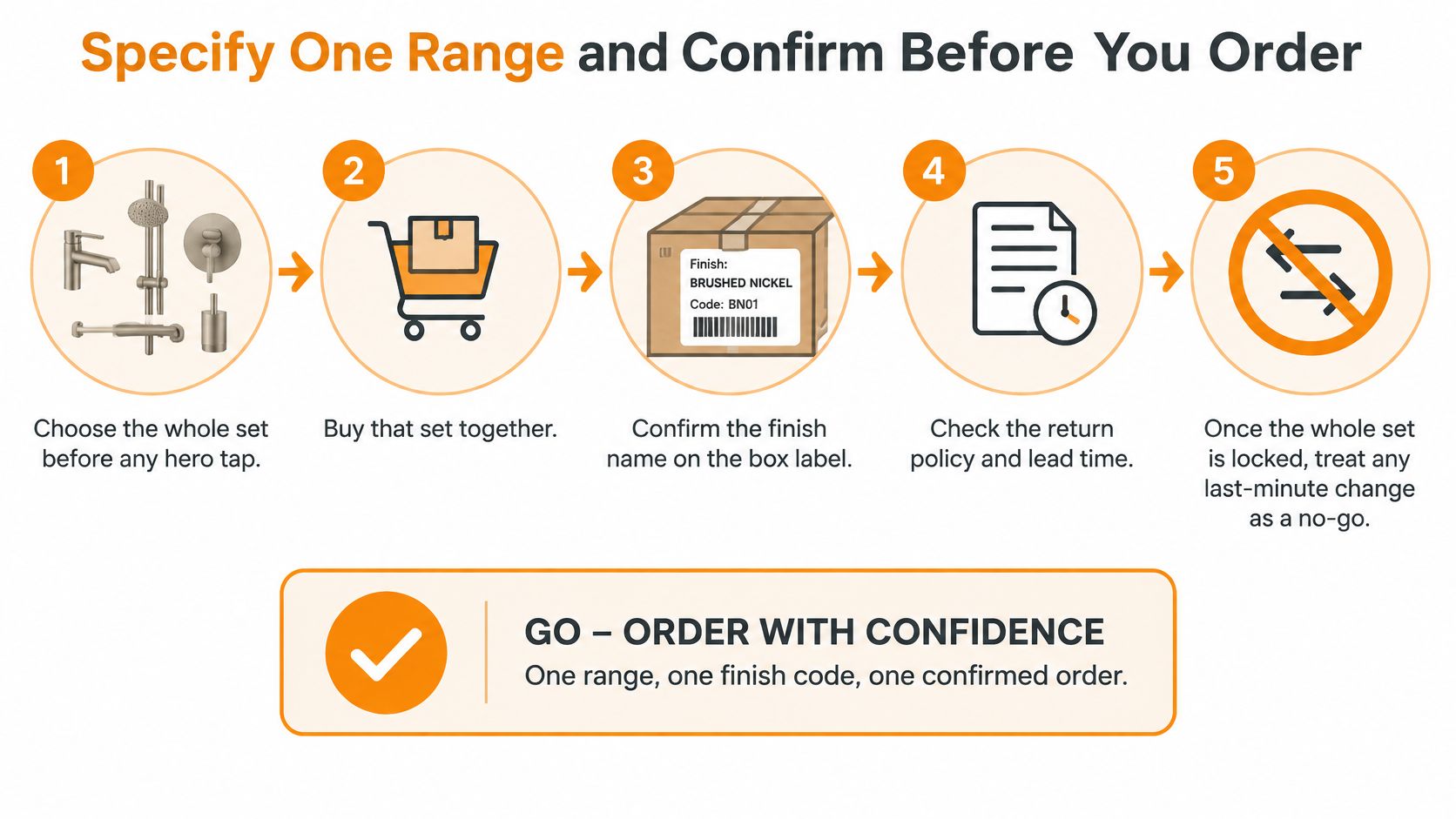
Specify One Range and Confirm Before You Order
Work through the sequence once, in order, and the go/no-go at the end becomes obvious.
1. Choose the whole set before the hero tap. That means the basin mixer, the spout, the shower trim, the bath outlet, the rail and the accessories. Deciding the mixer first and hunting for a matching spout later is how bathrooms end up with two tones of grey.
2. Buy the set from one range. Two products both labelled brushed nickel can differ in undertone, sheen and even brush direction. A coordinated bathroom assembled across brands is where this shows up, and it's also where lead-content requirements are changing how specifiers work, as Austpek's tapware trends write-up notes.
3. Compare physical samples under the room's own lights. Morning and evening, not a screen. Ask whether the finish is PVD or electroplated and whether the body is brass or stainless steel at the same time.
4. Treat price as a prompt, not proof. A specialist retailer listed its highest-priced brushed nickel piece at AUD 882 in 2026, per Tigar Bathrooms' brushed nickel collection. A high number should trigger a question about coating and warranty, and a low number should trigger the same question. Neither answers it.
5. File the paperwork with the order. The WELS listing, the declared litres per minute, the WaterMark evidence and the warranty exclusions all belong in the same folder as the invoice.
6. Ask the lead-free question in writing. Australia is moving toward lead-free tapware requirements for new installations from 1 May 2026. Confirm whether the exact model complies, which certification or WaterMark evidence supports that, and whether the rule reaches replacement work as well as new construction. Get the answer on paper before you order multiple fittings.
The site checks that protect the finish
Confirm supply pressure before the tap is boxed, and fit isolation valves so a future cartridge swap doesn't shut down the house. Set the mixer handle so it clears the basin edge rather than spraying the splashback. Leave the cartridge reachable through the vanity or a service point. Keep tile clean-off and acid wash well away from the new finish, because the cleaner that makes grout haze disappear will happily attack a coating.
Accept the set only when four things line up: the samples match the tile in the real room, the coating and body metal are named in writing, the stars and litres suit that outlet, and WaterMark plus any lead-free documentation is on file.
Anything short of that is a reason to pause the order rather than hope. When you're ready to compare, we list 16 products in our taps collection and post five samples for $15 so you can check a finish against your tile in your own lighting, and you can call us on 1300 680 580 to talk through a set.
Tiles Mate Pty Ltd is a Melbourne tile and flooring retailer based in Truganina, and we stock tapware, showers, basins and bathroom accessories alongside the tiles that have to match them. If you're specifying brushed nickel for a bathroom, kitchen or laundry, start with our five samples for $15 so the finish, tile and basin can be judged together in your own light before anything is ordered. Visit Tiles Mate Pty Ltd to browse the range or book a free 15-minute design consultation.