




Black Tapware Guide Melbourne 2026: Styles, Care & Selection
by Shivam Tayal 24 Sep 2026 0 Comments
You're standing in a Melbourne showroom with a tile sample in one hand and a black mixer in the other, trying to decide whether the finish will still look considered after years of showers, cooking and hard-water marks. The colour is easy to like. The difficult question is what sits underneath it.
Black tapware can be an excellent choice for Australian homes, but colour alone tells you very little about service life. The coating system, tap body material, compliance, water conditions and cleaning routine all matter. A cheaper painted fitting may look identical to a well-made PVD mixer on installation day, yet behave very differently once the surface faces abrasion, mineral deposits and coastal humidity.
Why Black Tapware Dominates Melbourne Renovations
A typical Melbourne renovation starts with a practical brief: replace tired chrome, brighten the room, and add enough contrast to stop pale tiles and cabinetry looking flat. Black tapware often becomes the detail that pulls the scheme together. It gives a basin, kitchen island or shower wall a clear visual edge without requiring a strong wall colour or elaborate pattern.
The finish works across contemporary, industrial, coastal and pared-back interiors. Against white porcelain or pale stone, it creates definition. With timber, warm terrazzo or soft grey tile, it gives the room structure while allowing the materials around it to remain the focus.
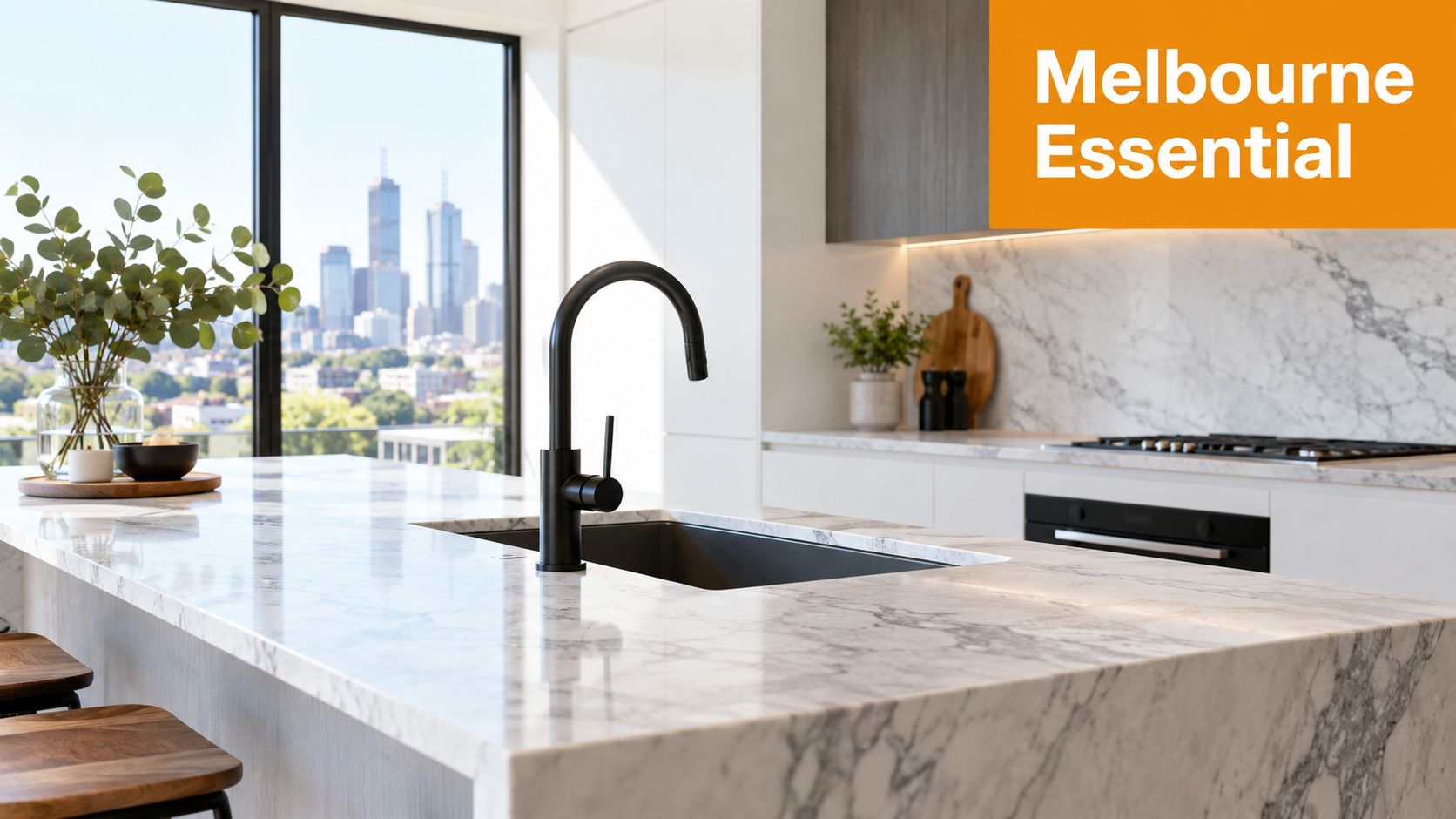
This popularity isn't just a showroom impression. An Australian bathroom tapware guide states that matte black was the single most-specified tapware finish in Australian bathrooms in 2026 (Australian matte black tapware guide). That makes it a mainstream specification, not an unusual choice reserved for designer projects.
A finish with staying power
Australian discussions have treated black tapware as “IN” and “still fashionable” across several years, while later trend commentary continued to place matte black among the finishes dominating the market (Australian discussion of black tapware). In practical terms, that continued relevance supports using black where you like the look, rather than assuming you'll need to replace it when the next palette arrives.
The caution is simple. A durable design category doesn't guarantee a durable product. Treat the style decision and the specification decision as separate jobs. Choose black because it suits the room, then inspect how the fitting is made before you commit.
Comparing Matte, Satin, and PVD Black Finishes
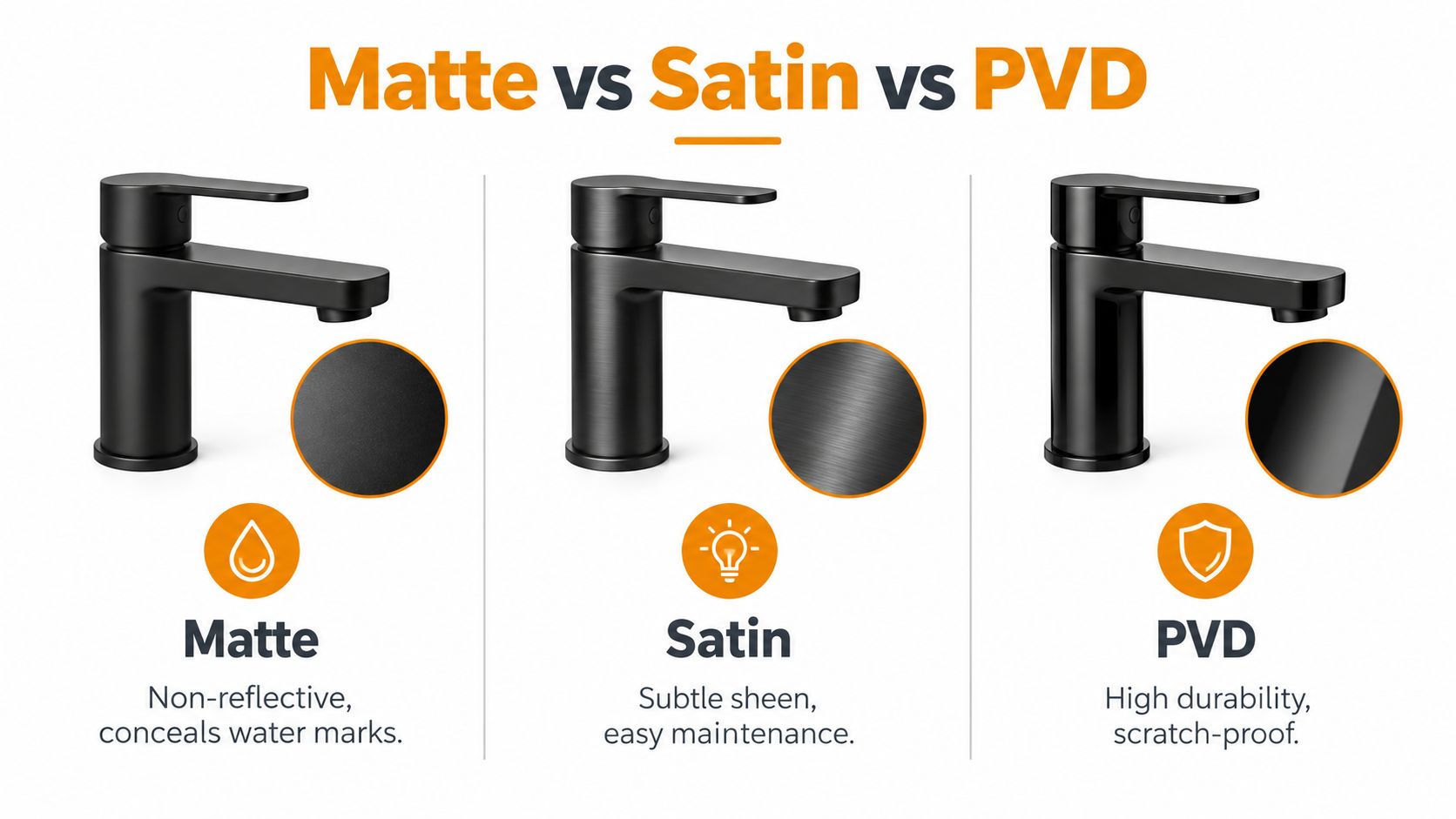
These labels describe different things, so don't assume they're interchangeable. Matte mainly describes the visual reflectivity, satin describes a softer sheen, and PVD describes a coating process. A tap can have a matte appearance and use PVD technology, which is why product listings need careful reading.
Matte black has a low-reflective, velvety appearance. It absorbs more light than polished metal and gives strong silhouettes around a basin or sink. That subdued surface can be forgiving of fingerprints and small marks, although mineral deposits can still become visible if water dries repeatedly on the fitting.
Satin black sits between matte and gloss. Its slight sheen catches light across curved spouts and handles, creating more surface definition without the sharp reflection of polished chrome. In a busy kitchen, that balance can feel less stark, particularly beside brushed stainless appliances or warm cabinetry.
PVD, or Physical Vapour Deposition, is different again. It refers to how the decorative layer is applied rather than guaranteeing one particular appearance. A PVD tap may be matte, satin or another dark metallic finish, depending on the manufacturer and product range.
Choose by room and touch points
| Finish | Visual character | Practical consideration |
|---|---|---|
| Matte black | Soft, quiet and non-reflective | Suits high-contrast tile schemes, but still needs mineral deposits removed carefully |
| Satin black | Gently reflective and warmer in changing light | Helps curved fittings show their form without a glossy appearance |
| PVD black | Available in different visual sheens | The coating process is generally the stronger durability choice, but check the actual product specification |
The finish you see in a sample may change under warm downlights, daylight or a darker tile backdrop. Ask to see the fitting in person if possible, and compare the handle, spout and base rather than judging a single flat swatch.
A useful visual reference for how surface sheen changes the reading of a fixture is this black tapware finish comparison video. The key buying point remains straightforward: matte and satin describe appearance, while PVD can describe construction quality.
Durability Factors Coating Systems and Body Materials
The hidden trade-off in black tapware is the relationship between the surface coating and the metal body. Two fittings can share the same colour and shape while offering very different resistance to daily wear.
Budget black tapware is often powder-coated or painted. If the surface chips, the base metal becomes visible and the damage can stand out sharply against the surrounding black. A kitchen mixer faces particular stress around the handle and spout, while a bathroom fitting may be affected by cleaning chemicals, rings, tools and repeated contact.
Australian industry guidance describes PVD as the most durable decorative option because it better resists abrasion, fading and corrosion, including in humid or coastal environments (Australian bathroom fixture durability guidance). That doesn't make every PVD product indestructible, but it does explain why the initial specification matters more than the colour name.
Practical rule: If a supplier won't identify the coating system, don't assume the finish has the performance of PVD.
The body matters underneath
The metal beneath the coating affects how the fitting handles moisture and corrosion. Solid brass or lead-free brass bodies are generally preferred for demanding Australian settings, while zinc-alloy bodies deserve closer scrutiny, particularly near the coast or in rooms with persistent humidity.
Look beyond the visible finish and ask for:
- Body material: Confirm whether the construction uses brass, lead-free brass or zinc alloy.
- Coating description: Look for a clear statement about PVD, powder coating or another named system.
- Warranty terms: Compare coverage for the finish rather than reading only the headline warranty period.
- Installation environment: A coastal bathroom and an inland powder room don't place identical demands on the fitting.
Warranty positioning can reveal how a supplier views the finish. Some Australian suppliers offer shorter coverage for powder-coated products than for PVD, reflecting the practical gap between the systems. For broader planning around how tapware fits with the rest of the room, the tapware selection guide is a useful companion reference.
Paying less upfront can make sense for a low-use powder room where replacement access is easy. For a family bathroom or main kitchen, I'd put the budget towards a better body and coating before spending more on decorative extras.
Maintaining Black Tapware in Australian Conditions
Black tapware isn't maintenance-free. It is low fuss when the owner removes residue before it dries, but neglect and aggressive cleaning can shorten the life of the finish.
Water spotting deserves attention in its own right. Mineral deposits and limescale can build on matte surfaces, dulling the appearance and creating a rough film that needs periodic descaling. The severity varies with local water conditions, so a Melbourne homeowner shouldn't assume that advice based on another city will match their experience. Existing Australian guidance identifies this as an under-answered issue and recommends regular wiping, drying and careful descaling (black tapware maintenance guidance).
A safer cleaning routine
- Wipe after use. Use a soft microfibre cloth to remove droplets from the spout, handles and base. This is especially useful where water sits around the mixer collar.
- Use mild soap sparingly. Diluted mild soapy water is usually a safer starting point than a strong bathroom chemical. Apply it to the cloth, not by leaving a solution sitting on the fitting.
- Rinse residue away. Soap film can attract dust and make a dark surface look uneven. A clean damp cloth helps remove it before the final dry wipe.
- Treat scale cautiously. If mineral deposits remain, follow the manufacturer's care instructions and test any approved descaling approach on an inconspicuous area first.
- Avoid abrasive products. Scouring pads, powders, harsh bleach products and high-pH cleaners can accelerate finish failure. Australian tapware guidance also warns that unsuitable chemicals may void warranty claims (Australian tapware material and care guidance).
Don't use the same aggressive cleaner you reserve for grout on a decorative tap finish.
Inspect the aerator and joins during routine cleaning. If the coating is already lifting or the body is discolouring, stop experimenting with chemicals and contact the supplier, keeping purchase and warranty records available.
Styling Black Tapware with Melbourne Tile Trends
Black tapware looks most deliberate when it belongs to a wider material conversation. In Melbourne bathrooms, a pale marble-look porcelain can give the fittings a crisp architectural outline, while a honed or textured tile softens the contrast and prevents the room feeling overly sharp.
Calacatta marble-look porcelain works well when you want white space with visible veining. Statuario-inspired surfaces create a cooler, more graphic backdrop, so timber cabinetry or warmer lighting can stop the black fittings from feeling severe. Natural stone mosaics bring variation and texture, which suits a matte finish but requires restraint elsewhere in the room.
Build contrast with control
A strong black-and-white scheme can look excellent, but grout colour and tile texture change the result substantially. If you're considering dark grout with light tile, this guide to a high contrast tile bathroom helps clarify how the pattern can become a major visual feature rather than a quiet background.
For a more relaxed Melbourne look, pair black tapware with warm white tile, pale oak, sandy stone or muted grey. A black-framed mirror can repeat the tapware without turning every accessory black. Keep the repetition intentional, using a few dark details rather than matching every visible object.
Subway tile can work particularly well when the layout adds rhythm behind a simple basin mixer. Review options and installation considerations in this guide to black subway tile, especially if you're deciding whether the dark tile should be the feature or the tapware should hold that role.
Samples matter because black can read blue, brown or charcoal beside different tiles. Place the actual tapware sample, tile, grout and vanity finish together under both daylight and artificial light before ordering.
Installation and Purchasing Advice for Australian Homes
Start with compliance, not colour. For an Australian renovation, specify tapware that is WaterMark and AS/NZS 3718 compliant, then confirm the certification with the supplier or product documentation. This supports suitability for Australian plumbing standards and helps prevent an attractive fitting becoming a compliance problem during installation.
The body and coating should match the site. A coastal property, humid bathroom or frequently used kitchen deserves more attention to brass construction and finish quality than a lightly used internal powder room. Ask the retailer to state the material, finish system, care instructions and warranty conditions in writing.
Plan the purchase around the room
Before the plumber arrives, check the following:
- Set-out and compatibility: Confirm the mixer type, hole size, spout reach and required in-wall components.
- Matching pieces: Check that the basin mixer, shower controls, bath filler and accessories come from compatible finish ranges.
- Samples: Compare the tapware against the chosen tile, grout, vanity and mirror frame.
- Access: Make sure service valves and connections remain reachable after cabinetry and wall finishes are installed.
- Trade requirements: If you're a builder, tiler or designer, ask whether a trade account or project pricing is available.
Order samples before committing to a large tile purchase, particularly where a dark fitting will sit beside a veined stone-look surface. Tiles Mate Pty Ltd offers tile and flooring selections through its Melbourne operation, with sample packs, design consultations and TilesMate Pro access for trade buyers.
A practical bathroom renovation plan should also allocate time for waterproofing, rough-in checks, tile delivery and final fixture installation. The bathroom renovation planning guide can help organise those decisions before walls are closed and expensive finishes are fixed in place.
Is Gunmetal the New Black for 2026?
Black hasn't disappeared, but it no longer owns the dark-metal conversation. Australian trend commentary for 2026 describes gunmetal as “the new black”, with one view saying matte black remains strong and another suggesting gunmetal has taken the crown (Australian tapware trends for 2026).
That disagreement is useful. It shows that gunmetal is better treated as an alternative specification than a universal replacement. Its softer, warmer depth can sit comfortably with beige porcelain, oak, brushed brass lighting and natural stone. It may also be more forgiving where a pure black fitting would create too much contrast against an already busy tile pattern.
When black still makes sense
Choose matte or satin black when you want a clear outline, a strong graphic accent or continuity with black window frames, shower screens and mirrors. It suits a restrained palette where the tapware provides the main point of definition.
Choose gunmetal when the scheme needs less visual hardness, or when existing hardware already leans towards warm grey and aged metal. Either way, check the coating system and body material. A fashionable colour with a weak finish is still a poor long-term purchase.
The safest approach is to choose the metal that supports the whole room, not the finish currently receiving the most attention in a trend article.
Your Black Tapware Decision Checklist
Use this checklist before placing the order:
- Confirm compliance: Verify WaterMark and AS/NZS 3718 documentation for the exact model, not just the brand range.
- Identify the coating: Ask whether the black surface is PVD, powder-coated or painted. Don't accept “premium finish” as a technical specification.
- Check the body: Prefer solid brass or lead-free brass where humidity, heavy use or coastal air increases corrosion risk.
- Read finish warranty terms: Look for coverage that specifically addresses peeling, fading, corrosion and coating failure.
- Test the visual match: Put the tapware beside your tile, grout, vanity, mirror and lighting samples.
- Plan care: Make sure everyone using the room knows to wipe away water and avoid abrasive or high-pH cleaners.
- Consider the alternative: Compare black with gunmetal if the scheme includes warm stone, timber or brass.
- Coordinate installation: Confirm set-out, compatible components and access before the wall or cabinetry is closed.
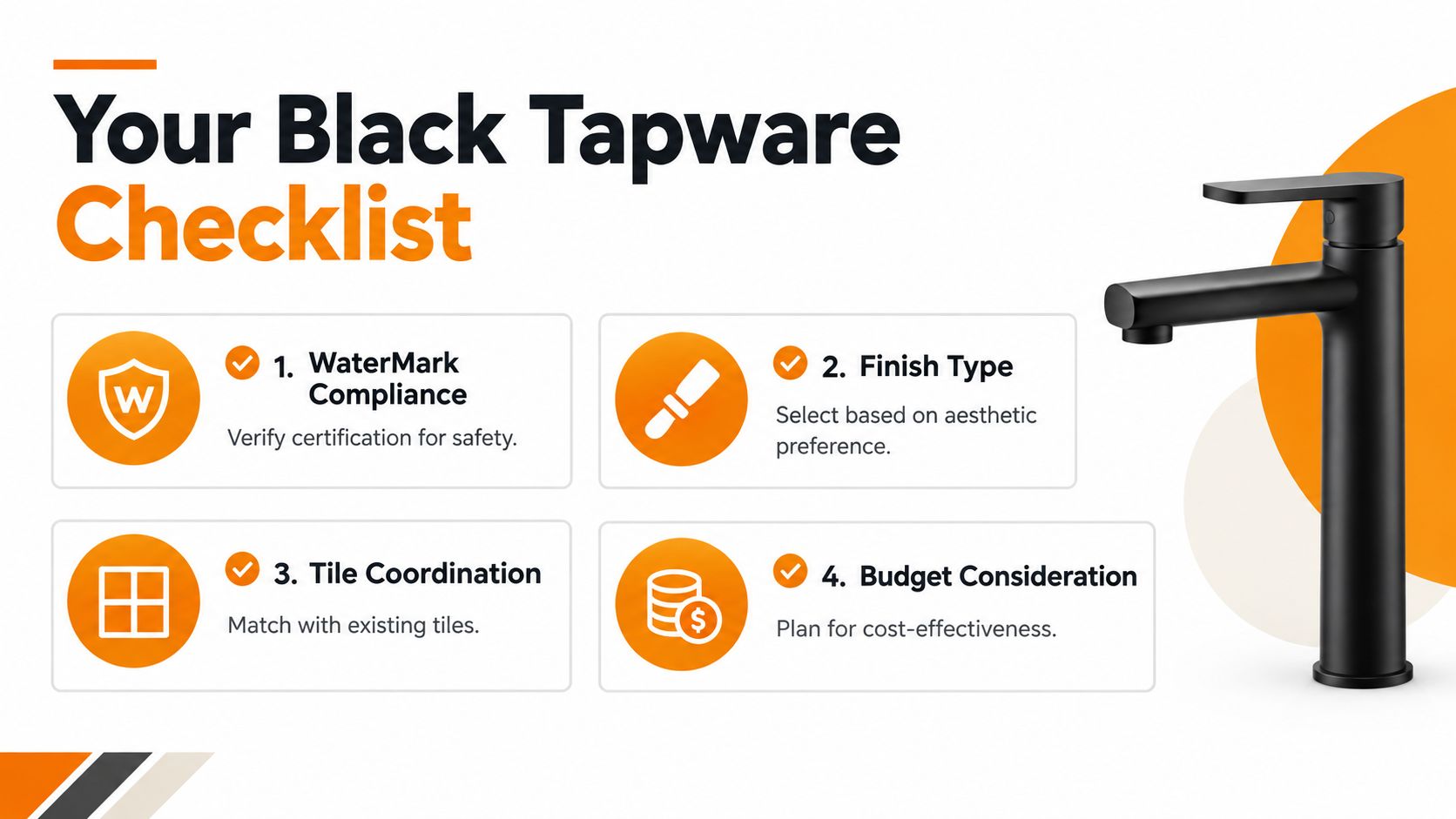
The central decision is simple: buy the construction, not just the colour. A well-specified black fitting can anchor a Melbourne renovation for years, while an unidentified coating on a weak body can turn a stylish upgrade into an early replacement.
For tile pairings that suit black tapware, Tiles Mate Pty Ltd offers marble-look porcelain, natural stone mosaics, textured finishes and sample packs from its Melbourne operation. Visit the range before you order, compare samples against your tapware, and use the available design consultation or trade support to finalise a scheme that works in your home.