




Pull Out Kitchen Mixer Buying Guide for Melbourne Renovators
by Shivam Tayal 09 Aug 2026 0 Comments
You've probably got the bench picked, the splashback sorted, and the tap finish sitting in a cart because it looks right with the handles. Then install day turns up the ugly part. The mixer lands under the sink, the hose hangs into the bin drawer, the retraction feels stiff, and the plumber asks where the tempering valve is supposed to go. That's the point where a pull out kitchen mixer stops being a showroom choice and becomes a cabinet, pressure, and plumbing decision.
If you're renovating in Melbourne, start with the space under the sink, then work back to the tap body. That's the right order. A mixer that photographs well can still be wrong for a standard cabinet, a low-clearance filter, or an older pressure setup, and once the stone is cut, there's no elegant way to pretend it fits.
The Reno Day Surprise Most Buyers Don't Plan For
A Melbourne renovator often buys the tap last, which is usually the wrong move. The stone goes in, the sink is cut, and the tap is still sitting in a box on the laundry bench. On paper, the spray head reaches everything. Inside the cabinet, the hose runs into the bin runner, the return weight lands on the drain line, and the head sits a bit proud because the dock and hose path are fighting each other.
That is why this choice should be judged from the inside out. Start with the cabinet and the sink, then work back to the tap body and the hose path. If you have not checked the space under the bowl and around the waste, the nicest finish in the showroom will not save the install. A good starting point is to look at the sink layout first, including how it sits with the cabinet and tap hole, and then match the mixer to that setup. The Kitchen sinks guide is a useful place to sanity-check the basin side of the job before you commit.
Pull-out tapware gets sold as a convenience upgrade, but the question is whether your cabinet gives it room to move without clashing with the plumbing. In Melbourne, that matters more than the brochure photo. Older houses, tight sink cabinets, filters, and awkward waste layouts all change the game. If the hose has nowhere clean to travel, the finish you picked on the showroom floor will not matter once the plumber starts fitting it.
The old story of mixers is useful because it shows how kitchen hardware kept getting smaller and more practical as domestic use became the goal. The mixer's development from commercial to domestic use does not relate to kitchen tapware history, so leave that aside and focus on the actual tap choice. What matters now is simple. A mixer that looks right still has to suit the cabinet, the pressure, and the sink it sits over.
Practical rule: If you have not measured the cabinet, you have not chosen the tap yet.
What a Pull Out Kitchen Mixer Actually Is
A pull-out kitchen mixer is a single-lever tap with a spray head that lifts out of the spout on a hose, then returns to a dock when you're done. It's the difference between a fixed shower head and a handheld on a hose. One stays put, the other gives you reach where you need it.
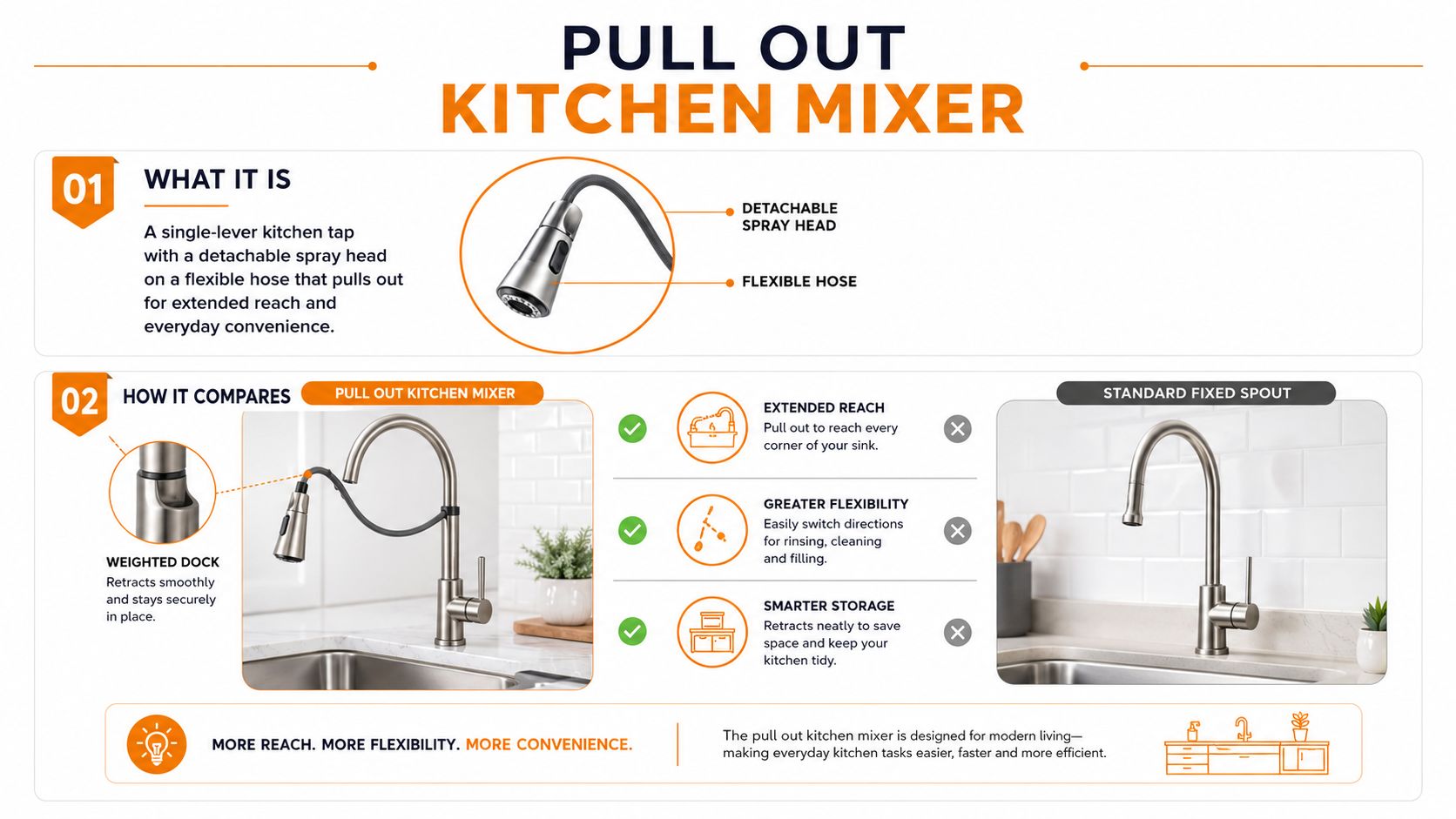
Pull-out versus pull-down versus fixed
A pull-down mixer usually has more height and a spray head that drops from above. That's handy over deeper sinks, but it can be awkward under a shelf or window. A pull-out mixer gives you more horizontal reach and usually sits a bit tidier in a tighter opening.
A fixed mixer is the plain choice. Fewer moving parts, less to go wrong, less hose stress, but also less reach when you're rinsing the sink or washing awkward cookware. That's the trade. If you want the simplest plumbing and the least moving hardware, fixed wins. If you want flexibility for daily cleaning, pull-out is the smarter pick. If your under-cabinet clearance is tight, pull-down can still make sense, provided the head has room to move.
For a broader look at kitchen tap styles, the Ring Hot Water tap guide is useful because it shows how a mixer can be part of a larger sink setup, not just a single isolated fitting.
Bottom line: pull-out is the practical compromise between reach and height, and that's why it suits a lot of Melbourne renovation jobs.
Specs Worth Checking Before the Finish
Don't start with colour. Start with the mechanics. A good-looking mixer that stutters at the hose, sprays badly, or sits wrong in the bench hole is just expensive clutter.
The six specs that matter
- Spray modes: Stream and spray are the basics. A pause setting is worth having because it stops the flow while you move from sink to bench, which is useful when you're rinsing produce or shifting a heavy pan.
- Hose reach: Ignore vague marketing language. You need enough real reach for your sink shape, and in a compact cabinet a hose that behaves badly is worse than one that's shorter but cleanly routed.
- Flow and pressure behaviour: The product has to suit your supply, not the other way around. A pull-out head feels weak if the pressure is poor, and a good spray pattern falls apart fast if the system is mismatched.
- Cartridge type: Ceramic cartridges are the sensible choice for most renovations. Cheaper internal parts are more likely to wear earlier and give you drips or stiff operation later.
- Finish: Chrome is common, but it shows hard-water marks quickly. Brushed and PVD-style finishes are usually more forgiving in real kitchens, especially if you don't want constant wiping.
- Mounting and bench thickness: This is the boring bit that saves the job. If the hole size, base footprint, or underside access is wrong, the tap won't seat properly and the plumber will be wasting your day.
For broader tapware categories and style choices, Tiles Mate's tapware guide is a practical reference point, especially if you're matching the mixer to the rest of the fitout rather than buying it in isolation.
What's real and what's marketing
A lot of brochure talk is fluff. “Elegant curve”, “premium feel”, “designer silhouette”, none of that matters if the hose snags or the spray head won't dock cleanly. What matters is whether the pull-out moves smoothly, the cartridge feels solid, and the finish will survive actual Melbourne use without constant attention.
If you're shortlisting, cut anything that doesn't affect install day, daily use, or long-term maintenance. That leaves you with a much smaller and much better list.
Does It Actually Fit Your Melbourne Kitchen
Measure the cabinet before you buy. Not after. A pull-out head can look compact above the bench and still be a pain below it if the hose has to swing around a bin drawer, a water filter, or a drain line that steals the rear of the cabinet.
Fit check against the cabinet, not the catalogue
The useful test is simple. Measure the under-bench clearance where the mixer body and hose path will sit. Then check the back of the cabinet for obstructions, because that's where plumbing, filters, and bulky fittings usually eat space. If you're working with a standard 600mm or 900mm sink cabinet, the question isn't just whether the tap fits through the hole, it's whether the hose can retract without fighting the hardware underneath.
The Australian pressure envelope matters too. One commercial-grade Australian specification lists a recommended working range of 150–500 kPa, equal hot and cold inlet pressures, and a maximum continuous water temperature of 75°C, with a tempering valve required above that threshold. It also states the mixer is suitable for storage-tank and continuous-flow hot water units, but not gravity feed. Read the Australian specification here. If your house is on a weak or mismatched pressure setup, the spray won't feel right and the hose return can be sloppy.
Simple fit checklist
| Cabinet width | Min under-bench clearance | Working pressure | Hot water compatibility | Suitable for gravity feed? |
|---|---|---|---|---|
| 600mm | Check the mixer body and hose travel before ordering | 150–500 kPa | Storage-tank and continuous-flow units, with tempering above 75°C | No |
| 900mm | Check the mixer body and hose travel before ordering | 150–500 kPa | Storage-tank and continuous-flow units, with tempering above 75°C | No |
Measure the hole, the back of the cabinet, and the hose path. If any one of those fails, stop there.
Pull Out vs Pull Down vs Fixed in Everyday Use
Use matters more than labels. A mixer can look premium and still be the wrong tool for how your household cooks, rinses, and cleans up.
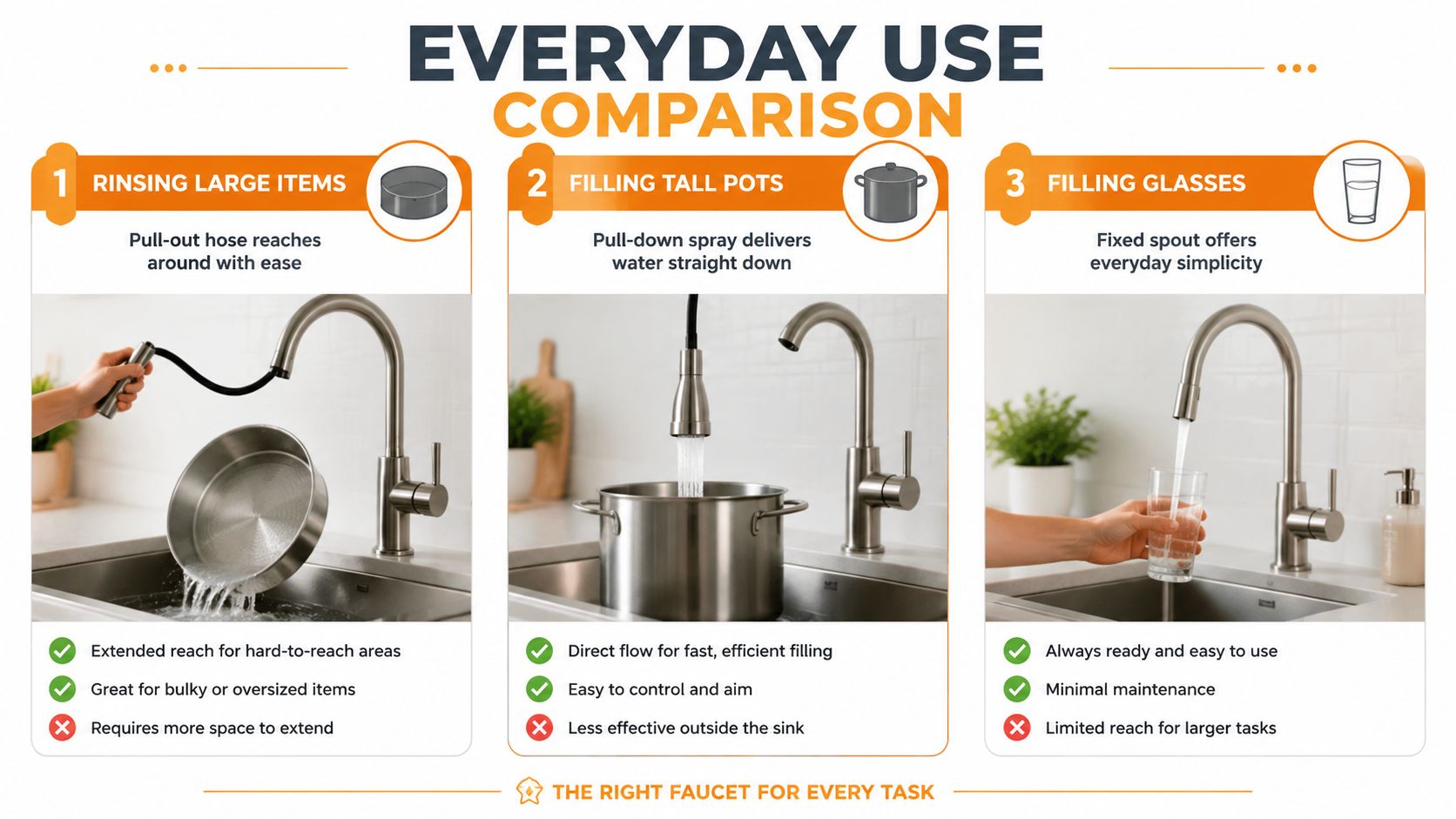
Three common jobs
Rinsing a big cake tin or roasting tray is where a pull-out earns its keep. You don't have to wedge the item under the spout. You pull the head out, direct the flow, and clean the corners properly. A fixed mixer makes that annoying. A pull-down helps, but the extra height can be a nuisance under shelves or windows.
Filling a stockpot is usually where a pull-down feels strong, especially if the sink is deep and you want the water delivered straight into the pot without twisting the vessel around. A pull-out still works, and in a tighter Melbourne kitchen it often works better because it doesn't demand as much overhead room.
Cleaning the sink itself is where the pull-out wins cleanly. You can rinse around the overflow, flush the corners, and wash the tap area without juggling the bowl. That's the task most renovators underestimate, and it's the one that reminds you whether the tap is useful or just pretty.
The trade-off you don't ignore
Pull-out mixers have moving parts. That means hose wear, dock wear, and more internal stress than a fixed tap. Don't buy the cheapest unit you can find and pretend it'll age well. If your kitchen gets heavy daily use, spend properly on the internal parts.
For a replacement-focused perspective, Voyager Plumbing's kitchen tap replacement guide is worth a look because it puts the swap into a practical context of existing plumbing and old fittings.
My verdict: choose pull-out for cleaning-heavy kitchens and cooks who use big cookware. Choose pull-down if the sink sits under a window or shelf and height is the problem. Choose fixed if you want the least fuss and you barely use the spray function.
Common Install Pitfalls and How to Avoid Them
The same mistakes keep turning up on jobs. They're not dramatic, just expensive and annoying.
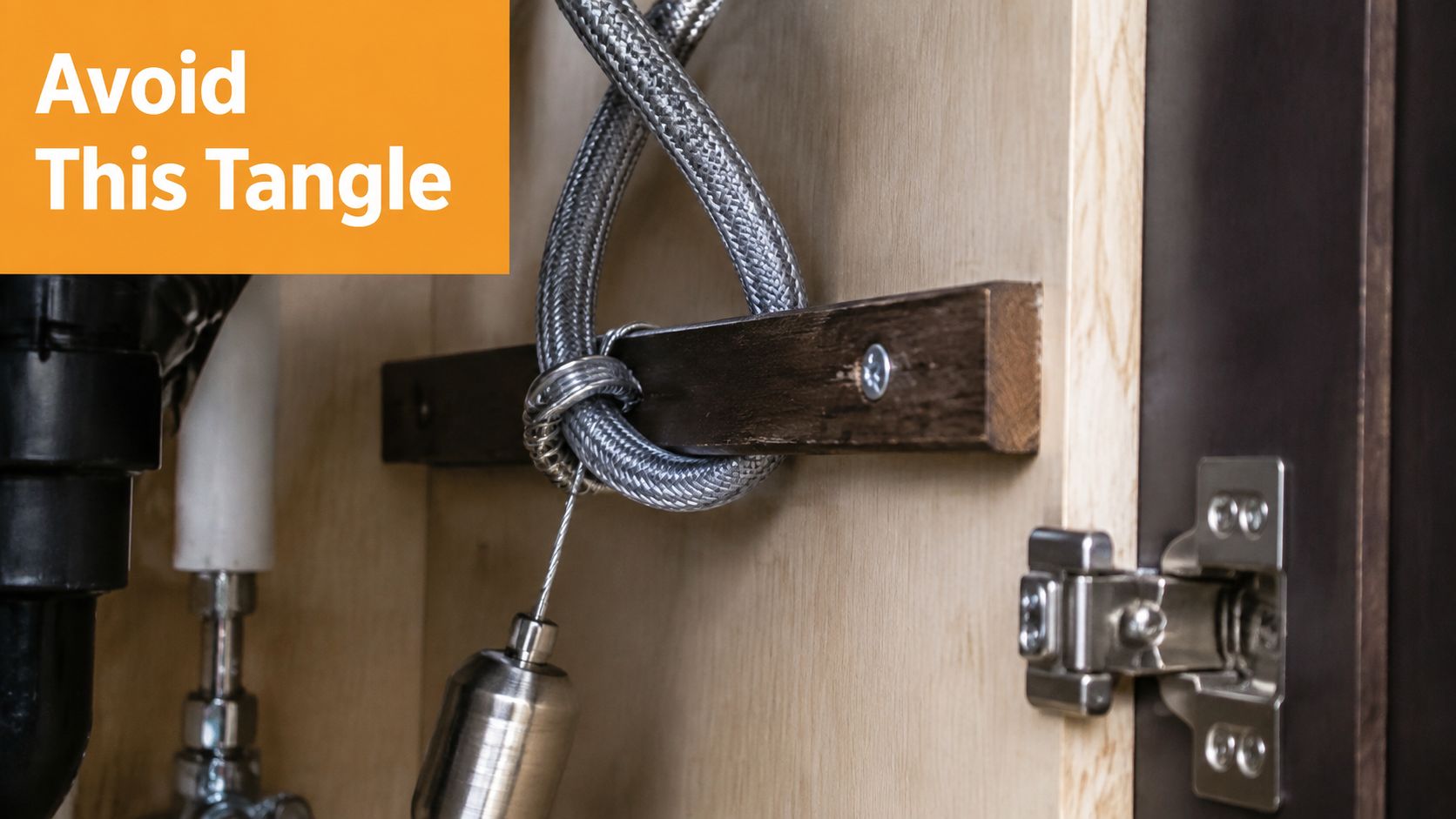
What goes wrong in the cabinet
The hose weight goes on the wrong side of the cabinet. Then the return doesn't pull straight, and the head sits awkwardly every time you dock it. The fix is simple, the weight needs to sit on the correct travel line so the hose retracts without scraping other fittings.
The hole in the bench is cut too tight. Stone and composite tops don't forgive that. If the body has to be forced through or torqued hard to seat, you can crack the top or stress the base. Tell the plumber to confirm the cut-out and base clearance before the tap is tightened down.
Cheap flexible hoses are another trap. They can feel fine on day one and miserable later, especially if the cabinet underneath is busy and the hose is constantly bending around other services. Ask for a proper braided setup if the supplied hose looks flimsy.
The dock magnet loosens over time. That's when the head stops seating flush and starts sitting a fraction proud. It looks minor, but it tells you the dock isn't doing its job properly anymore.
The hot-water pipe can run too close to the mixer body. That's a lazy install, and it can cook the finish over time. Make sure there's enough separation and that the pipework isn't hard against the tap body.
What to tell the plumber on day one
- Check the hose travel line before the tap is fixed.
- Confirm the hole size and underside clearance before cutting stone.
- Use proper hose routing around bins, filters, and drains.
- Keep hot pipework off the tap body.
- Seat the dock properly so the head returns flush.
If the plumber understands those five points, most of the common failures never happen.
Maintenance, Water Hardness and Long-Term Reliability
A pull-out mixer needs a simple upkeep routine, not constant attention. Melbourne water and kitchen use will tell you what needs cleaning long before the tap dies.
Keep the spray head and cartridge honest
Wipe the spray head face regularly so the nozzles don't clog up with limescale. In harder-water suburbs, do it more often. In softer-water areas, you can stretch the interval, but don't ignore it completely. If the flow starts to look uneven, the head is usually the first place to check.
If the tap starts dripping from the spout when closed, the cartridge is the first suspect. Don't assume the whole mixer is finished. A cartridge swap is often the sensible repair, and that's a lot cheaper than replacing the entire tap body.
The hose return should also be checked from time to time. If the head no longer sits flush in the dock, inspect the magnet or the return weight before blaming the whole unit. Those parts carry most of the day-to-day mechanical load.
PVD and brushed finishes hold up better than plain chrome in hard-water conditions, which matters if you're planning the kitchen to last rather than just survive the handover. That's the right way to think about a renovation. Buy for how it will look and function after years of wiping, rinsing, and drying, not just the first month.
Best habit: clean the head, watch the return, and fix the cartridge early. That's how you keep a pull-out mixer feeling new.
Your Pre-Order Checklist and Questions for the Plumber
Check the cabinet clearance, confirm the pressure, and make sure the hot water setup suits the tap. If those three don't pass, don't order yet. A good finish can't rescue a bad fit.
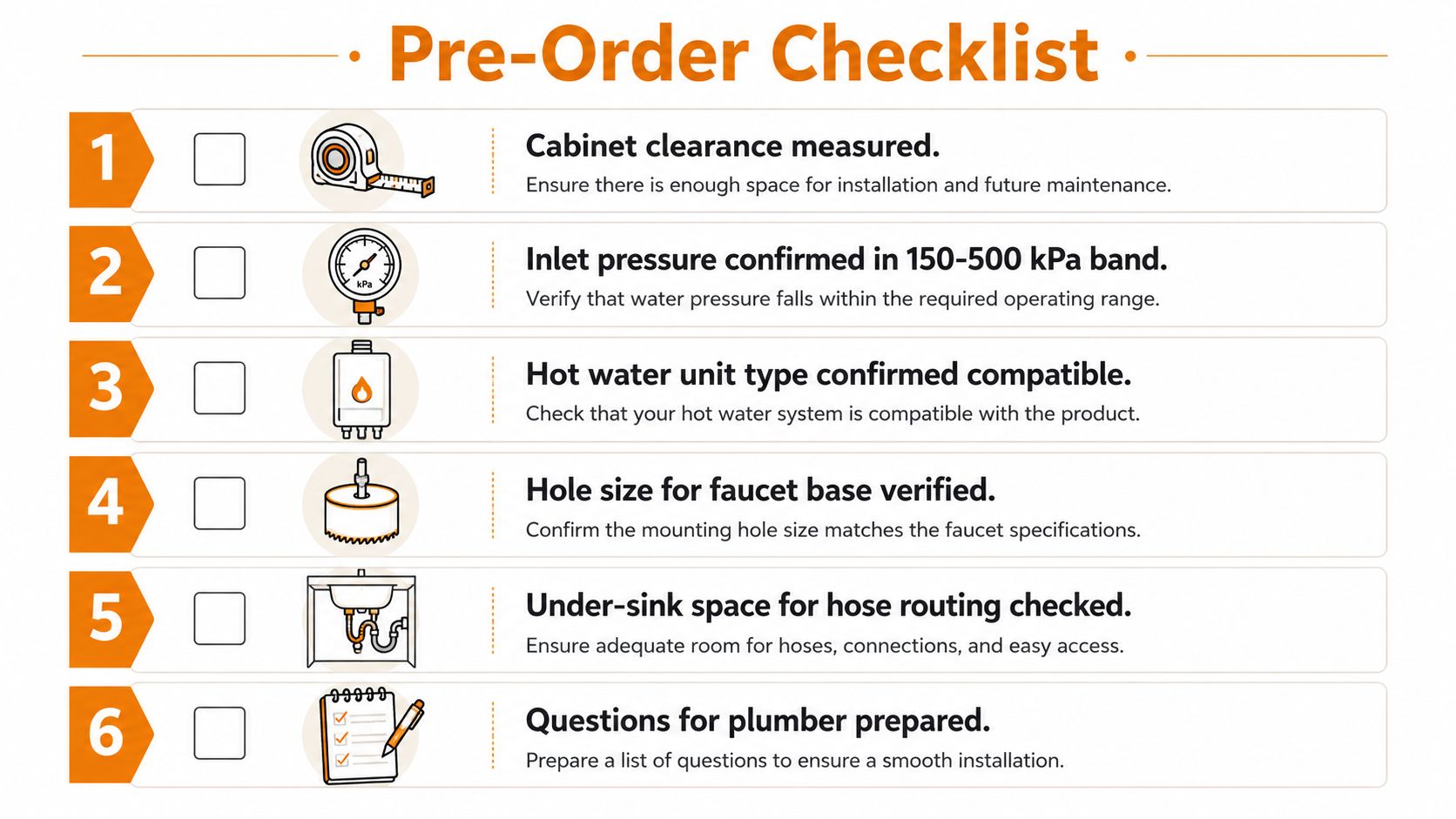
Print this before you buy
- Cabinet clearance measured
- Inlet pressure confirmed in the 150–500 kPa band
- Hot water unit type confirmed compatible
- Hole size for the mixer base verified
- Under-sink space for hose routing checked
- Questions for the plumber prepared
Tiles Mate Pty Ltd keeps a kitchen category and a design appointment booking service, so it can sit in the mix when you're coordinating finishes and fixtures for a renovation. Its sink mixers collection is one place to compare options once you've done the fit check.
Ask your plumber two things before sign-off. First, where exactly does the hose travel and return sit in this cabinet. Second, does the hot water and pressure setup suit the mixer without extra parts. For a typical Melbourne family kitchen on mains pressure with a 600mm or 900mm sink cabinet, a mid-range pull-out with a ceramic cartridge and a PVD finish is the sensible buy. The premium tier only earns its price if the kitchen gets hard use or the design spec really demands it.
Tiles Mate Pty Ltd can help you line up the look with the practical side of a renovation, from finish selection to kitchen-fit decisions that need real-world checking. If you're sorting a kitchen now, visit Tiles Mate Pty Ltd and compare the range after you've measured the cabinet, checked the pressure, and ruled out the wrong mixer before it reaches your bench.