




LED Mirror Buying Guide for Australian Bathrooms
by Shivam Tayal 05 Oct 2026 0 Comments
You're standing in a bathroom that should feel finished, but one thing still looks off. The tiles are in, the vanity is installed, and the mirror is on the wall, yet the room feels flatter than it should. In a lot of Australian renovations, that's the moment when the wrong mirror choice exposes every compromise in the lighting plan, especially on glossy porcelain, textured stone-look tiles, or a carefully selected matte finish.
A well-chosen LED mirror fixes more than reflection. It becomes the task light, the mood light, and the visual anchor over the vanity, which is why it now gets treated as part of the bathroom specification rather than a last-minute accessory. In the Australian market, LED mirrors have moved into mainstream bathroom use, with bathroom LED mirrors leading product-type demand in 2025 and vanity LED mirrors forecast to grow fastest through 2034 in one Australia-specific report (Deep Market Insights).
Why Your Bathroom Lighting Dictates Tile Success
I've seen premium tiles look cheap under poor light, and I've seen mid-range tiles look expensive when the lighting was handled properly. The difference usually isn't the tile itself. It's the way the light catches the glaze, reveals the edge detail, and decides whether veining feels crisp or washed out.
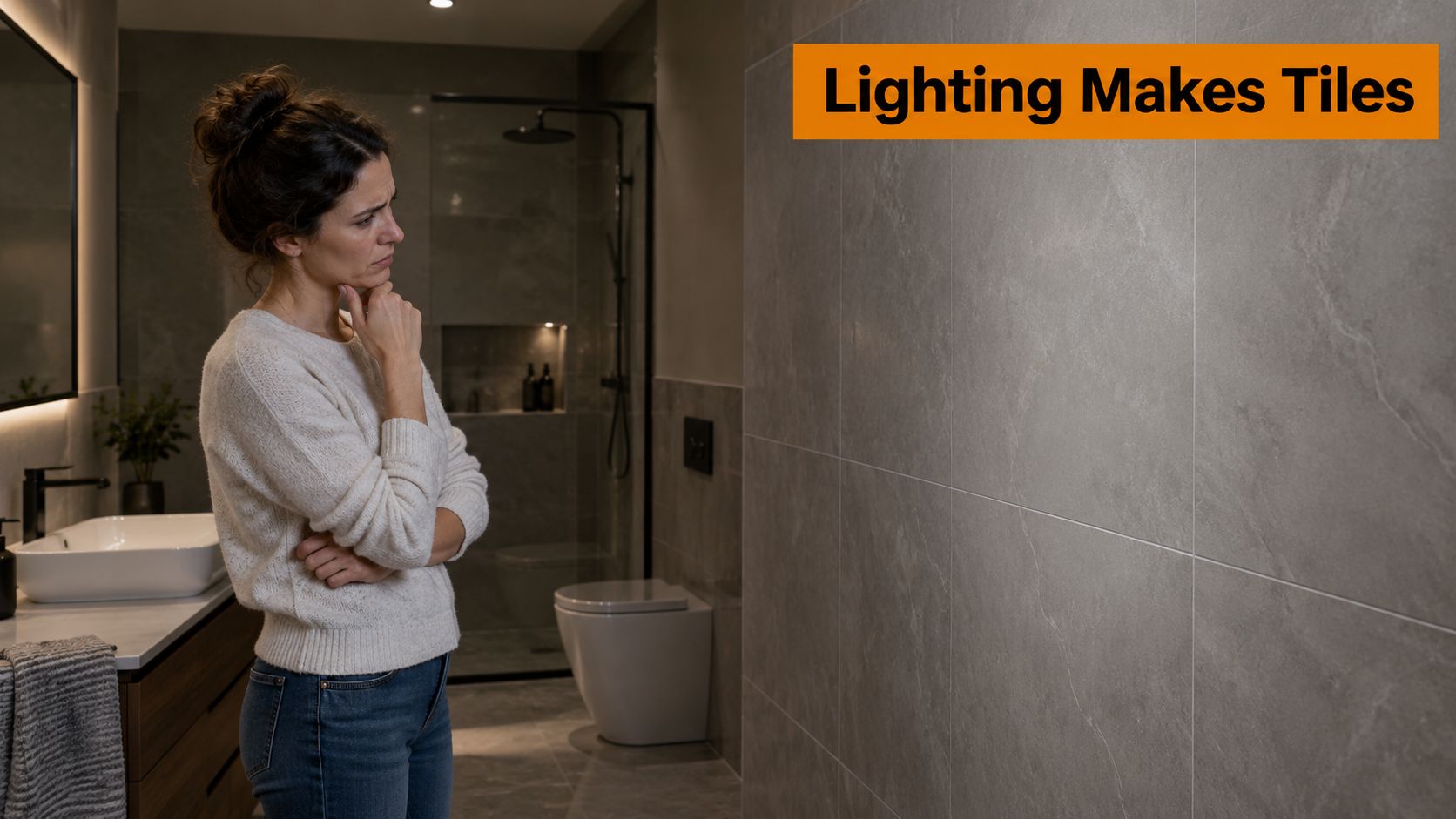
A LED mirror over the vanity changes how the room reads at eye level. That matters because tile finishes behave differently. Gloss tiles bounce light hard and can feel busy if the source is too harsh, while matt and honed surfaces need enough direction to stop them looking dull. For tile choice context, I often point clients to how to choose bathroom tiles before they lock in the mirror, because the mirror and tile finish need to work together, not compete.
The vanity wall does the heavy lifting
The vanity zone is where people notice whether the room works. When the mirror provides the main forward-facing light, it helps the tile surface show its real colour, not the colour created by a ceiling fitting bouncing off the ceiling and basin. That's why backlit and front-lit mirrors now feel like part of the architecture rather than an add-on.
In practical terms, gloss, matt, and textured finishes separate here. Gloss porcelain can look sharp and luxurious, but it will punish bad angles. Matt finishes are calmer, yet they can disappear into shadow if the light is weak. Textured or stone-look tiles need a light source that gives shape without creating ugly hotspots.
A good mirror doesn't just show your face. It decides whether the room feels considered or unfinished.
That's the shift Australian renovators need to make. The mirror isn't the final purchase, it's one of the first decisions that should lock the whole wall into place.
Decoding LED Mirror Specifications for Daily Use
A mirror can look impressive on a showroom wall and still perform poorly at the vanity. The useful specifications are the ones that affect grooming accuracy, glare, tile colour, fog, electrical installation, and everyday control.
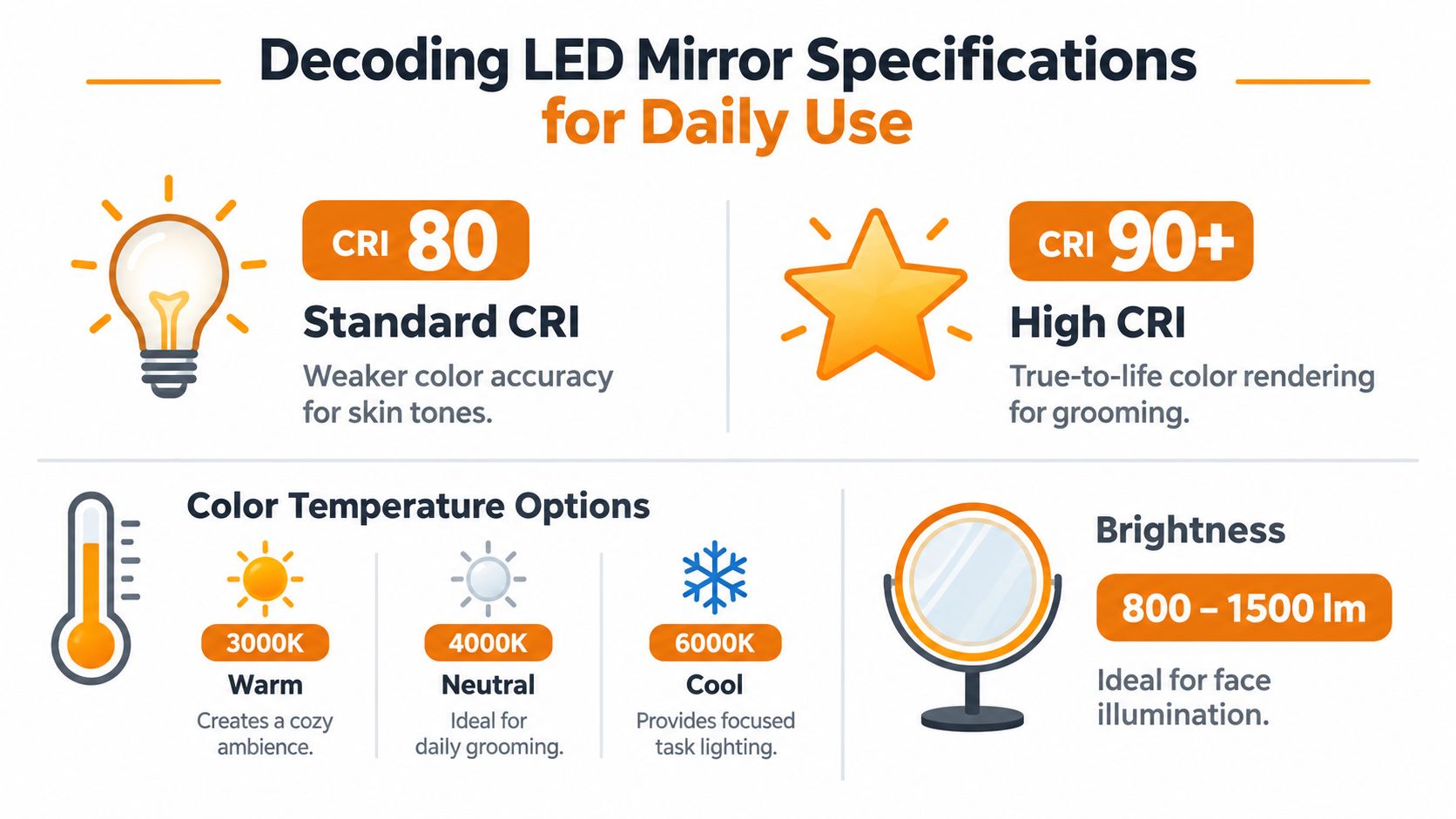
CRI and colour temperature matter more than most buyers realise
For example, one Australian product specification lists CRI90, adjustable colour temperature from 2700K to 6500K, and an LED lifetime greater than 54,000 hours at L80 (ReMer). That is one manufacturer's figure, not a universal benchmark. The CRI90 rating is still useful when comparing models because high colour rendering helps show skin tone, beard lines, foundation matching, and the way tile colour sits beside the vanity.
Colour temperature is a trade-off rather than a fixed rule. Australian bathroom lighting guidance places 4000K to 5000K closer to accurate facial rendering, while 2700K to 3000K creates a softer atmosphere (Zest Lighting). Neutral light usually suits a grooming-focused bathroom. Warmer light can work in an ensuite designed for a quieter mood, although it may make both skin and tile colour appear less precise.
Tile finish changes how that light feels. On gloss porcelain, strong or cool illumination can create sharp reflections and expose uneven grout lines. Matt and honed surfaces absorb more light, so a weak mirror can leave them looking flat. Check brightness, diffusion, and the mirror's light position against the tile sample before ordering.
Useful features versus expensive extras
Anti-fog demisters earn their place in a family bathroom, particularly after hot showers. Touch dimmers allow bright task lighting in the morning and softer light at night. Adjustable colour temperature gives one mirror more useful range.
Audio and smart functions deserve a harder cost check. A Bluetooth speaker mirror costs $150 more than the same unit without audio, and the speaker adds nothing to grooming accuracy. Use our guide to choosing a bathroom mirror to compare practical features before paying for extras.
Electrical details matter too. Confirm the mirror's IP rating is suitable for its proposed wet-area zone, then have wiring and connection work completed by a licensed electrician in line with Australian requirements. The rating supports the installation, but it does not replace correct positioning or compliant wiring.
For a tiled vanity wall, prioritise high CRI, sensible temperature control, suitable IP protection, and even light before built-in technology. That combination improves daily use and keeps the mirror working with the tile finish rather than creating glare or shadow.
Pairing Mirror Styles with Tile Formats and Finishes
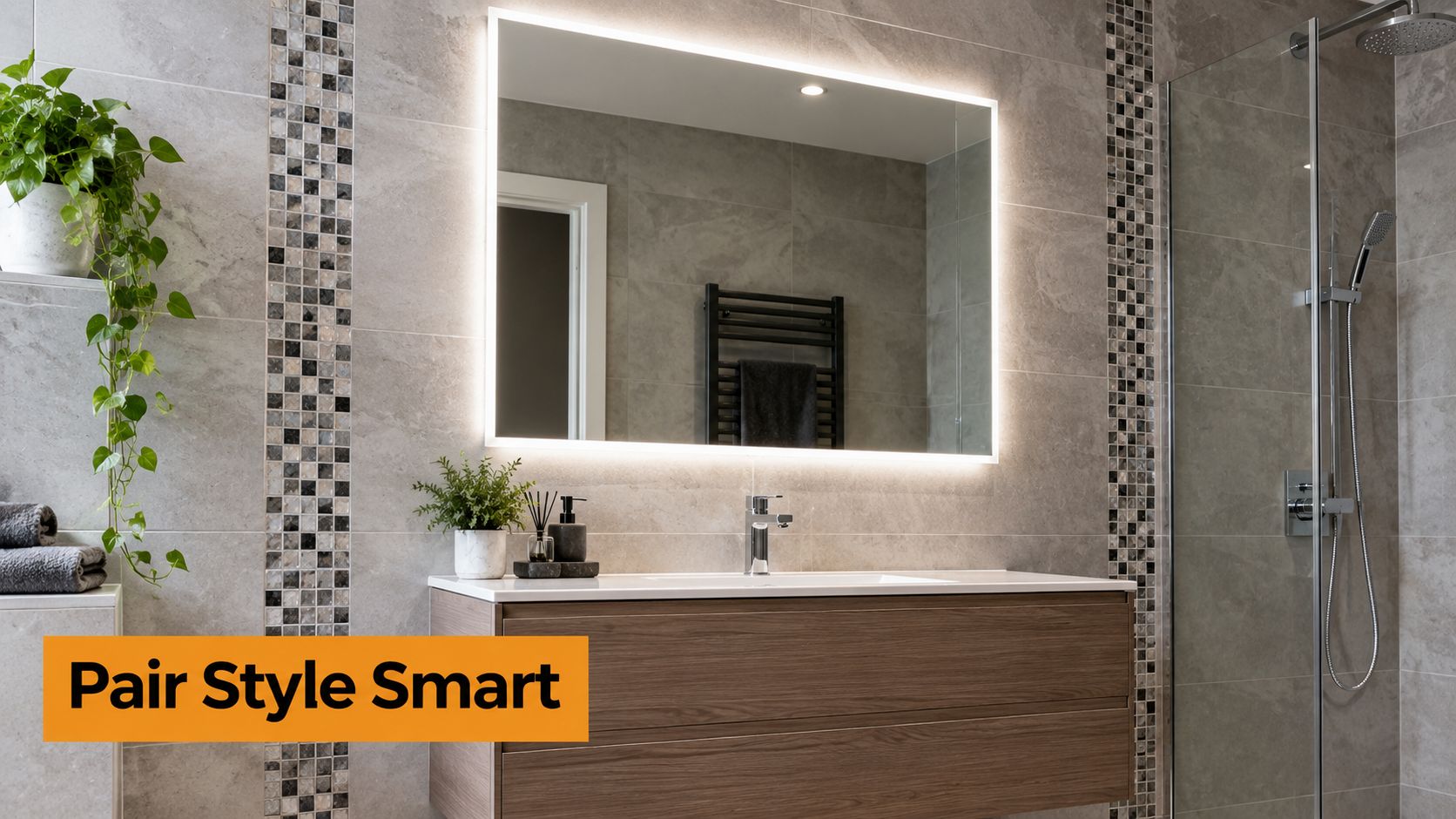
Shape matters more than people expect. A large rectangular LED mirror can calm a busy feature wall, while an arched or pill-shaped mirror softens all the straight lines in a room full of kit-kat, herringbone, or slab-like tile formats. That contrast is often what makes the space feel designed rather than assembled.
Match mirror geometry to tile rhythm
Long linear tiles, especially in stacked or horizontal layouts, often look best with a mirror that respects that direction. A frameless or softly outlined rectangular mirror keeps the wall calm and lets the tile do the talking. On the other hand, if the splashback uses small-format shapes like hexagon, penny round, or feather-style layouts, an arched mirror can stop the wall from feeling too mechanical.
A large mirror also changes how veining reads in marble-look porcelain. It reflects more of the pattern, so the wall feels broader and more intentional. That works well with Calacatta and Statuario-inspired looks, where the goal is usually to stretch the visual field and keep the vanity area from feeling chopped up.
Finish choice decides glare or depth
Gloss tiles and bright mirror light can be a difficult pairing if both elements are fighting for attention. The room can end up with too many hard reflections, especially on narrow vanities or in bathrooms with a lot of direct sunlight. Matt tiles are easier to live with, but they need enough light to avoid becoming flat.
That's where a well-positioned LED mirror earns its keep. It can bring direction to honed or textured surfaces without making them look harsh. It can also stop glossy finishes from looking overworked by balancing the reflection at face height instead of relying on ceiling light alone.
For finish-specific comparisons, choosing the right white tile gloss, matte, textured options is worth reading before you order the mirror. The visual result depends on that pairing just as much as the product itself.
Mounting and Wiring Considerations for Tiled Walls
The nicest mirror in the world can become a problem if it's mounted badly on tile. Hard porcelain and stone-look surfaces chip if the wrong bit or too much pressure is used, and a cracked glaze is the kind of mistake you keep noticing every morning. The installation needs to be planned around the wall finish, not improvised after the tiler has packed up.
Before drilling, the safest approach is a proper layout mark, a stable support point, and the right diamond-tipped bit for the tile type. Once the tile is penetrated cleanly, the fixing has to suit the mirror's weight and the wall structure behind it. If the mirror is large or frameless, stud location or a suitable heavy-duty anchor is not optional.
For a broader wiring and fixture planning reference, the bathroom lighting remodel tips resource from Lighthouse Energy Services is a useful starting point. It's a reminder that the mirror should be planned with the electrical rough-in, not after the waterproofing has already been locked in.
The rough-in should happen before the tiles go up
That's the cleanest way to keep cables, isolators, and drivers where they belong. If the electrician and tiler aren't coordinated, the result is usually a compromised fixing point or an awkward visible adjustment later. In bathrooms, those compromises tend to show up exactly where people look first, around the vanity.
A fixed LED mirror also needs enough space behind or beside it for the driver arrangement and cable path. If that part is left until the end, the mirror can sit proud of the wall or force a visible workaround that spoils the finished look.
Plan the mirror position before waterproofing. Fixing a bad rough-in after tiling is always harder and uglier than doing it once, properly.
The best installations look simple because the hard decisions were made early. Once the wall is tiled, the room stops forgiving guesswork.
Navigating Australian Wet Area Compliance and Safety
A mirror being labelled waterproof does not mean it belongs anywhere in a bathroom. Australian wet areas have rules for a reason, and the gap between a safe installation and a risky one usually comes down to zoning, ingress protection, and who is allowed to wire the fixture.
The product mark is only part of the story
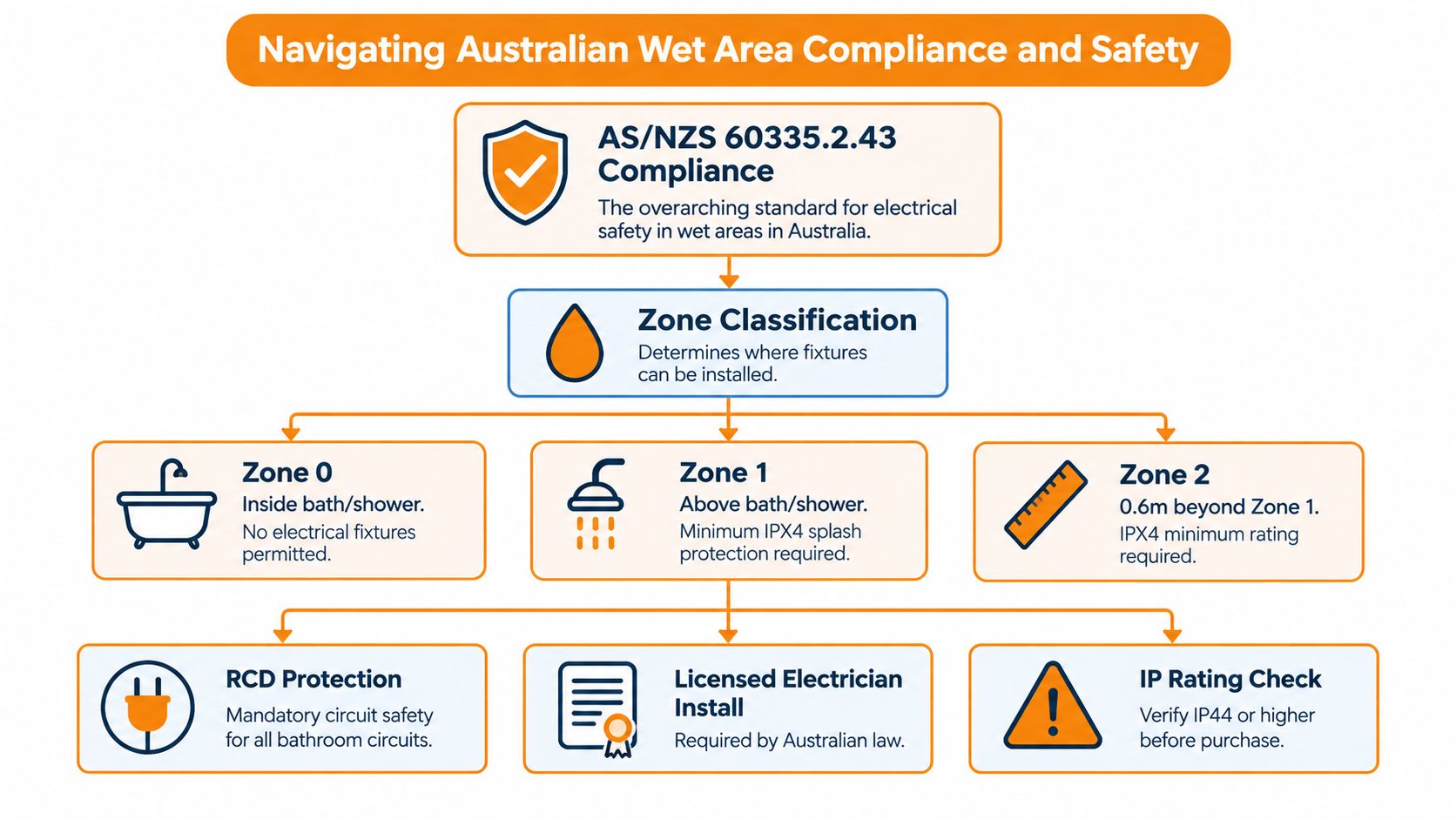
Current Australian guidance says LED mirrors entering the market must carry the RCM under the EESS, the driver must comply with the relevant safety standards, and bathroom circuits require 30mA RCD protection under AS/NZS 3000 (Rato LED Mirror). That means the mirror body, the hidden driver, and the circuit all need to be checked as one system.
The common mistake is treating IP44 as a universal answer. It is not. The rating matters, but it does not replace correct zone placement or licensed wiring.
Zone placement changes what is allowed
The practical rule is simple. A mirror that suits a vanity wall is not automatically suitable over a shower. The closer the fixture sits to direct water exposure, the more the rating and installation method matter.
For bathroom zones, the standard approach is to keep fittings closest to baths and showers to the higher protection level, while fittings beside a basin can often sit in a lower exposure zone if they still meet the correct rating and are installed properly. That is where tile layout matters too. Gloss tiles throw more reflected light and can expose glare, while matt finishes soften the reflection but still need the mirror and light spread to be matched to the room.
For exact zone boundaries and wet-area requirements, refer to the current AS/NZS 3000 guidance used by licensed electricians in Australia.
- Zone 0 is inside the bath or shower base itself.
- Zone 1 is the area directly above the bath or shower.
- Zone 2 extends beyond that immediate wet zone around the bath, shower, and nearby splash areas.
- Outside the zones does not mean anything goes, the fitting still needs the right rating and lawful installation.
That is the part many product pages gloss over. The key question is not whether the mirror looks right, it is whether the whole assembly is legal and safe once it is fixed to a bathroom wall.
Maintenance Routines and Troubleshooting Common Faults
Bathroom mirrors live in steam, splashes, and constant wiping, so maintenance has to be gentle. Harsh cleaners are a bad idea because they can damage the silvering and edge seals over time. If the mirror has an anti-fog layer or an illuminated edge, treat the surface as a finished electrical product, not a regular glass pane.
A soft microfibre cloth and a mild cleaner are usually enough for daily care. Avoid ammonia-based products, abrasive pads, and rough scrubbing around the edges. That's where water and cleaning residue tend to creep in first.
If the demister stops working, start with the simple checks before assuming the mirror has failed. Confirm the isolator is on, make sure the driver has power, and check whether the issue is condensation or a wiring fault. Flickering LEDs often point to driver trouble or a connection issue rather than a problem with the mirror face itself.
What usually needs a technician
- Unresponsive touch controls: Condensation can interfere, but persistent failure usually means a deeper electrical issue.
- A dead demister pad: Check the supply and driver before replacing parts.
- Intermittent flicker: Loose connections or moisture ingress are the first things to inspect.
- Black edge creep: This usually means moisture or chemical damage, not normal ageing.
If the fault involves wiring, hidden moisture, or a driver replacement, it's time for a professional. A mirror that was correctly installed should not need constant fiddling, and a good warranty process is easier to use if the wiring has been done properly from the start.
Clean it gently, test it logically, and never keep forcing a failing electrical component.
Finalizing Your Bathroom Renovation Lighting Plan
A bathroom feels finished when the mirror, tile finish, and electrical plan all support each other. The easiest way to get there is to check the zone, the IP rating, the CRI, and the colour temperature before you sign off on the order. After that, match the mirror size and shape to the tile layout so the wall reads as one designed surface, not separate parts.
The practical sequence matters. Lock in the electrical rough-in early, confirm who is wiring the mirror, and make sure the wall fixing suits the tile type and the mirror weight. If the room uses glossy tile, be more careful about glare. If it uses matt or textured tile, make sure the light is strong and even enough to show the surface properly.
For many renovations, the right mirror is the one that simplifies the wall, improves daily grooming, and keeps compliance straightforward. That's the balance worth aiming for in an Australian bathroom, especially where wet areas and tile finishes both demand a bit more discipline.
If you're planning a bathroom update, Tiles Mate Pty Ltd can help you line up tile finishes, mirror proportions, and the look you want over the vanity. Browse Tiles Mate Pty Ltd to compare bathroom tiles and related finishing ideas before you commit to the mirror and electrical plan.