




600x600 Outdoor Tiles Non Slip: Ratings and Buying Guide
by Shivam Tayal 02 Nov 2026 0 Comments
You're standing in a showroom with a sample under your arm, the colour's right, the price looks fair, and the salesperson has just called it non slip. Then Melbourne does what it does. A shower blows in, the patio's wet, someone carries a drink across in thongs, and that confident showroom feel disappears. That's the moment your choice of 600x600 outdoor tiles non slip has to earn its keep.
Size won't save you. A big tile can still be slick, and a textured look can still test poorly when it's wet. What matters is the tested P-rating for the exact finish, matched to the zone where you'll lay it, and installed so water leaves the surface instead of sitting on it.
Minimum Slip Rating for Each Outdoor Zone
A P-rating is a zone decision, not a product label. Rain, irrigation overspray, mud off the garden and pool water each change how a surface behaves, and a tile can stay treacherous after it looks dry because a thin film of dirt or algae holds moisture. Rate each area on its own exposure before you fall for a colour.
The table below sets out the lowest wet-pendulum classification I'd accept in each common outdoor area. Treat each figure as a floor for that exposure, and step up when your site is harsher than the description.
| Outdoor zone | Minimum P-rating | Barefoot check | Key exposure |
|---|---|---|---|
| Covered alfresco | P3 to P4 | Optional | Spills and wet footwear, little rain |
| Open patio or courtyard | P4 | Optional | Rain, leaves and algae |
| Garden path | P4 | Not usually required | Soil, mulch and irrigation |
| Driveway-adjacent entry | P4 | Not usually required | Tracked-in water and grit |
| Pool edge | P5 | Required | Pool water, chlorine and bare feet |
How to Use the Minimums
A covered alfresco misses most direct rain, which is why it can sit at the lower end of the range, but wind-blown drizzle, esky melt and shoes coming in off a wet lawn still reach it. I treat P4 as the practical floor there rather than gambling on a smoother indoor tile carried outside. An open patio or courtyard cops full weather, so leaves and algae join water as part of the grip equation.
Garden paths add soil and mulch underfoot, and fine grit can work like ball bearings on a smooth face. A driveway-adjacent entry concentrates the same problem in a small area where people turn, stop and carry shopping. Both need drainage and easy cleaning access as much as they need a rating.
Pool edges are a different case. People are barefoot, the surface rarely dries, and children don't walk carefully. Specify P5, and ask for the barefoot result as well, because shod performance doesn't automatically predict barefoot grip. Facility operators work zone by zone in the same way, and a safer building program for facility managers is a useful reminder that prevention works best when each traffic area is assessed on its own exposure.
Zone rule: Match your area to the table first, then confirm the rating on the test certificate for that exact finish before you shortlist colour or price.
Should every outdoor 600x600 tile be P5? No. A P5 tile laid with poor falls on a slope can still pond and turn hazardous, while a well-drained P4 under a roof can perform well for years. The large format also raises the stakes on workmanship: one tile sitting high creates a wider trip edge and a bigger ponding area than a small paver would, so falls and lippage control matter as much as the number on the box. Slope, barefoot use, drainage and cleanability move the answer more than appearance ever will.
How to Read an AS 4586 Slip Certificate
Two tiles can look identical on a display board and behave very differently in the rain, so the certificate is where the comparison happens. Australia's framework is anchored by AS 4586:2013, "Slip resistance classification of new pedestrian surface materials," with Amendment 1 published in 2017, which classifies new pedestrian surfaces through the wet pendulum test and inclining-platform tests. For outdoor tiles, the wet pendulum result carries the most weight because it measures the condition you'll face, a wet surface under a moving foot.
The pendulum swings a rubber slider across the wet tile and records a British Pendulum Number, or BPN. That figure converts to a P classification, running from P0 at the lowest end to P5 at the highest. A higher rating indicates stronger measured wet slip resistance for that tested finish. Keep the zone table open while you read it, because the rating only protects you when it matches the exposure where the tile will be laid.
| P-rating | Typical outdoor use |
|---|---|
| P0 | Not suitable for outdoor use |
| P1 | Not recommended outdoors |
| P2 | Dry, lightly used areas only |
| P3 | Covered areas with limited wet exposure |
| P4 | Patios, balconies and general external paving |
| P5 | Pool surrounds and open wet outdoor areas |
What the Certificate Must Show
Don't accept a brochure claim in place of a report. Before you trust a rating, check that the document names the product clearly enough that you could reorder the identical item from it alone.
- Exact product and finish: The name, colour and surface finish must match the tile in your quote rather than a smoother or rougher variant from the same range. A range offered in both gloss and matt can carry two different results.
- Test method: Look for the wet pendulum method under AS 4586, so you know which test produced the P classification.
- Classification and condition: The report should state the P-rating and whether the surface was tested wet, because a dry result tells you little about a rainy patio.
- Product identity: Check batch or production details where they're shown. Tiles are natural products and can vary slightly in shade or size between batches, so a report from an older production run may not describe what arrives on your pallet.
Because tiles are consistent manufactured finishes, laboratories can test them reliably, and suppliers can provide the resulting reports on request. Asking for that document is standard practice. Treat a supplier who can't produce one as a warning sign rather than a paperwork gap.
P Ratings Are Not Interchangeable With Other Results
A P-rating and an R-rating answer different questions. The R classification comes from a barefoot wet-ramp procedure, where a person walks a surface that inclines steadily until grip fails, while the P classification comes from the pendulum's rubber slider. Different contact materials, different conditions, different scales. A strong pendulum result doesn't guarantee secure footing under a bare heel, which is exactly why pool surrounds need the barefoot figure alongside the P-rating.
Format doesn't change friction either. A 600x600 slab carries the rating of its tested finish, so confirm the report covers the product you're buying rather than assuming a related size shares the result. Treat any tile described only as textured, matt or grip finish as unverified until the report arrives. Ask for the AS 4586 report covering the exact finish and batch you intend to buy, file it with your invoice, and pass a copy to your tiler before work starts. If the paperwork can't produce the rating each zone needs, the tile hasn't earned its place on the shortlist.
Is the 600x600 Format Right Outdoors
The appeal is easy to see. Large tiles create broad, calm surfaces with fewer interruptions, which suits contemporary patios and alfresco areas that flow from indoor living spaces. Fewer joints also means less grout to scrub, fewer edges to trap dirt, and a cleaner look across a wide slab.
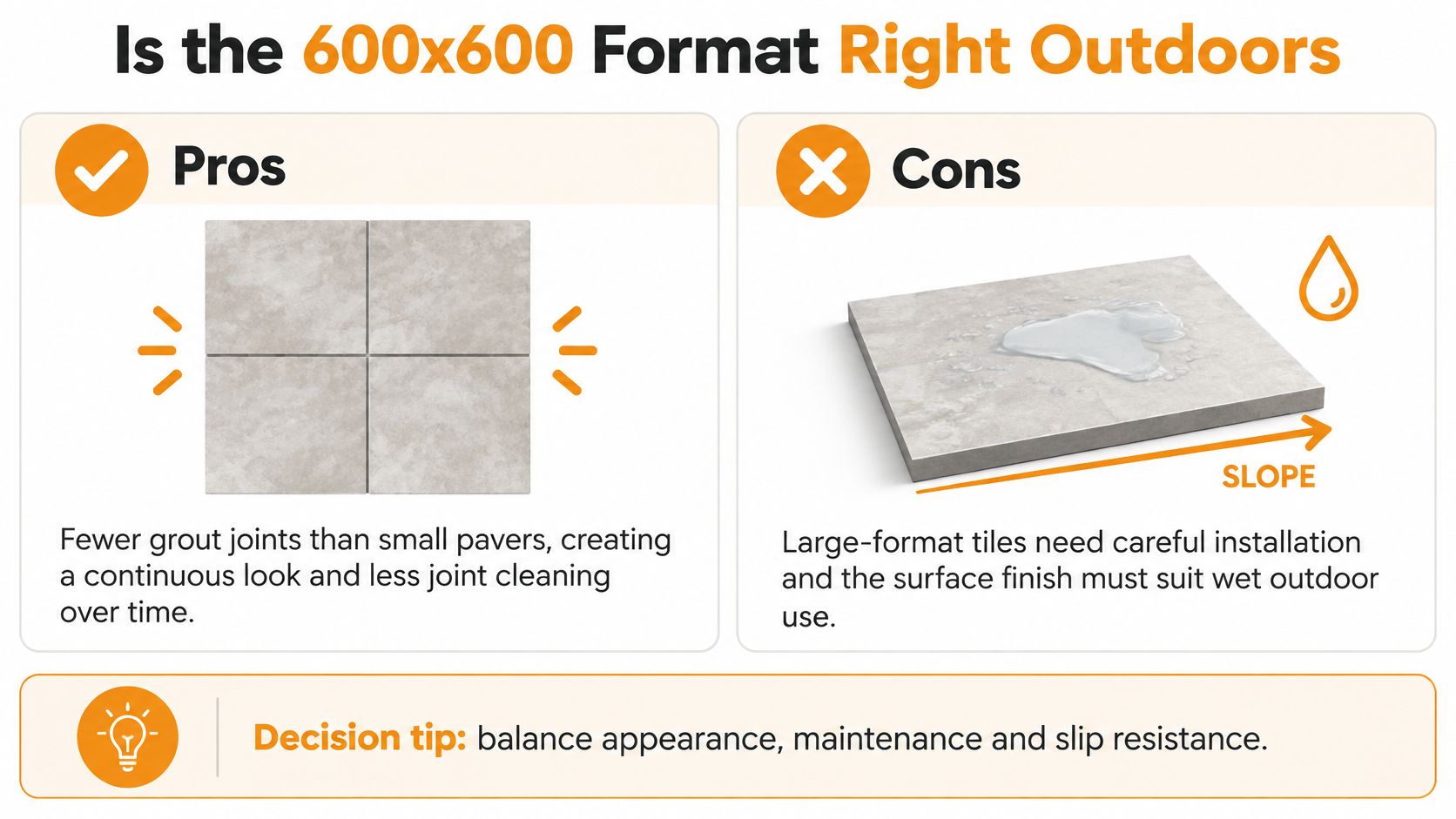
That visual benefit doesn't create friction. A large, low-rated tile is still a low-rated tile, and because each unit covers more area, a single poorly drained slab can hold a broad sheet of water right where people step. Accurate falls and a flat substrate matter more with this format, not less.
Where the Format Works Against You
Large slabs are heavier to carry, harder to manoeuvre through a side gate or up to a balcony, and less forgiving around drains, pipes and pool fittings. Every cut takes planning, and a small substrate dip that a small paver might follow can leave a 600x600 tile rocking or lipping at the corner. Your tiler needs time to dry-lay, check levels and set out joints before adhesive goes down.
Edge type changes the set-out too. Non-rectified tiles have slightly rounded edges and can show minor size variations, which require careful planning during installation. If you want to understand how this size behaves across general floor applications before committing outdoors, our guide to 600 x 600 floor tiles is a useful starting point.
A flat, well-drained slab with few penetrations flatters 600x600 tiles. A steep entry crowded with drains usually does not.
Choose this format when the base is sound, falls are achievable in large planes, and access is straightforward. Consider a smaller format or tighter joint pattern on a sloped entry, around multiple outlets, or where the substrate changes direction often. You'll get more control over falls and less risk of ponding.
Finishes and Textures for Patios and Pool Surrounds
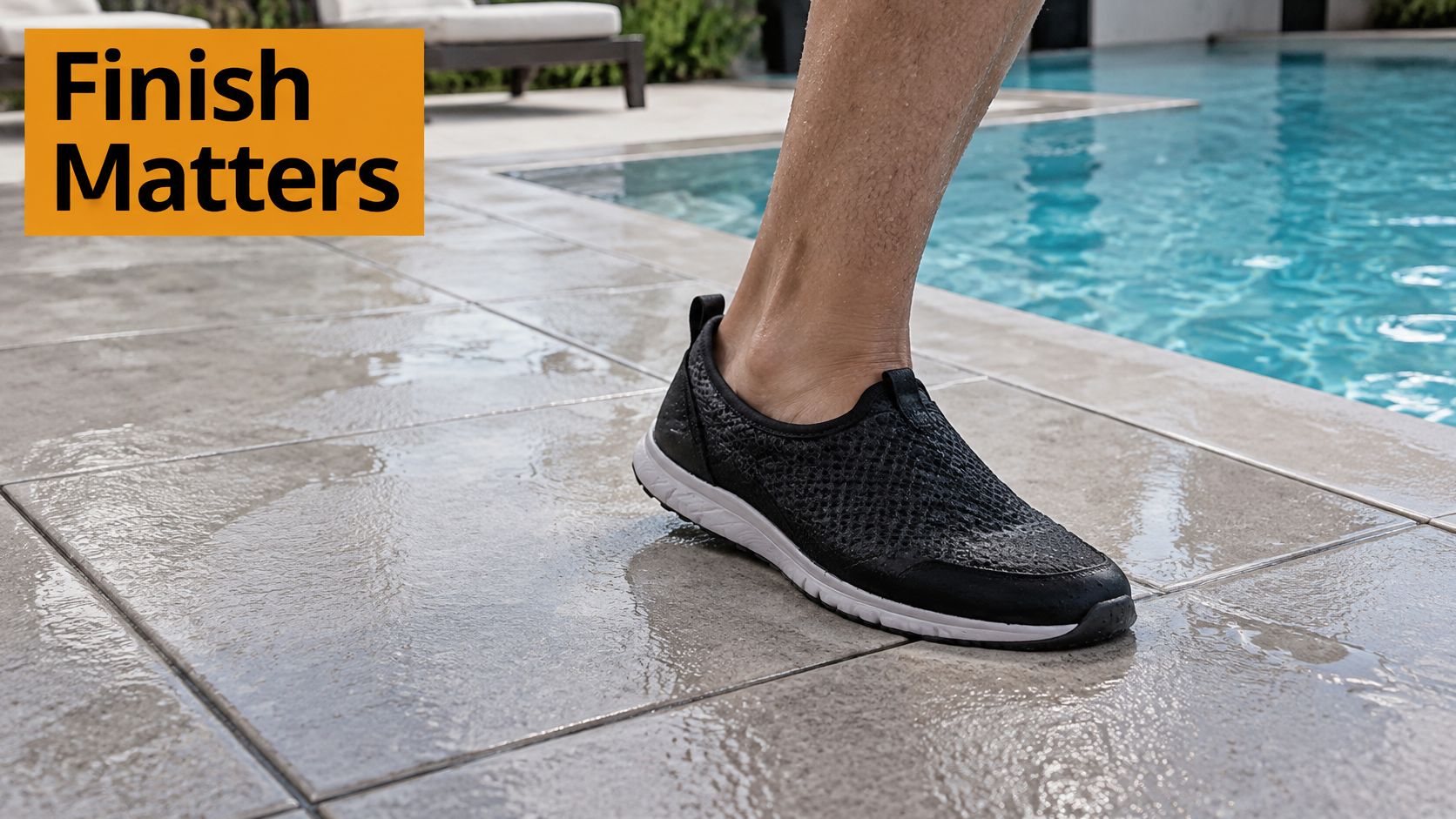
The finish is what your foot meets. The rating is the measured result of that meeting. You need both, because two tiles that look equally rough in a dry showroom can behave very differently once water, sunscreen or soil enters the picture.
| Finish | Wet grip | Cleaning effort | Best zone |
|---|---|---|---|
| Carved or anti-slip texture | High | Moderate, grooves hold dirt | Pool edges and wet ramps |
| Matt textured | Medium to high | Easy | Patios and balconies |
| Lappato or honed | Medium | Easy | Covered alfresco |
| Polished or gloss | Low when wet | Easy | Avoid outdoors |
Reading the Trade-Offs
Carved or anti-slip textures give the strongest mechanical grip, but their grooves collect fine dirt and need a stiff brush rather than a quick mop. Matt textured finishes are the workhorse for most patios because they balance grip with realistic cleaning. Lappato or honed surfaces feel smoother and suit covered areas better than open wet zones. Polished or gloss finishes lose grip quickly when wet and don't belong outdoors, however good they look under showroom lights.
Material still matters after you've settled the finish. Porcelain tiles are suited to high-traffic areas, both indoors and outdoors, so porcelain is a sound base material once the surface and rating are right for the zone.
Two Worked Examples
Say you're tiling a pool surround where children climb out and turn sharply toward the gate. I'd specify a carved P5 finish, confirm the barefoot result, and accept the extra scrubbing as the price of grip. Anything smoother is a compromise in the wrong direction.
Now say it's a second-storey balcony used for morning coffee, with good drainage and no barefoot pool traffic. A matt textured P4 finish gives sensible wet grip without turning every clean into a project. In both cases, order a physical sample, wet it on a flat surface, and test it in the shoes and thongs your household wears.
How to Install 600x600 Outdoor Tiles in Melbourne
A laboratory rating describes an unused tile. Your finished patio includes adhesive, grout, falls, haze, weather and workmanship, so installation can either protect that rating or undermine it. Work through the job in order and don't let the tiler improvise the drainage.
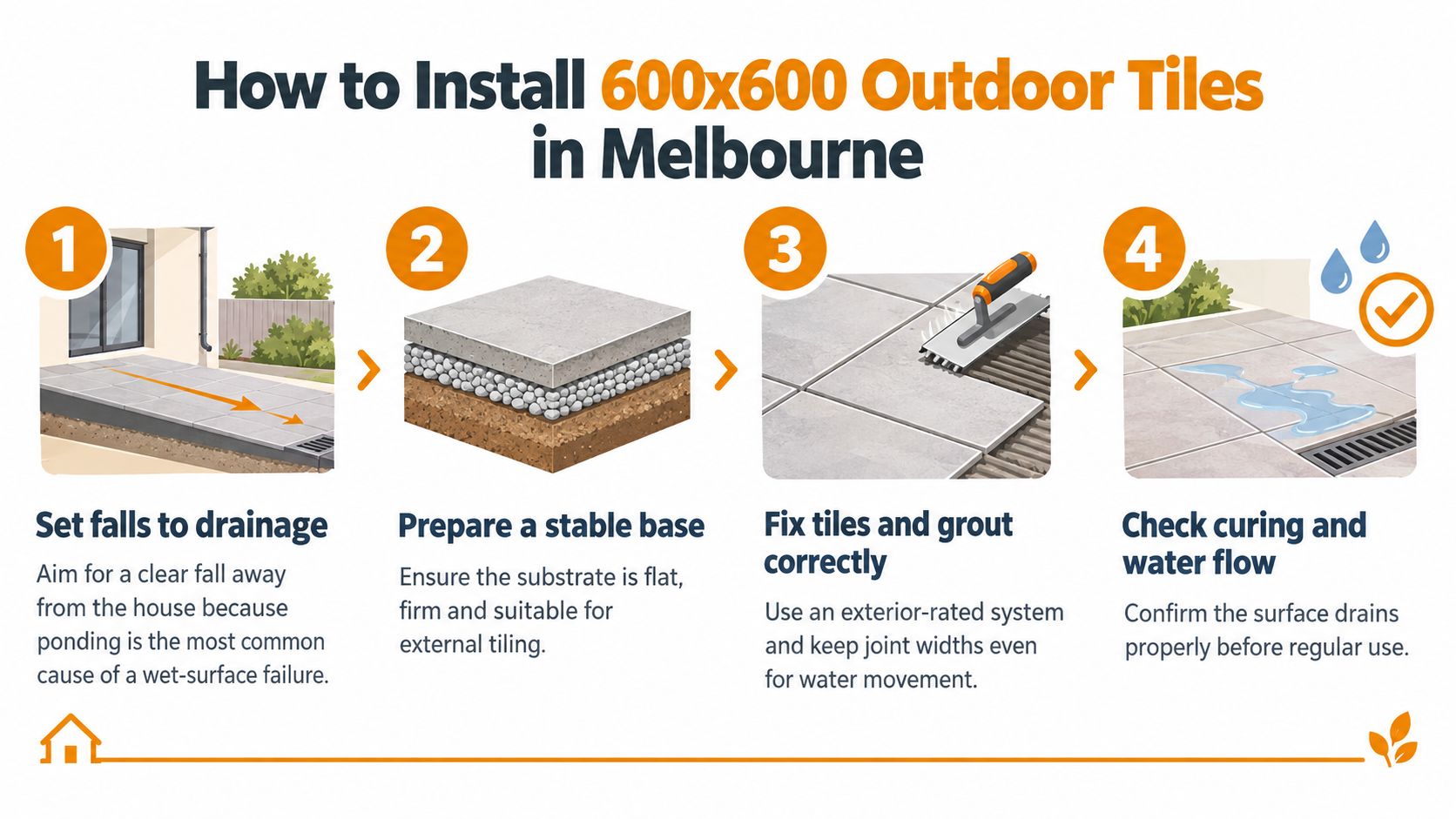
- Set falls to drainage first. Establish a clear fall away from the house toward the drain or garden edge before any tile is fixed. Ponding is the most common reason an outdoor surface stays slippery, and you can't grout your way out of a flat spot later.
- Check batch, colour and size on delivery. Tiles from different batches can differ slightly in colour and size, so we recommend having your tiler verify all measurements before placing an order. Open several boxes and blend tiles across them rather than laying one box at a time.
- Dry-lay the field. Set out full tiles, cuts and joint lines around drains and door thresholds while everything can still move. Non-rectified size variation shows up at this stage and awkward sliver cuts get designed out.
- Prepare a flat, sound substrate. Grind high spots, fill hollows with a suitable external levelling product, and confirm the base is firm and clean. Large tiles telegraph substrate defects, so a straightedge check now prevents lipping later.
- Fix with full adhesive coverage. Use an outdoor-rated flexible adhesive, comb it in one direction, and back-butter each large slab so corners and centres are supported. Hollows can collect water, sound drummy and crack under point loads from outdoor furniture.
- Grout and clean before haze sets. Use exterior-rated grout, keep joints full and even, and wash cement haze off the textured face before it dries. Haze left in the texture dulls the finish and gives dirt something to cling to.
- Leave expansion joints and cure properly. Keep movement joints at perimeters and around posts, pool fittings and fixed structures so Melbourne's cold snaps and hot summers don't force tiles to tent or crack. Stay off the surface for the full period on the adhesive datasheet.
Verify the Installed Surface
AS 4663 provides methods for measuring frictional characteristics of existing pedestrian surfaces in wet and dry conditions, including on-site wet-pendulum assessment, which matters because the installed surface can differ materially from the unused tile tested under AS 4586. Field verification is especially worthwhile on steps, ramps, pool edges and entries that stay wet.
At home, start simpler. Hose the finished area, walk it in your usual footwear, and watch where the water goes. If it sheets toward the drain and the surface grips under a turning step, you're on track. If it ponds or feels greasy, investigate haze, residue and falls before blaming the tile. For broader site planning, including how pavers handle these same drainage questions, see our notes on outdoor pavers in Melbourne.
Cleaning Routine That Keeps Outdoor Grip
Grip rarely vanishes overnight. It erodes as leaves break down, algae films form in shaded corners, detergent dries on the surface and fine grit settles into the texture. Australian outdoor tiles spend long stretches of the year cycling between wet and dry, so the cleaning routine is part of the safety system, not housekeeping for its own sake.
A Routine You Can Actually Keep
- Sweep weekly: Use a stiff outdoor broom to remove leaves, soil and grit before they turn into a slick paste.
- Rinse monthly: Hose the surface during wet periods so film doesn't build up unnoticed in low-traffic corners.
- Wash with a pH-neutral cleaner: Scrub algae with a stiff brush and rinse thoroughly, because leftover detergent can leave a slippery residue.
- Check after storms: Look for pooled water, cracked tiles and loose or missing grout while the drainage pattern is still visible.
Timing matters as much as technique, and seasonal patio care with Top Cleaners makes the useful point that cleaning before growth takes hold is far easier than rescuing a surface months later. For product-specific washing technique, our guide on how to clean porcelain floors covers the same gentle approach indoors and out.
Use a pressure washer cautiously. Start on a low setting, keep the nozzle moving, and test a hidden corner first, since high pressure can chew grout and wear the very grooves that provide grip. Avoid acid cleaners on a routine wash because they can damage the surface and surrounding materials.
Once a year, walk the area slowly after rain. Check that falls still carry water away, that no tile sounds hollow when tapped, and that joints remain full. Ground settles, tree roots move, and a small change in fall can create the pond that undoes a good specification.
Shortlist and Order Samples Before You Commit
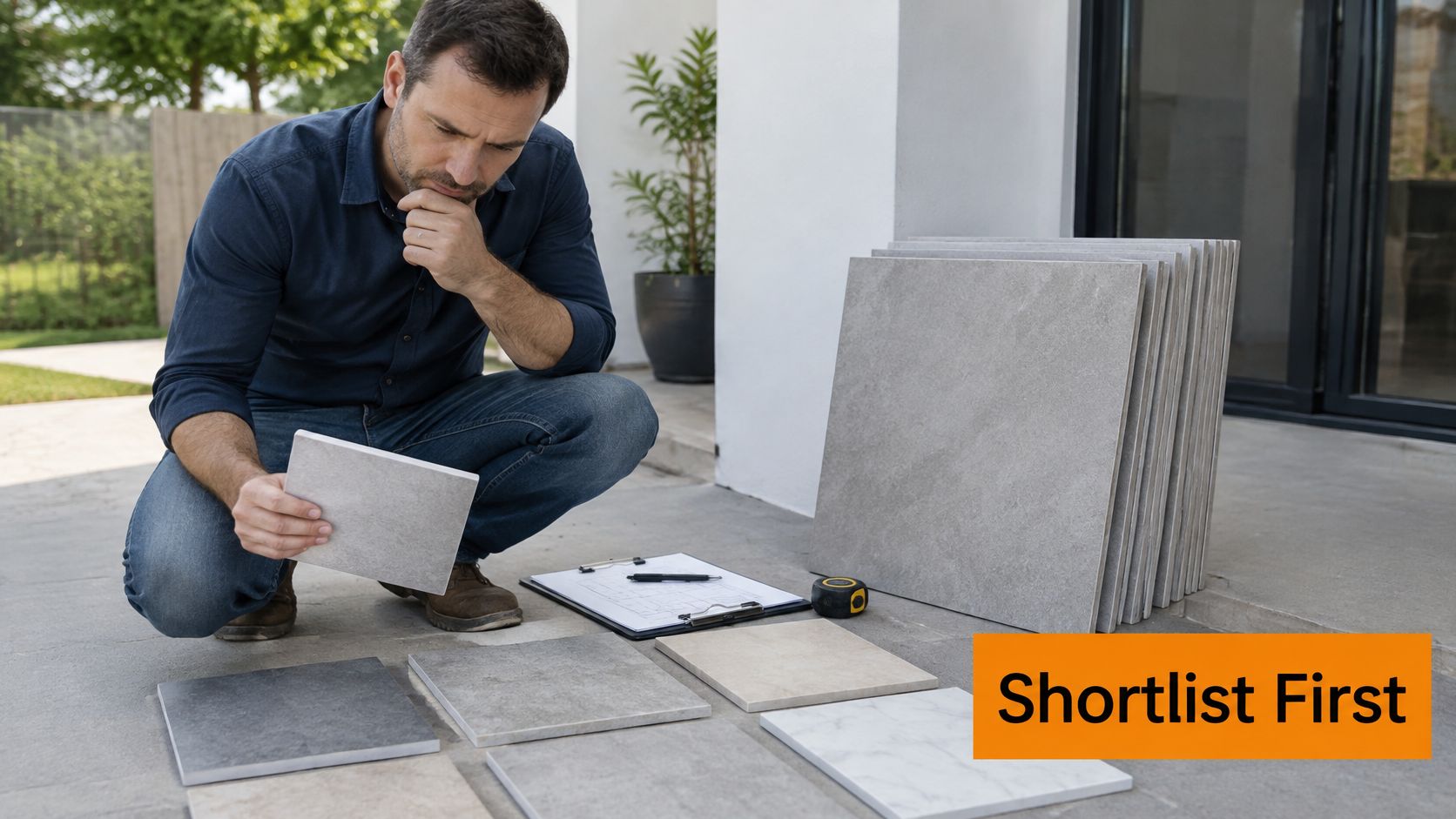
Turn everything into a three-part shortlist and don't let a good photo jump the queue. First, set the minimum P-rating for your zone. Second, request the AS 4586 report for the exact finish and batch. Third, confirm the finish suits how the area is used and cleaned. If a tile fails any one of those checks, it doesn't matter how well it matches your render colour.
What the Market Charges
Price gives you context, not a safety verdict. In 2026, Beaumont Tiles listed a 600 x 600 mm charcoal textured tile at AUD $39.95 per square metre, while Johnson Tiles listed 600 x 600 x 20 mm external paver tiles at AUD $77.95 per square metre. In 2026, BuildPilot stated that mid-range 600 x 600 mm porcelain floor tiles in Australia typically cost AUD $40-$70 per square metre.
| Product or market band | Size | Price per m² | Basis |
|---|---|---|---|
| Beaumont Tiles charcoal textured | 600x600 | AUD 39.95 | Listed price in 2026 |
| Johnson Tiles external paver | 600x600x20 mm | AUD 77.95 | Listed price in 2026 |
| Mid-range porcelain floor tile market band | 600x600 | AUD 40-70 | Published estimate in 2026 |
| Tiles Mate Alpine Grey GripTech | 600x600 | AUD 30 (AUD 43.20 per box) | Listed price |
Our Alpine Grey GripTech 600x600 tiles are sold at $43.20 per box, which is $30 per square metre. That listing price still doesn't prove a slip rating on its own, and I'd say the same about any competitor's listing. Ask for the AS 4586 report before you buy, then judge the price against the evidence.
Order Samples and Test Them Properly
Sample tiles can be ordered so you can see and touch tiles before choosing them, and a pack of five samples lets you compare finishes side by side in your own light. Wet each sample, stand on it in bare feet if it's destined for a pool, then try runners and thongs if it's for a path or patio. Tip a little soil on it, rinse it, and see how much effort the texture needs.
That ten-minute test tells you things no product page can. You'll feel whether the grip is confidence-inspiring or merely rough, and you'll see whether the colour darkens attractively when wet or turns patchy.
Notes for Trade and Multi-Zone Jobs
Builders, designers and tilers buying across several projects should use TilesMate Pro for B2B pricing rather than ordering through retail listings job by job. For a multi-zone project, order the full quantity from one batch where possible and request a single AS 4586 report covering the exact finish supplied. Mixed batches create colour and size headaches you don't need on a large format.
Record each zone and its minimum rating on the specification sheet, so the pool edge is documented at P5 and the covered alfresco at P4. Then send the zone list and the report to the installer together before work starts, so falls, adhesive coverage and drain details get checked against the requirements for each area. If you're unsure which rating a zone needs, call us on 1300 680 580 before you order rather than after the tiles arrive.
Order a sample pack, wet-test the finish in your own footwear, and ask for the AS 4586 report before you commit to a full pallet. Tiles Mate Pty Ltd supplies 600x600 outdoor tiles with clear per box and per square metre pricing, plus TilesMate Pro B2B pricing for trade buyers across Melbourne. Start your shortlist at Tiles Mate Pty Ltd and bring your zone list with you.