




Picasso Tiles in Melbourne: A Buyer's Guide for Homes
by Shivam Tayal 15 Oct 2026 0 Comments
You've probably typed Picasso tiles into Google because you saw a patterned floor, a striking bathroom splashback, or a tile photo that felt a bit Mediterranean and couldn't work out what you were looking at. In Melbourne, that confusion is normal, because the name gets used for a tile style, not a single product family, and the same search also pulls up the magnetic construction toy. If you're renovating, this guide keeps you on the tile track and helps you make a sensible buying decision without getting lost in the label.
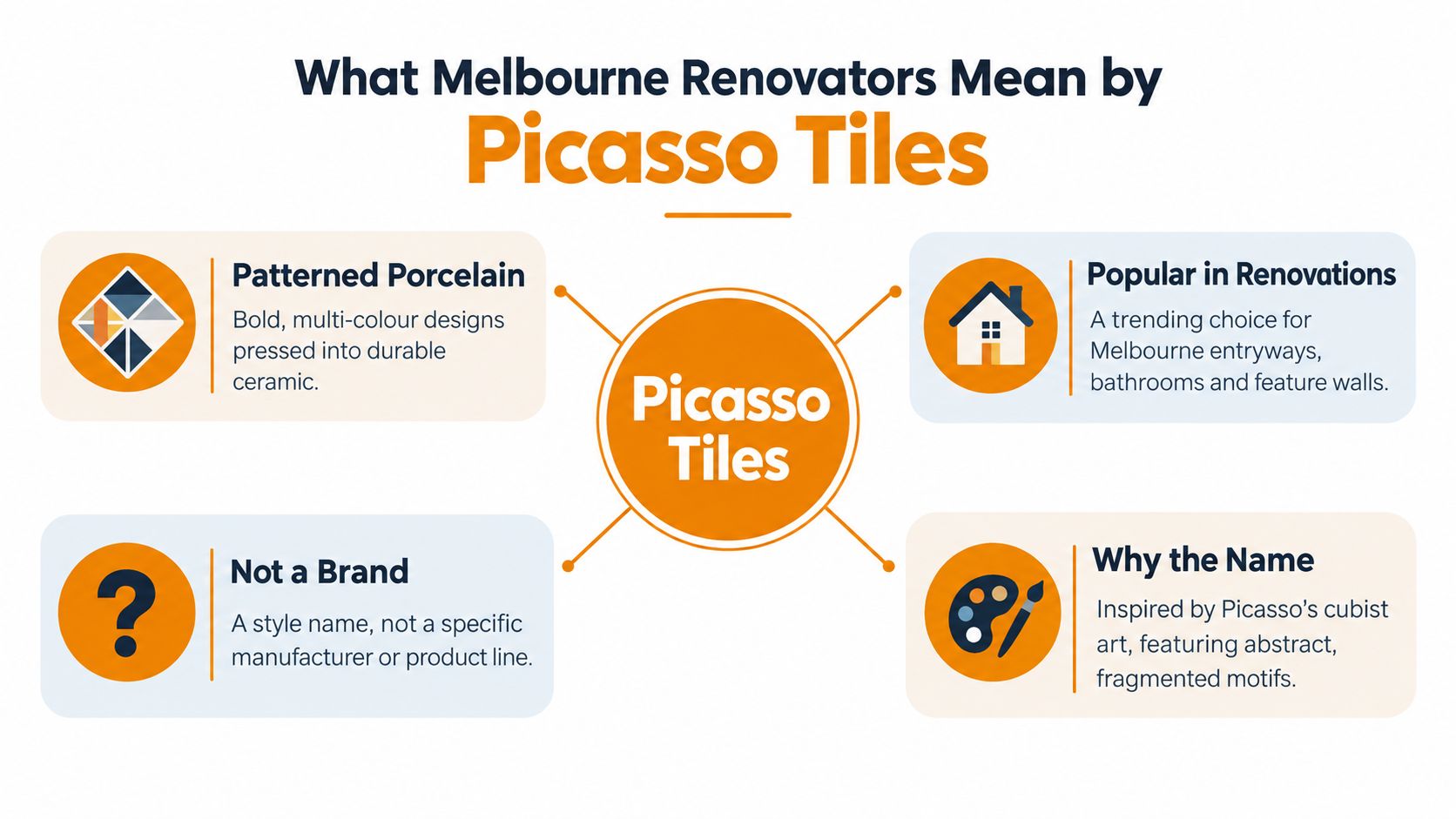
What Melbourne Renovators Mean by Picasso Tiles
A Melbourne homeowner looking at a hallway update might search Picasso tiles after seeing a friend's entryway or a saved Pinterest board, then end up staring at two completely different results. One result is a decorative porcelain tile with a patterned, encaustic-look surface. The other is the magnetic toy that parents buy for stacking and building.
For renovators, the tile meaning is the one that matters. In Australian product listings, the name usually points to patterned porcelain with Mediterranean patterning and traditional European cement-tile aesthetics rather than a product made by Pablo Picasso himself (The Tile Collective product description).
That distinction matters because the name is doing styling work, not authorship work. When a supplier says Picasso, they're usually signalling visual character, bold motifs, repeated geometry, heritage references, and a decorative look that suits floors, splashbacks, feature walls, entries, courtyards, and even shopfronts.
A quick way to stay oriented is to ask one question first, “Am I buying a surface material or a toy?” If you're planning a kitchen, laundry, bathroom, or porch, you want the surface material. If you're comparing gift ideas for a child, you've landed in a very different category.
If you're already sketching layouts, an ai patio design generator can be handy for testing how a patterned tile choice might sit alongside outdoor furniture and planting before you commit.
Style Versus Brand How to Read the Name
The safest way to read Picasso tiles in Australia is to treat the word Picasso as a style cue, not a manufacturer guarantee. While the romantic label can be useful, the buying decision starts with the product sheet, not the name printed on the sample label.
The first check is the surface specification
Look for porcelain body, the stated finish, the tile size, and the country of origin or importer details. A patterned tile that looks similar online can behave very differently in a wet room if the finish, absorption, or batch quality changes.
Practical rule: judge the tile by its spec sheet, not by the mood of the photo.
The common Australian pattern name usually sits around Mediterranean, encaustic, or geometric styling. That's why a modern tile can feel heritage-inspired without pretending to be an antique object. The design language is borrowed from decorative traditions, then translated into a contemporary manufactured tile.
| Spec | Patterned Picasso-style porcelain | Large-format porcelain (600x600mm) |
|---|---|---|
| Visual effect | Strong pattern, smaller repeated motifs | Cleaner, more continuous surface |
| Room feel | Suits entries, bathrooms, splashbacks | Suits open-plan floors and larger rooms |
| Layout pressure | Pattern alignment matters more | Fewer pattern decisions |
| Grout visibility | More noticeable | Usually less visually dominant |
| Buying focus | Print consistency and batch matching | Size consistency and edge finish |
The comparison is useful in Melbourne homes because many rooms are not huge. A smaller patterned tile can make a compact entry or ensuite feel intentional, while large-format porcelain can be better when you want the floor to read as quieter and more expansive.
The Picasso Design Heritage and Why It Shows Up in Tiles
The name makes more sense once you connect it to Picasso's documented ceramic work. The National Gallery of Victoria records that Suzanne and Georges Ramié opened the Madoura Pottery studio in Vallauris in April 1938, and that Picasso returned annually for 25 years, producing approximately 4,000 ceramic works (NGV exhibition page).
Those ceramics give the tile name its cultural echo. They're part of why a patterned tile can feel artistic, layered, and slightly European without being fussy. The visual reference is not a claim of authorship, though. It's a borrowing of atmosphere, the kind of atmosphere that comes from bold shapes, repeated forms, and a warm decorative tradition.
Why that matters in a Melbourne renovation
A lot of Melbourne homes balance old bones with modern living. That's why the Picasso-style look lands well in terraces, weatherboard updates, and apartment fit-outs. It gives you something that feels curated without forcing a full heritage reconstruction.
The museum connection also helps when you're explaining the look to a designer or tiler. You're not asking for a generic “patterned tile.” You're asking for something with Mediterranean warmth, geometry, and a slightly gallery-inspired feel.
That cultural reference has been carried into modern porcelain because it's practical as well as pretty. A manufactured porcelain tile can deliver the look in a way that suits everyday cleaning, busy households, and the installation realities of a Victorian home.
Specs That Matter for Victorian Homes
The most useful technical question is not whether a tile looks artistic, it's whether it suits the room. For Picasso decorative tiles, the common specification is 200 x 200 x 8.5 mm glazed porcelain with a matt surface, and Australian guidance identifies P3 or R10 as a typical minimum slip rating for residential wet-area floors (Chalkline practical guide).
That makes the tile a floor system as much as a decorative finish. If you're using it in a bathroom or laundry, you need the right slip data, not just a nice pattern. A matt surface helps reduce glare, but it doesn't automatically prove the floor is compliant.
Good-looking is not the same as safe to walk on when it's wet.
Room by room thinking
| Room | Recommended finish | Minimum slip rating | Key installation note |
|---|---|---|---|
| Bathroom floor | Matt glazed porcelain | P3 or R10 | Check wet-area suitability before ordering |
| Laundry floor | Matt glazed porcelain | P3 or R10 | Match grout colour to minimise visual clutter |
| Entryway | Matt or textured porcelain | P3 or R10 if exposed to wet footwear | Watch the first few steps for pattern alignment |
| Kitchen splashback | Matt glazed porcelain | Not usually the deciding factor for splashbacks | Focus on print consistency and cut edges |
| Courtyard or exposed external area | Weather-suitable porcelain | Higher classifications may apply | Confirm suitability for exterior use |
| Shopfront or feature wall | Patterned porcelain | Depends on exposure and traffic | Confirm substrate and fixing method |
The installation detail matters just as much as the room label. Don't assume a tight, rectified-looking joint unless the supplier states it clearly, because nominal 200 mm tiles can still vary. Use the supplier's joint width, confirm the batch, and ask for the manufacturer-approved adhesive before work starts.
For a deeper product comparison, Tiles Mate's porcelain guide at https://tilesmate.com.au/blogs/news/porcelain-tiles is useful when you're narrowing patterned porcelain options against more neutral formats.
Installing Patterned Porcelain Without Visible Mistakes
Patterned porcelain exposes sloppy work fast. If the room is out by a few millimetres, the eye catches it. If the print shifts from one tile to the next, the whole surface can look tired before the grout has even cured.
Start by opening several boxes and dry-laying the tiles. Mix pieces from at least three cartons so shade and print variation don't bunch together in one area. That simple habit saves a lot of regret once the adhesive is down.
A cleaner sequence on site
- Dry-lay multiple cartons. Spread the tiles out first so you can see how the pattern repeats.
- Set the sightline. Work from the room's main viewing direction, usually the doorway or the most obvious approach.
- Hold the joint width. Keep the grout lines consistent with spacers rather than “eyeballing” them.
- Finish carefully. Clean grout residue quickly and keep the surface tidy while the work is still fresh.
The setting-out step matters most in smaller Melbourne rooms, where every cut is more visible. A bathroom with a patterned floor should feel balanced, not squeezed. A laundry with a busy tile needs especially careful placement around drains, cabinetry, and thresholds.
The biggest mistake is forcing a look that the tile system doesn't support. If the supplier says the joint should be wider, don't butt the tiles together just because the pattern seems neat in the box. That usually creates more visual and technical problems later.
You can also compare fixing notes with Tiles Mate's installation advice at https://tilesmate.com.au/blogs/news/porcelain-tile-installation-tips when you're checking what to ask your tiler before the job starts.
Samples Trade Options and Local Sourcing in Melbourne
A tile sample can look right online and feel wrong once it sits under your room's light. That shift is common in Melbourne, especially in north-facing rooms, dim laundries, and bathrooms that pick up borrowed light from a hallway. A sample-first approach lets you see the pattern, colour, and finish where they will live.
Tiles Mate, a Melbourne-based tile and flooring retailer and wholesaler in Truganina, offers a $15 pack of five samples, free 15-minute design consultation from home, and TilesMate Pro trade pricing for B2B buyers (Tiles Mate). For a first-time renovator, that combination helps turn a guess into a decision.
Why samples matter more than photos
A patterned tile can look warm on a screen and cooler beside real cabinetry. It can seem calm in a showroom and busier next to grout or timber. Testing it in your own space shows the balance that photos hide.
Keep the practical side tidy too. If you are clearing space for a renovation, good storage keeps samples, boxes, and spare cartons out of the way, and these packing tips for renovation storage can help you avoid clutter during the job.
A sensible buying path is straightforward. Order samples, view them in morning and evening light, compare them with your benchtop or paint swatches, then use the consultation to check quantity and layout. If you are sourcing for a builder, architect, or trade job, the B2B pricing path also helps with quoting and ordering discipline.
For a local buying reference point, tile shop Melbourne guidance is useful when you are comparing range, service, and delivery options.
Care and Maintenance for Patterned Porcelain
A patterned floor stays handsome when the cleaning routine stays simple. Use a pH-neutral cleaner, a soft mop or cloth, and clean spills before they settle into the grout. That keeps the tile surface looking sharp without wearing down the finish.
Avoid harsh acidic cleaners if you can. They can be rough on grout, and coloured grout in a patterned floor is part of the overall look. Bleach is also a poor habit for regular maintenance because it can make grout colour uneven over time.
What to watch after installation
Grout haze is common after tiling, especially if the cleanup was delayed. A careful first clean usually sorts it out. Outdoors, you may also see efflorescence on steps or exposed surfaces, which needs the right treatment rather than scrubbing harder.
Small chips near entries happen when grit, dropped objects, or heavy furniture meet a busy threshold. Keep a spare tile or two if the supplier recommends it, because a matching replacement is much easier than trying to hunt one down later.
Simple routine: sweep, mop with a neutral cleaner, check grout lines seasonally, and deal with spills quickly.
If the room is a wet area, a penetrating sealer on the grout lines can be worth discussing with your installer. It won't turn the floor into something it isn't, but it can help the grout stay easier to maintain. The main thing is consistency, because patterned porcelain looks best when the grout and tile age at the same pace.
For busy Melbourne households, the ideal routine is boring in the best possible way. You want a floor that survives foot traffic, weekend mess, and the occasional sandy shoe without needing constant rescue.
Bringing It All Together for Your Project
Picasso-style tiles work when three things line up: the pattern language, the slip rating for the room, and a local supplier you can talk to. Once those are settled, the rest is sample checking and layout discipline.
If you're deciding now, start with the look you want, order the $15 sample pack, view it in the room, and use the free 15-minute design consultation if you want a second pair of eyes. Tiles Mate's curated porcelain and stone ranges, transparent per-m2 and per-box pricing, and Melbourne delivery make that process much easier to manage.
If you're ready to narrow down a patterned porcelain for a Melbourne bathroom, entryway, or feature wall, Tiles Mate Pty Ltd can help with samples, layout advice, and local delivery. Visit Tiles Mate Pty Ltd to compare Picasso-style options, book your consultation, and move from guesswork to a clear tile choice.