




Porcelain Mosaic Tiles Melbourne: Buying and Installation
by Shivam Tayal 12 Oct 2026 0 Comments
A porcelain mosaic is a small-format porcelain tile sold on mesh sheets, and in Melbourne the right pick depends as much on slip rating, water absorption and installation standard as on colour or shape. If you're standing in front of sample boards trying to choose for a shower, splashback, balcony or pool edge, start with performance, not looks.
Porcelain earns its keep because it can handle wet areas, cleaning, and hard use better than a lot of decorative alternatives, but only if you match the product to the job. Get that wrong and you'll pay for it twice, once in the install and again in replacement.
What a Porcelain Mosaic Actually Is
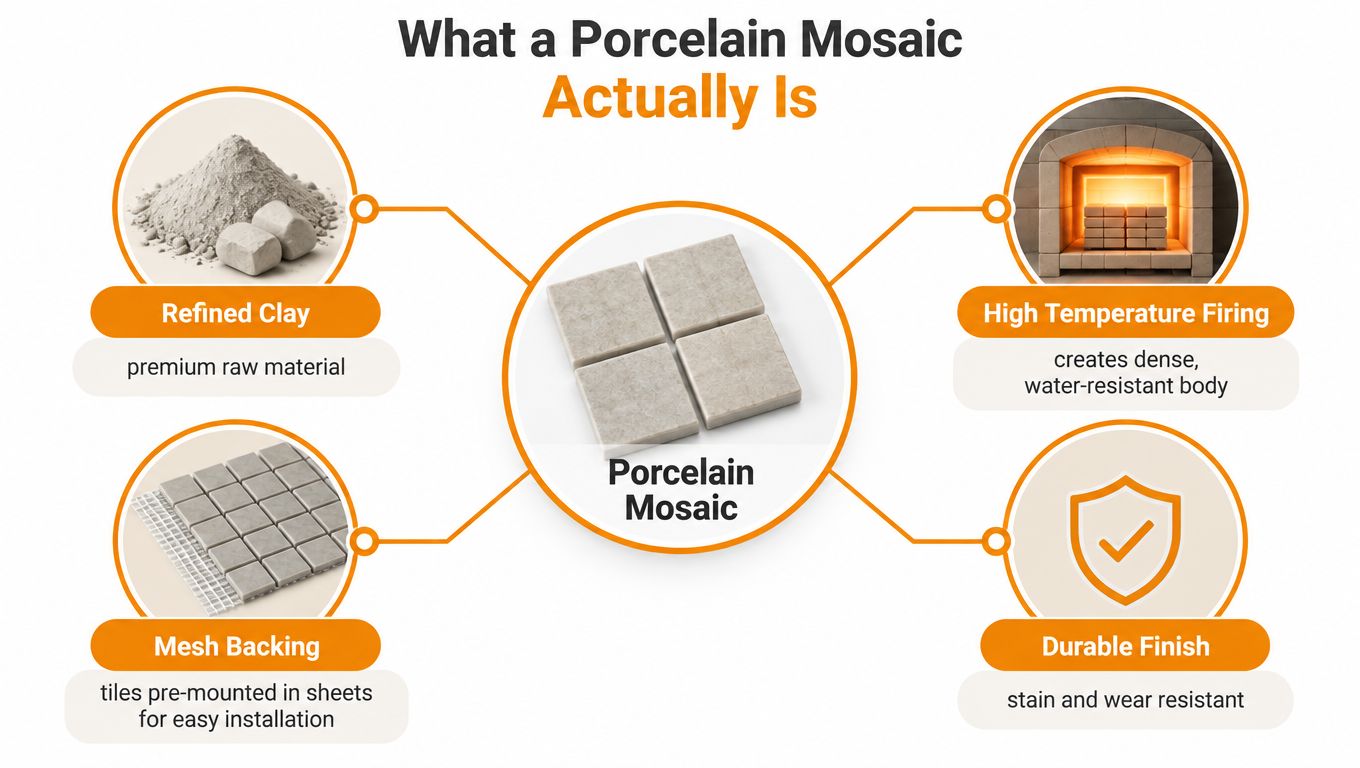
A porcelain mosaic is not just a pretty small tile. It's a dense, fired porcelain body cut into small units, then mounted on mesh sheets so the installer can place a wider area quickly and keep the joints aligned.
Why the body matters
Porcelain is made to be denser and less absorbent than standard ceramic, which is why it's the safer starting point for Melbourne bathrooms, laundries and exteriors. That dense body matters because it helps resist moisture uptake and staining, but it doesn't cancel out bad detailing at the substrate, grout or waterproofing layer.
The mesh backing changes the conversation too. You're not just choosing a face finish, you're choosing how the sheet behaves on a wall or floor, how much grout it carries, and how forgiving it is on a slightly uneven substrate.
Ceramic, but pushed harder
People often use “ceramic” and “porcelain” as if they're interchangeable. They're not. A porcelain mosaic is the stronger spec when you care about wet-area performance, maintenance, and colour consistency across a batch.
Practical rule: if you want the decorative look of mosaic without treating it like fragile decoration, start with porcelain and work back from the room's exposure.
The one local benchmark that shows how far porcelain-based mosaic thinking can be pushed is Melbourne's Arden Station façade, where a 522-square-metre east façade uses 300 × 150 centimetre porcelain slabs to reproduce Abdul Abdullah's Come Together with high-resolution hot-stamping technology, rather than thousands of tiny tesserae. That project shows porcelain can work as an architectural skin, not just a shower finish. See the local example of a porcelain-based public artwork at Melbourne's Arden Station façade.
Porcelain Compared to Ceramic, Stone and Glass Mosaic
The wrong way to shop is to ask which mosaic looks nicest. The right way is to ask which material suits the room, the cleaning routine, and the exposure.
The trade-offs that matter
Porcelain is the safest all-rounder for wet areas because its dense body is built for low absorption and stable colour. Natural stone brings warmth and unique veining, but it asks more from maintenance and sealing. Glass wins in splashbacks and feature surfaces where you want light play, but it can become a bad call underfoot. Standard ceramic can work on walls and lighter-use areas, but it's usually the first material I'd move away from if the room gets hard use.
| Mosaic Material Comparison for Melbourne Homes | Water Absorption | Best Fit | Watch Out For |
|---|---|---|---|
| Porcelain | Low, if the product is documented as such | Showers, bathrooms, laundries, pools, outdoor zones | Needs correct adhesive, grout and substrate prep |
| Ceramic | Typically higher than porcelain | Feature walls, light-use interiors | Less forgiving in heavy moisture or traffic |
| Natural stone | Variable, depends on stone type | Warm-looking interiors, premium feature areas | Sealing, staining and variation between pieces |
| Glass | Very low | Splashbacks, decorative walls | Slipperier feel underfoot, more visible adhesive and substrate issues |
What to buy for the room, not the showroom
Porcelain is the option I'd trust first for Melbourne conditions because it gives you durability and visual consistency without the maintenance burden of stone. Stone is worth paying for when the look matters more than the cleaning routine. Glass is brilliant when the job is decorative, not practical.
If you're browsing broader bathroom directions at the same time, browse 2026 bathroom tile styles is a useful reference point, but don't let style boards override performance in a wet room.
Shapes, Finishes and Sheet Layouts Worth Knowing
The shape you pick changes the room's rhythm, but it also changes the amount of grout you live with. More grout means more visual texture, more joints to maintain, and more planning on the install side.
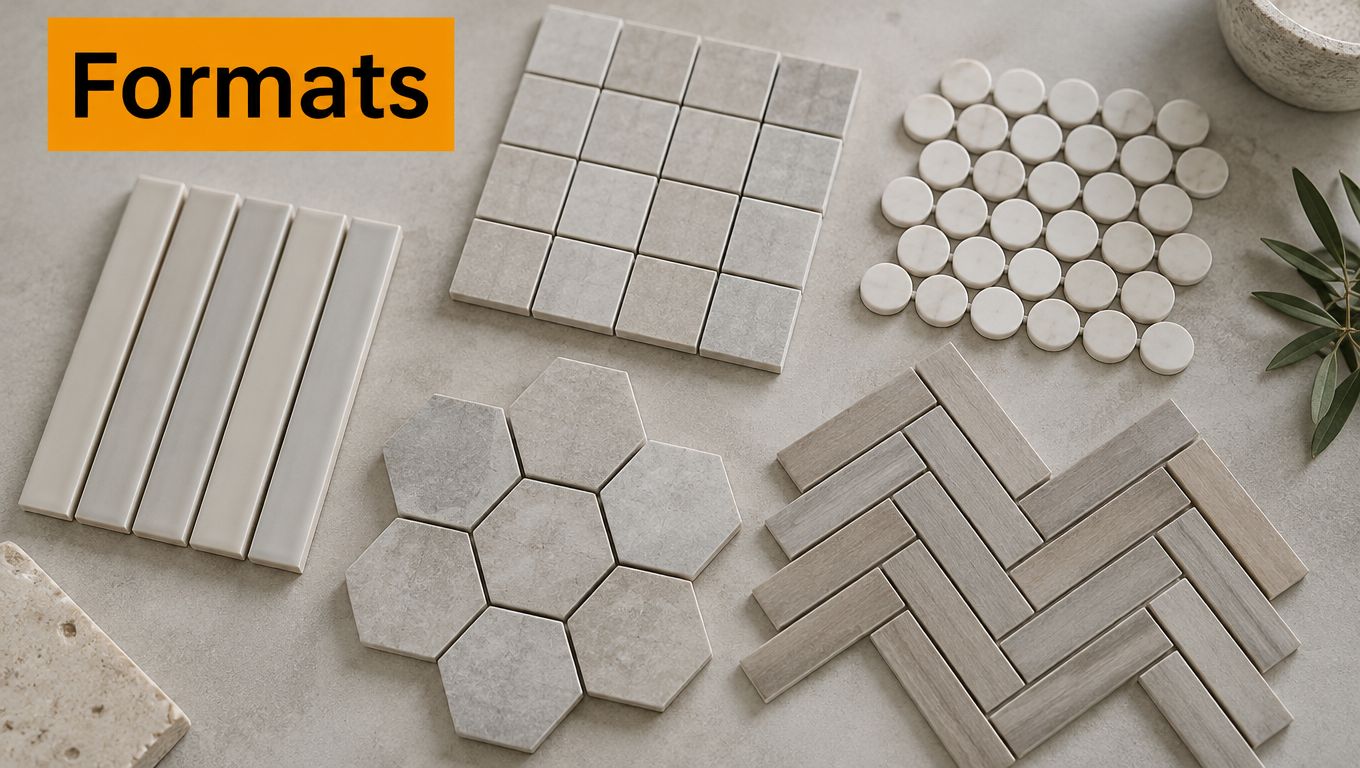
Shapes that do different jobs
Square and hexagon are the safest choices when you want a steady, predictable field. Penny round adds texture and can feel lively in a small bathroom. Kit-kat and feather shapes bring vertical movement, which suits splashbacks and accent walls. Herringbone looks more active and works when you want direction in the layout. Concave shapes read softer, but they still need the same installation discipline as any other mosaic.
A shape that looks calm in the sample tray can look busy across a whole shower wall. Always judge it at room scale.
Finishes that belong in the right place
Gloss reflects light and can look excellent on a wall, but I'd avoid it on a shower floor. Matt is the cleaner choice underfoot because it hides water marks better and usually reads less slick. Textured and anti-slip surfaces belong where traction matters most. Honed gives a softer visual effect, but it still needs to be matched carefully to the space.
Layouts and grout density
Mesh-mounted sheets are the normal format because they make alignment faster and more consistent. Loose pieces give more design freedom, but they cost more in labour and demand a better installer.
If you want a deeper look at the shapes that are driving attention in decorative interiors, kitkat and fish scale porcelain mosaics are worth a look.
Matching Porcelain Mosaic to the Right Application
A porcelain mosaic that works in a powder room can fail badly on a balcony. The room decides the spec, not the pattern.
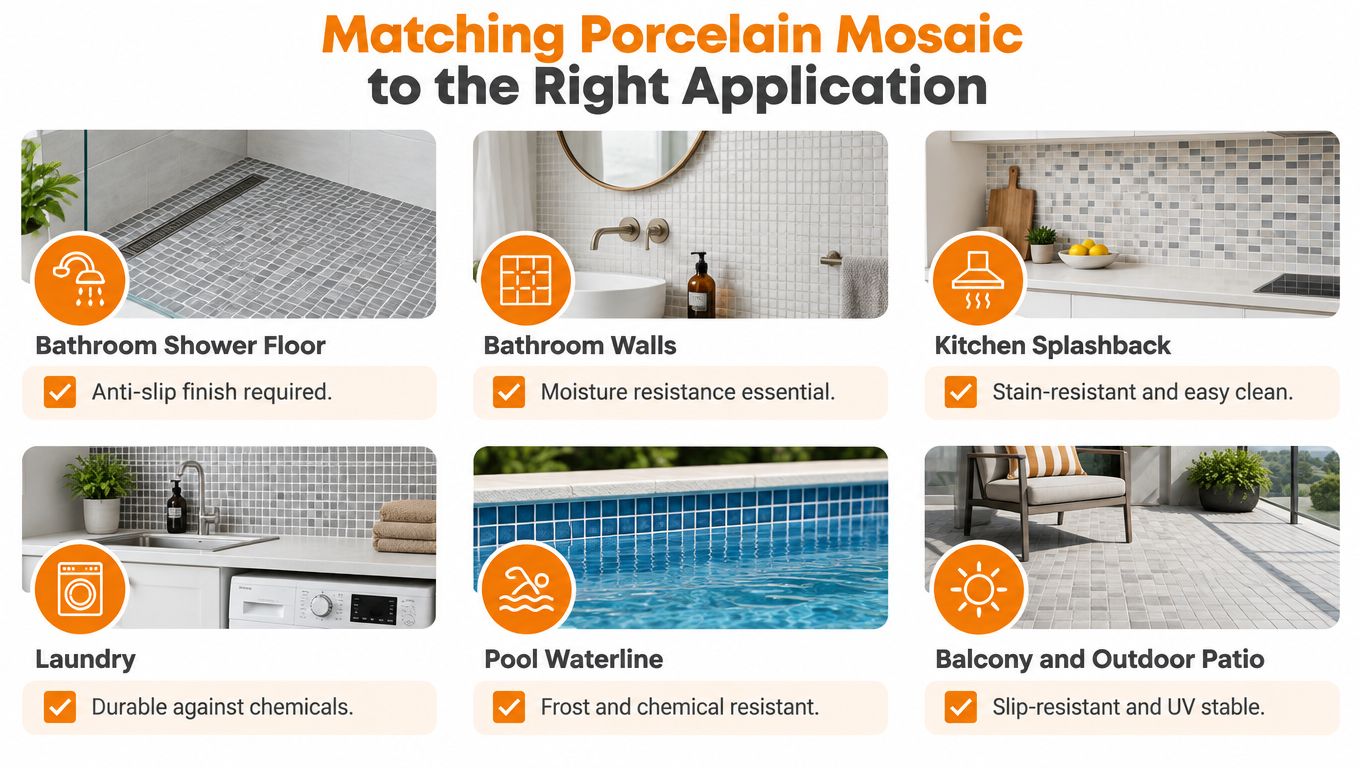
Where each use case stands
Bathroom shower floor: choose an anti-slip finish and a layout that helps form falls cleanly. Small units can make shaping the floor easier, but that doesn't make the surface automatically safe.
Bathroom walls: porcelain is easiest to justify here. Moisture resistance matters, but you're mainly choosing for cleanability and the visual finish.
Kitchen splashback: go for stain resistance and easy wiping. Gloss can work here because you're not standing on it, and the cleaning burden is lower than on a floor.
Laundry: use a durable porcelain surface that can cope with detergents and frequent cleaning. Keep the grout colour practical, not delicate.
Pool waterline: confirm documented suitability with the supplier, not marketing language. Chemical exposure and wet conditions need proper product evidence.
Balcony and outdoor patio: ask for slip resistance, outdoor suitability and an installation system that respects movement and drainage. Melbourne weather is not kind to vague product claims.
Practical rule: if the space gets water, slope, chemicals or foot traffic, don't buy on looks alone.
For buyers comparing options, the product sheet should tell you more than the display rack does. If you're also looking at broader bathroom directions, use browse 2026 bathroom tile styles as a visual reference, then come back to the actual room requirements before you decide.
Installation, Adhesive, Grout and Waterproofing
Porcelain mosaic lives or dies by the install. A good sheet on a bad substrate still ends badly.
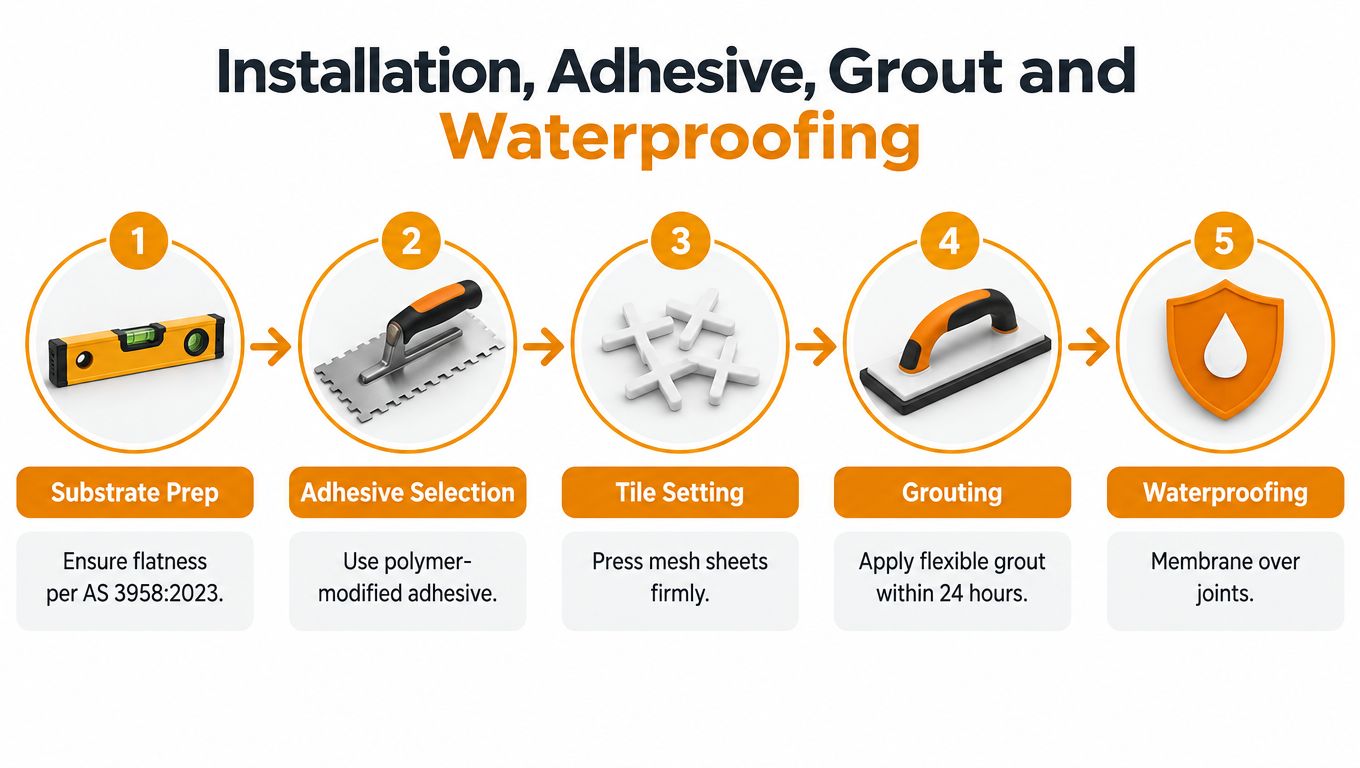
What the standard actually means
For bonded ceramic and stone tiling, the current national guidance is AS 3958:2023, and it explicitly covers floor tiles, wall tiles, mosaic tiles and panels (AS 3958:2023). The issue with mosaic is geometry. There are more edges, more joints and more chances for a bad substrate to show through.
A locally uneven base can telegraph straight into the sheet, which is how you end up with lippage, wavy joints or hollow spots. That's not a cosmetic annoyance, it's a durability problem.
The install stack that makes sense
- Substrate prep: get the base flat, sound and clean before the first sheet goes down.
- Adhesive choice: use a product suited to porcelain's low absorption, not a generic tile glue.
- Sheet setting: press each sheet firmly so every piece is supported.
- Grout selection: pick cement, epoxy or urethane based on staining risk and cleaning regime.
- Waterproofing and movement joints: separate the tiler's job from the waterproofing system and don't blur the two.
For grout haze clean-up after the job, how to remove grout haze is a practical resource worth keeping in your back pocket.
Bottom line: if the tiler can't explain substrate flatness, adhesive coverage and movement joints before work starts, they're not ready to install mosaic.
If you're comparing adhesive types for a specific room, the product guidance at floor tile adhesive is a sensible place to sanity-check the spec before anyone opens a bag.
Maintenance, Cleaning and Long-Term Durability
Porcelain itself is straightforward to clean. The grout around it is where the work starts.
What to expect over time
Mosaic has more grout than large-format tile, so it asks for more attention. That doesn't make it high-maintenance in a bad way, it just means you need to be honest about the cleaning routine before installation. Mild cleaners are the normal choice for porcelain, while harsh acidic products can be rough on cement grout and shorten its useful life.
Cement grout may need resealing depending on the area and the product used. Epoxy grout is the better call where stain risk is high or cleaning needs are strict, because it resists day-to-day grime more aggressively. In Melbourne bathrooms with poor ventilation, mould prevention becomes a routine, not a one-off task.
Two common problems
If grout goes discoloured, start with the cleaner before blaming the tile. In many cases the issue is surface contamination, not tile failure. If a single piece cracks in an otherwise sound sheet, the problem is usually local impact or movement, not the whole installation collapsing.
For deep cleaning, steam cleaning services can be useful when normal maintenance hasn't been enough, especially on grout-heavy surfaces that need a reset.
Keep the cleaning product gentle, the ventilation active, and the grout maintenance on schedule. That's how a porcelain mosaic stays sharp.
A properly installed porcelain mosaic should give long service in a residential setting. If it starts failing early, the problem is usually installation quality, not the material itself.
Specifying and Buying Porcelain Mosaic in Melbourne
Start with samples. Don't order from a photo and hope the room sorts itself out.
A practical buying workflow
Ask for a small sample pack first, then compare it against your actual lighting, benchtops, paint and grout colour. Tiles Mate Pty Ltd offers a $15 pack of five samples, which is the right kind of low-risk first step when you're trying to judge colour and finish before committing.
After that, compare per-m2 and per-box pricing with wastage allowance built in. Check the product sheet for documented water absorption, slip rating and intended use, then confirm delivery timing for stocked versus indent orders before you pay a deposit. If you're working across multiple zones, keep the wet-area spec separate from the decorative one.
Who should ask for what
Interior designers should request finish consistency, batch control and lead times early, because client approvals are easier before order placement. Builders and tilers should lock in adhesive, grout and waterproofing details in writing before the job starts. DIY homeowners should keep the brief simple, sample first, then confirm that the tile, adhesive and substrate system all suit the room.
If you want a retailer's product range and buying process that's built around Melbourne projects, the local overview at porcelain tile Melbourne is worth a quick read before you finalise quantities.
Common Misconceptions and Your Next Step
“Mosaic means non-slip.” Not automatically. Slip performance depends on the finished system, not the word mosaic on the label.
“Porcelain means waterproof.” No. The tile body matters, but grout, substrate and waterproofing still decide how the area performs.
“High-gloss is fine on a shower floor if it looks clean.” Bad idea. A glossy finish can be the wrong call where water and footing matter.
“Outdoor on the label means Melbourne-proof.” Not necessarily. Outdoor exposure, drainage, movement and cleaning still need to be checked against the actual product spec.
Order samples, request the test data, brief the tiler to AS 3958:2023, and confirm the waterproofing detail before anyone starts setting sheets. That's the short list that saves money and avoids avoidable rework.
Tiles Mate Pty Ltd supplies porcelain mosaic options, samples, and practical product guidance for Melbourne projects, including wet areas, splashbacks and outdoor spaces. If you're planning a renovation and want to compare finishes, ratings and sheet formats before you buy, visit Tiles Mate Pty Ltd and start with samples, not guesswork.