




Porcelain Mosaic Tiles: Complete Buyer and Design Guide
by Shivam Tayal 27 Sep 2026 0 Comments
Porcelain mosaic tiles are worth the extra effort in wet areas only when you choose a textured or matt finish with an AS 4586 P3–P4 slip rating and accept regular grout maintenance. Australia imported about US$814 million of ceramic products in 2023, with HS 6907 representing roughly US$348 million, so porcelain mosaics sit within a substantial, import-reliant tile market rather than a tiny specialist niche.
You're standing in a Melbourne showroom with a bathroom plan on your phone, comparing tiny hexagons, narrow kit-kats and large-format slabs. One tile looks safer under bare feet, another promises easier cleaning, and the most attractive option seems to demand the most grout lines. The question isn't whether porcelain mosaics look good. It's whether the extra joints, cutting and labour solve a problem in your room.
For most homeowners, the answer is straightforward. Use small-format porcelain mosaics on shower floors, curved surfaces, steps and carefully chosen feature areas. Choose a larger slip-rated tile where the floor is broad, drainage is simple and reducing grout maintenance matters more than maximum layout flexibility.
Why Porcelain Mosaic Tiles Are Worth Understanding Before You Buy
A typical Melbourne renovation starts with a practical compromise. The bathroom is smaller than the inspiration images, the shower has a fall to a central waste, and everyone in the household wants a floor that feels secure without becoming a cleaning project. A homeowner might choose a mosaic because it looks stylish, then discover that the tile format affects drainage, grout quantity, installation time and barefoot comfort.
Small pieces follow curves and changes in floor angle more easily than large tiles. They also create more grout joints, which can break up a wet surface and offer additional texture underfoot. That doesn't automatically make every mosaic safe. A glossy, smooth mosaic with an unsuitable slip rating is still a poor floor choice.
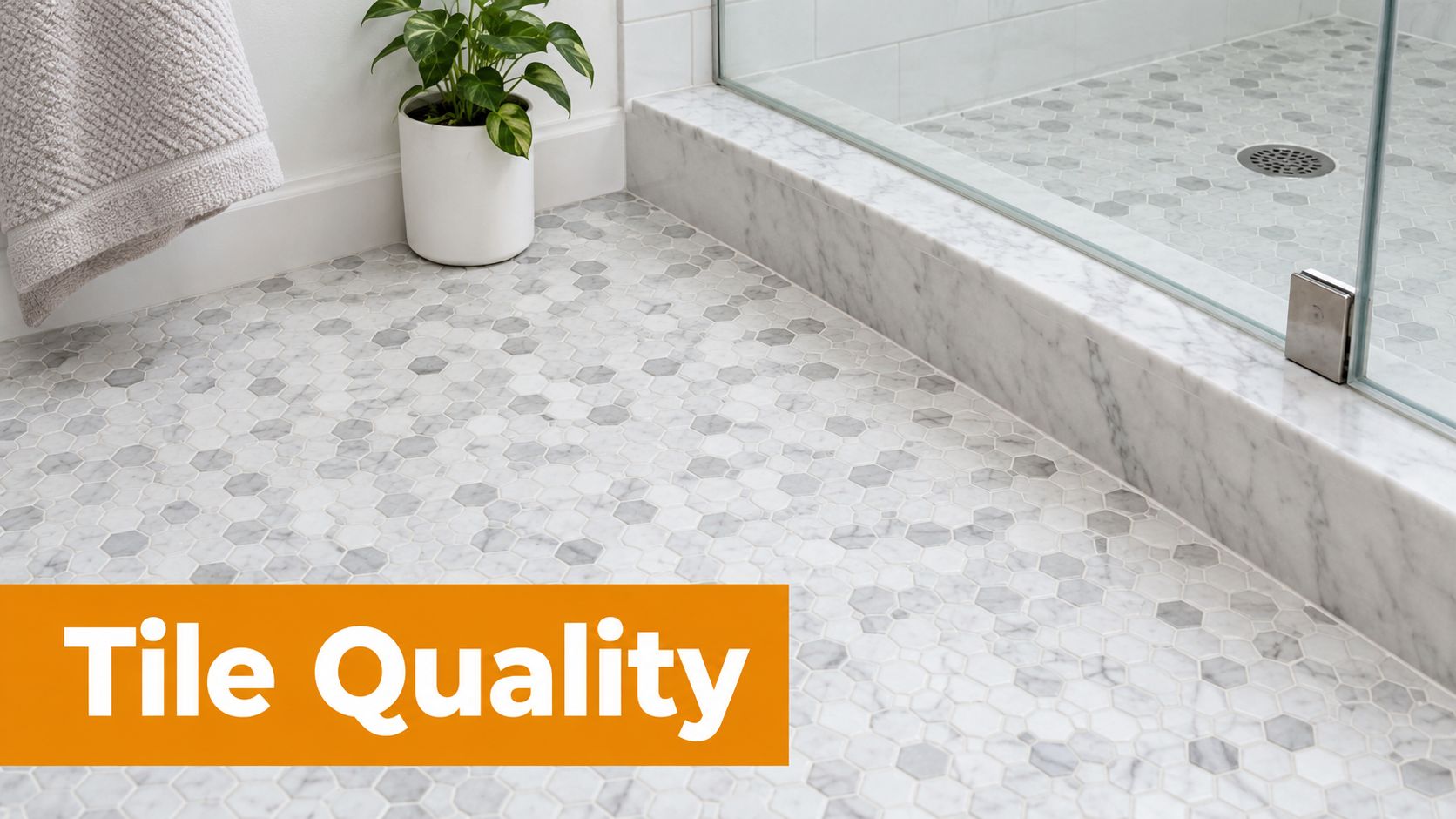
The format changes the practical result
A larger tile gives you fewer grout lines and a cleaner visual field. That's appealing on a laundry floor or a generous bathroom, particularly if the substrate is flat and the fall can be formed without awkward cuts. Mosaics give the tiler more control around wastes, niches, benches and curved shower edges, but they demand accurate preparation and consistent adhesive coverage.
Porcelain adds a separate performance advantage. Australian porcelain mosaics are typically specified as Group BIa porcelain under AS ISO 13006, with water absorption of ≤0.5% according to Australian tile data-sheet guidance. In plain terms, the tile body is effectively impervious, so it takes in very little moisture.
Practical rule: Choose mosaics for the geometry and underfoot feel, not simply because the pieces are small.
What I'd recommend in a real renovation
For a shower floor with multiple falls, I'd shortlist a matt or textured porcelain mosaic, check its AS 4586 rating, and use a grout colour that won't make every mark obvious. For a straight, open bathroom floor, I'd compare the same safety rating in a larger format before committing. You might prefer the larger tile once you price the installation and consider the extra joints.
Mosaics also make sense on shower walls, niches and splashbacks where cleaning underfoot isn't the issue. They can create a focused detail without covering every surface in a busy pattern. The best design usually gives the mosaic one clear job.
What Porcelain Mosaic Tiles Are
Porcelain mosaic tiles are small pieces made from a dense ceramic body. Manufacturers press refined clay and mineral materials under high pressure, fire the body at high temperature, then finish it with a glazed, matt, honed or textured surface. That process produces a tile that can be cut into small formats while retaining porcelain's low-porosity characteristics.
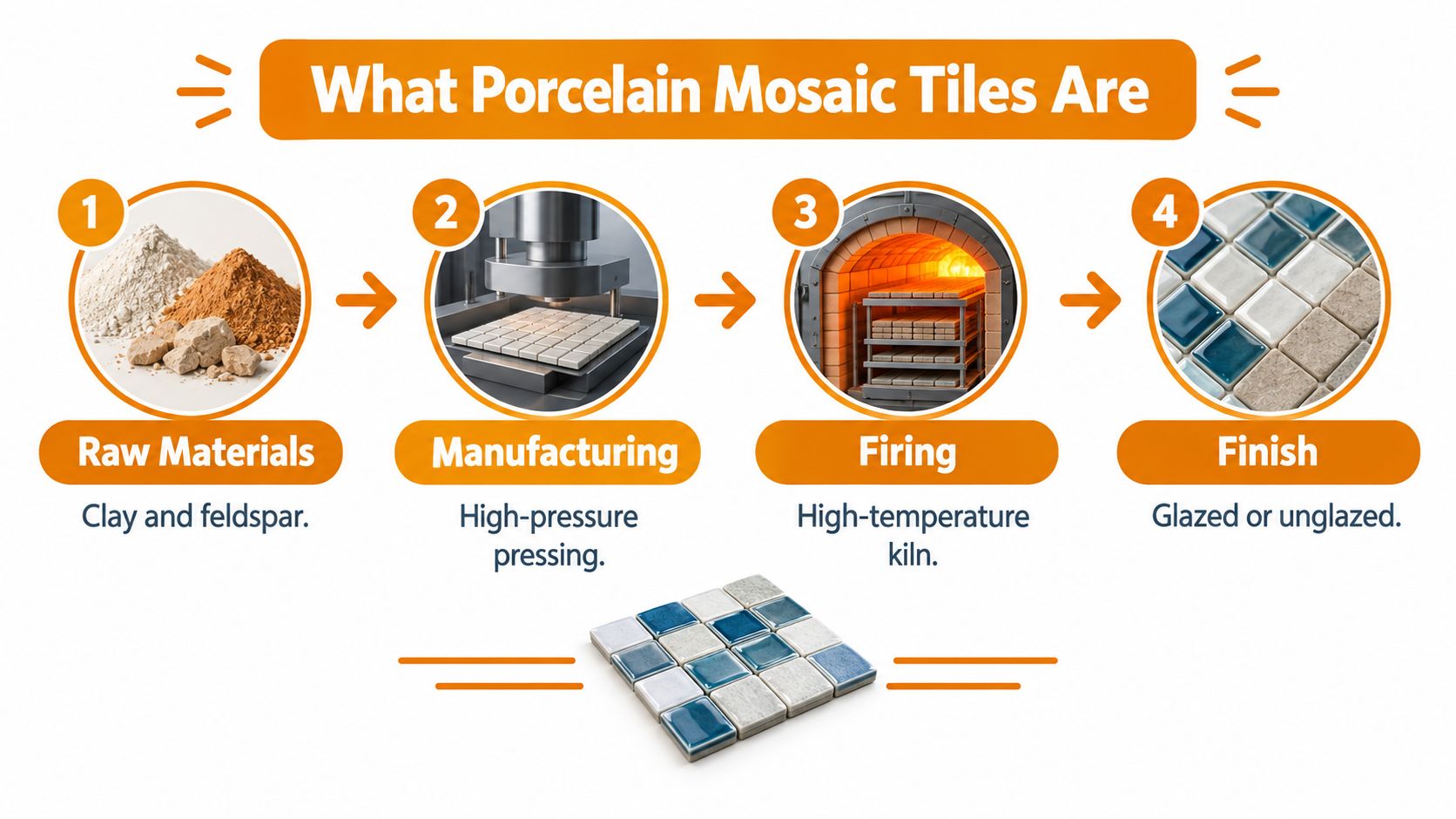
Why low porosity matters
Tile bodies range from open and absorbent to dense and closed. A porcelain body classified as Group BIa absorbs no more than 0.5% water under the Australian data-sheet guidance. That low absorption reduces moisture ingress and helps limit staining risk, which suits showers, laundries, balconies and other wet areas.
Porcelain is still only one part of the installation. The waterproofing membrane, junctions, falls, adhesive and grout must all be specified and installed correctly. A low-absorption tile cannot compensate for a poorly prepared substrate or failed shower waterproofing.
For a shower floor with multiple falls, porcelain mosaic can justify the extra grout and installation work because smaller pieces follow the shape of the floor and give the tiler more control around wastes and awkward edges. On a broad, straightforward bathroom floor, a larger slip-rated porcelain tile may deliver a cleaner look with fewer joints and lower installation complexity.
How porcelain differs from ordinary ceramic
Porcelain belongs to the ceramic family, but its manufacturing process produces a denser body with much lower water absorption. Ceramic tiles can suit indoor walls and lower-stress applications. The product's technical data must match the location, rather than the word “ceramic” on the box deciding the result.
Unglazed porcelain shows the body material through the surface and can maintain a more consistent appearance through minor wear. Glazed porcelain offers wider colour and pattern choices, including stone-inspired surfaces, but the finish still needs to suit traffic and slip requirements. A smooth decorative glaze may be appropriate on a wall and unsuitable beneath wet feet.
For a clear material overview, Tiles Mate's guide to what porcelain tile is provides a useful starting point before comparing mosaic ranges. Check the individual product data sheet before ordering.
Common Mosaic Shapes, Sizes and Finishes
The shape sets the visual rhythm, but the finish determines how a mosaic behaves in the room. I'd choose the surface first for a shower floor, then select a shape that supports the layout. On a wall, you have more freedom to prioritise colour, reflection and pattern.
Match the format to the room
Penny rounds suit classic bathrooms, curved niches and soft, spa-like schemes. Their repeated circular outline creates a gentle pattern, though the many joints need careful grout selection and cleaning.
Hexagons add sharper geometry. White and grey hexagons can make a small floor feel deliberately detailed, while darker colours create stronger contrast against pale walls. Use them as a floor feature or a controlled splashback rather than repeating them across every surface.
Kit-kat rectangles create direction. Install them vertically to draw the eye upwards on a wall, or horizontally for a calmer banded effect. Their narrow profile can look refined, but alignment matters, especially where sheets meet.
Sheet-mounted mosaics are the practical default for most installations. Pieces arrive fixed to a mesh or backing, helping the tiler maintain spacing and speed up placement. The sheets still need to be dry-laid, adjusted and blended between boxes, because a visible sheet edge can ruin an otherwise polished result.
| Format | Best Used For | Style Notes |
|---|---|---|
| Penny round | Shower floors, niches and classic bathrooms | Soft, familiar and visually busy |
| Hexagon | Floors, splashbacks and feature walls | Graphic geometry with strong grout definition |
| Kit-kat rectangle | Vertical walls, bands and splashbacks | Linear, directional and contemporary |
| Sheet-mounted mosaic | Floors, walls and repeated layouts | Faster placement with consistent spacing |
| Textured or matt surface | Wet floors and pool-adjacent zones | More practical than a smooth decorative finish |
| Gloss surface | Walls, niches and splashbacks | Reflective, but generally less suitable for wet floors |
Finish matters more than colour
A gloss finish reflects light and can brighten a dark kitchen splashback. On a shower floor, it may show water marks and feel less reassuring underfoot than a textured or matt surface. Honed finishes sit between decorative softness and practical restraint, while textured products can provide a more tactile surface but may collect more residue.
The most expensive mistake is choosing a floor by colour alone, then discovering the finish and rating don't suit the room.
For grout, a close colour creates a quieter surface and disguises slight variation in the pattern. A contrasting grout makes the shape stand out, but it also makes every joint part of the design. I favour restrained contrast on floors and stronger contrast on a small wall feature.
Porcelain Versus Ceramic, Glass and Natural Stone Mosaics
For a wet-area floor, porcelain is usually worth the extra cost when you need a predictable, hard-wearing surface and the small format helps the tiler follow falls to the waste. A larger slip-rated tile can be the better buy on an open, straightforward floor because it uses less grout and takes less time to install. Glass and natural stone earn their place in different parts of the room.
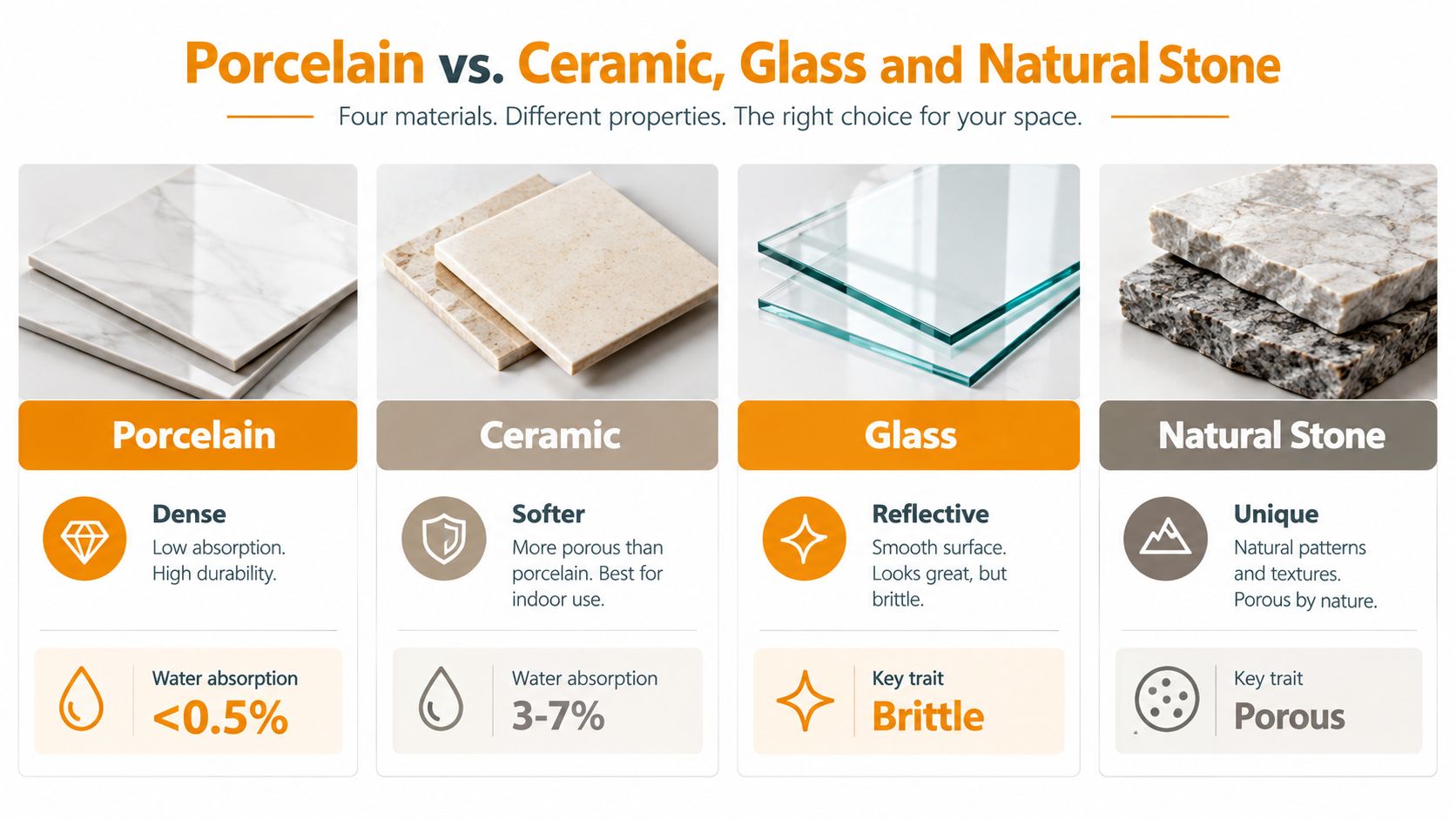
Where each material earns its place
Porcelain has a dense body that handles regular water exposure well. Compared with general-purpose ceramic, it offers greater consistency for shower floors, laundries, balconies and other wet or exposed areas. Choose it only when the specific product suits the location, including its surface and slip performance. Small porcelain mosaics are most worthwhile where their format improves drainage, adds barefoot grip through more joints, or solves a curved or detailed layout. On a simple bathroom floor, larger tiles may deliver better value.
Ceramic is often easier to cut and works well on indoor walls, splashbacks and decorative areas. It can be a sensible choice behind a basin or cooktop. Do not use a ceramic mosaic on a wet floor until the product information confirms that application.
Glass brings colour depth, reflection and visual movement that porcelain cannot always match. It suits a splashback, niche or wall behind a basin, where light can travel across the surface without regular foot traffic. Tiles Mate's glass tile mosaic guide offers useful design context. Glass still requires compatible adhesive and grout, careful handling, and an installer who can control visible joints and surface imperfections.
Natural stone provides authentic variation and a tactile, premium finish. Marble, limestone and similar stones differ in porosity, so sealing and gentler cleaning may be required. Acidic cleaners can etch some surfaces, making stone a higher-maintenance option in bathrooms and kitchens.
Don't confuse luxury with suitability
Natural stone is not automatically the better shower choice. Select it when you accept ongoing sealing, careful cleaning and natural variation. Porcelain gives a more uniform appearance and simpler care, while glass makes more sense when the priority is wall impact rather than floor durability.
For another material comparison, SitePro Bathrooms tile advice is useful background. Check the product data sheet against the room's actual conditions before you buy.
Installation, Grout and Slip Ratings You Should Know About
A mosaic floor succeeds or fails before the first sheet is pressed into adhesive. The substrate must be sound, clean, correctly waterproofed where required, and formed to drain without ponding. A tiler then needs the adhesive, trowel technique and sheet layout to suit the tile and substrate.
Installation decisions that affect the finish
Sheet-mounted mosaics reduce repetitive placement, but they don't remove the need for skill. The tiler must check the sheet's joint spacing, cut the backing cleanly, stagger joins and lift sections to confirm adhesive coverage. If the backing or adhesive shows through the joints, the final grout lines won't look uniform.
Porcelain is dense, so the installer needs the correct adhesive and preparation for the application. Don't rely on a generic product recommendation from a marketplace listing. Ask the tiler to confirm compatibility with the tile, waterproofing system and wet-area conditions. These porcelain tile installation tips from Tiles Mate offer useful preparation points, but your installer remains responsible for the project-specific method.
Grout is part of the cost
Mosaics create more joints than large tiles. That can help barefoot traction and allow the tiler to follow falls, but it also gives soap residue, dust and discolouration more places to appear. Cement-based grout is familiar and widely used, while epoxy grout can be worth considering in a busy shower because it offers stronger resistance to staining when installed correctly.
Sanded and unsanded grout choices depend on joint width and the product specification. The tiler should confirm the appropriate grout rather than choosing by colour alone. A mid-tone grout is often a practical compromise for a floor, especially in a household that doesn't want to scrub bright white joints constantly.
Use the slip rating, not a guess
Wet-area floors should be specified using AS 4586 slip ratings. Australian guidance commonly places residential bathrooms and laundries around P3 to P4, while external and pool-adjacent zones generally require higher resistance as explained in Australian tile guidance.
| Zone | Typical P-Rating | Notes |
|---|---|---|
| Residential bathroom floor | P3–P4 | Confirm the product rating and finish for barefoot use |
| Residential laundry | P3–P4 | Consider cleaning load and water exposure |
| External area | Higher resistance than typical indoor wet areas | Check exposure, drainage and the exact specification |
| Pool-adjacent area | Higher resistance than typical indoor wet areas | Prioritise wet grip, texture and outdoor suitability |
A mosaic's grout lines may improve the sensation of grip, but they don't replace a certified rating. My recommendation is firm: choose a textured or matt product with the appropriate AS 4586 rating, then accept that the extra joints need regular maintenance. If easy cleaning is your priority and a larger P-rated tile can follow the falls, choose the larger tile.
Design Ideas and Pattern Options for Bathrooms, Kitchens and Outdoors
Porcelain mosaic tiles work best when they define a zone. In a Melbourne bathroom, I'd use them on the shower floor, inside a niche or across a narrow feature wall, then keep the surrounding surfaces calmer. That approach gives the small format a purpose instead of turning the whole room into a grid of grout.
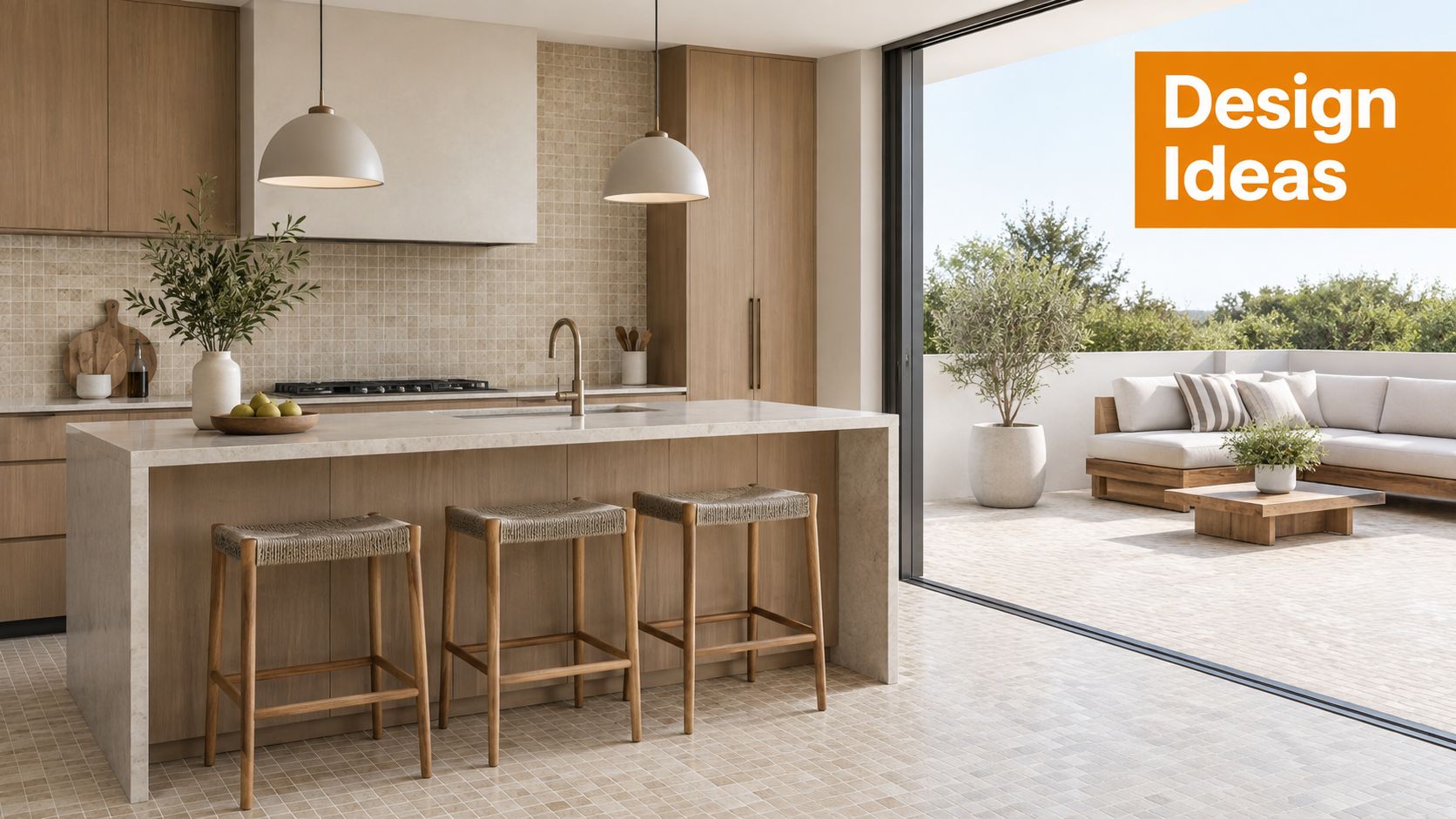
Build the pattern around the room
A shower-floor mosaic handles multiple planes and gives the tiler more manageable pieces around the waste. A niche mosaic creates a defined detail without adding visual noise to the main wall. A kit-kat band can connect the vanity wall to the shower area, while a restrained hexagon floor can anchor otherwise plain finishes.
In kitchens, use porcelain mosaics for a splashback behind the sink, cooktop or open shelving. Matt and textured finishes generally disguise smears better than a highly reflective surface, although textured wall tiles can take more effort to wipe clean. Match the grout to the tile if you want a quieter, more spacious look.
Design advice: Let one mosaic pattern lead. Pair it with plain field tiles, simple joinery and a grout colour that supports the room rather than competing with it.
For outdoor areas, check more than the colour and stone look. Confirm the slip rating, finish, drainage suitability and exposure requirements before using a product around a pool, patio or balcony. Small mosaics can follow complicated edges, but the extra grout and surface texture may demand more cleaning in exposed locations.
Curbs, thresholds and shower edges also need practical planning. If you're weighing different edge treatments, this guide to best shower curb options provides useful ideas for coordinating the tile, waterproofing and transition.
The video below can help you visualise how small-format layouts change the character of a wet area.
How to Buy Porcelain Mosaic Tiles with Confidence
Start with a physical sample. Screen colour varies with lighting, settings and surrounding finishes, while a real sample shows the texture, gloss level, grout relationship and undertone. Put it on the bathroom floor, hold it beside the vanity, and check it under both natural and artificial light.
Check the details before ordering
Ask for the product data sheet and confirm:
- Slip rating: Verify the AS 4586 rating is suitable for the exact zone.
- Water absorption: Confirm the product classification rather than assuming every mosaic performs the same way.
- Finish: Decide whether matt, honed or textured is more appropriate than gloss.
- Sheet layout: Check the sheet size, backing method and joint spacing.
- Batch consistency: Order from a consistent batch where possible, then blend opened boxes during installation.
- Edges and thickness: Confirm how the mosaic meets trims, drains, skirtings and adjoining tiles.
- Quantity: Allow for cuts and keep spare pieces for future repairs, with the final allowance confirmed by your tiler.
Don't compare only the price per box. Compare the tile cost, adhesive, grout, trims, cutting, preparation and labour. A cheaper mosaic can become the expensive option if it needs more correction on site or creates a difficult cleaning routine.
Tiles Mate Pty Ltd offers sample packs, a free 15-minute design consultation, clear per-square-metre and per-box pricing, Melbourne delivery, and trade support through TilesMate Pro. Its range includes porcelain mosaics, including the Porcelain Mosaic Fish Scale Matt Mosaic, alongside other shapes and finishes.
You're ready to order when the sample works in the room, the data sheet confirms the application, your tiler approves the installation method, and you've compared the mosaic with a larger slip-rated alternative. If the mosaic solves a genuine drainage, grip or design problem, buy it. If it only adds pattern, use it selectively.
Tiles Mate Pty Ltd can help you compare porcelain mosaic tiles, larger slip-rated formats, finishes and grout-friendly designs for a Melbourne or Victorian renovation. Visit Tiles Mate Pty Ltd to order samples, arrange design advice, or discuss trade sourcing before you commit to the wrong format.